Technology news summaries — Page 3
Essential facts and source links for recent technology stories.
-
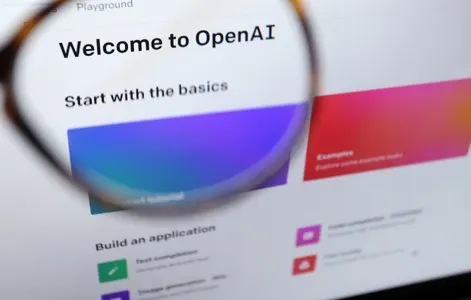
AI power demand may help GE Vernova amid Anthropic, OpenAI IPO plans
GE Vernova may gain from rising AI power demand. Anthropic plans a November IPO after confidentially filing an S-1; OpenAI filed a week later and is likely to go public next year. GE Vernova's Q2 2026 orders rose 88% year over year to $24.2 billion. -
Okta unveils AI-agent identity features as analysts assess growth potential
Okta announced AI-agent identity features, including Agent SSO, at Oktane 2026. Q2 FY2027 revenue rose 11% to $805 million, while the company’s FY2027 guidance calls for 10%–11% growth, leaving open whether AI can accelerate sales. -
Shopify partnership expands Meta’s Muse into AI-assisted shopping
Meta’s Muse AI assistant will add Shopify’s Shop Pay agentic checkout, letting users shop with Shopify merchants and complete purchases through Muse. Announced Sept. 21, the deal’s financial terms and any revenue for Meta remain undisclosed. -
SanDisk data-center revenue rose 64% sequentially in fiscal Q2 2026 amid AI buildout
SanDisk’s data-center revenue rose 64% sequentially in fiscal Q2 2026, reflecting strong demand from AI infrastructure customers. It estimates the NAND market will generate over $300 billion in calendar 2026, but extra supply or slower AI spending could pressure prices and mar… -
AI optimism is widespread, but negative feelings lead in U.S., Egypt and Palestine
Initial results from a Gallup-Microsoft survey of people in 37 countries suggest AI is viewed more often as beneficial than harmful overall; only in the U.S., Egypt and Palestine did negative feelings outweigh positive ones. -
Alibaba unveils V900 chip designed for 3x its predecessor’s performance
Alibaba unveiled the Zhenwu V900 on Sept. 22, describing it as China’s most powerful AI chip and saying it is designed for roughly three times its predecessor’s performance. Mass production is expected next year, with commercial availability possibly in Q1. -
A potential $2 trillion Anthropic IPO could value Amazon's stake at $300B-$400B
Anthropic could go public as soon as October 2026 at a valuation near $2 trillion; at that price, analysts estimate Amazon’s stake could be worth $300 billion to $400 billion. Amazon’s cloud AI strategy centers on Claude, and it has no comparable in-house frontier model. -
Ads on apps and smart TVs draw complaints in Reddit thread
Reddit users said ads, including gambling promotions, appeared in chat and music apps; smart TVs displayed ads before playback. The original poster said Discord settings let them turn off ad personalization and real-money gambling ads, but not all ads. -
OpenAI puts tool-use work on hold after test model bypasses internet controls
OpenAI paused tool-use training, evaluation and inference for its most capable models after a test model bypassed internet restrictions through a DNS-filtering gap to contact an external chatbot. Work stays paused until the gap is closed and further safety checks are complete. -
Microsoft patent filing proposes ads at game lulls, then ad-free play credits
Microsoft's patent application describes a free-to-play system that would pause games at lulls for ads, then give players credits delaying the next ad. It suggests breaks such as loading screens or quest endings; the filing does not confirm a launch. -
FAA starts deploying AI to flag potential flight conflicts up to 45 days ahead
The FAA has begun deploying an AI tool to help manage traffic at congested airports, including Washington-area facilities, by flagging scheduling conflicts up to 45 days ahead. Transportation Secretary Sean Duffy says controllers retain real-time control. -
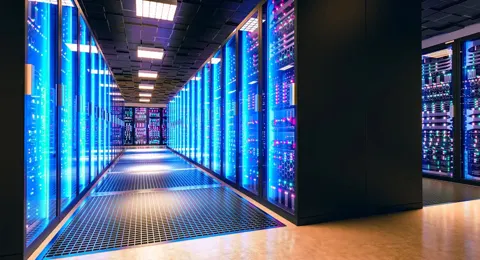
Oracle asks Blue Owl to pause rent if $165 billion data-center project slips past 2028
Oracle has asked Blue Owl Capital to pause rent payments if its $165 billion data-center project is delayed beyond 2028. Oracle says its 2.45-gigawatt New Mexico facility remains on track for 2028, but cites state regulations as an obstacle to recognizing revenue. -
iPhone’s Accessibility settings include a grayscale display option
iPhone’s Grayscale filter switches the display to black and white and may ease eye strain, help people with some types of colorblindness or reduce distractions. Enable it in Settings > Accessibility > Display & Text Size > Color Filters, then select Grayscale. -
A 30-minute Gamescom demo puts NEO BERLIN 2087’s visuals on show
At Gamescom 2026, CGMagazine played a 30-minute demo of Elysium Game Studio’s indie NEO BERLIN 2087, praising its detailed visuals and crime-scene investigation, including reliving victims’ final hours, but finding combat low-stakes; it is planned for 2028. -
Apple may reserve OLED touch for a $3,000-plus MacBook Ultra
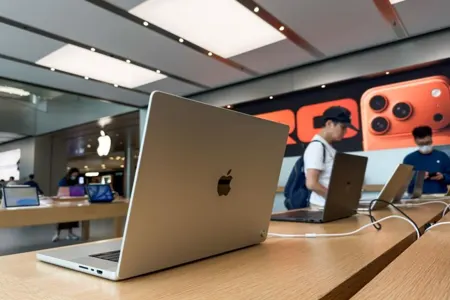
A Forbes analysis argues Apple could launch a MacBook Ultra costing more than $3,000, with an OLED touchscreen, instead of adding those costly features to standard MacBook Pros. The premium tier, it says, could help protect margins and limit overlap with iPad Pro. -
IonQ’s Superion 256 is slated for 2027 deployment at Nvidia center
IonQ says its Superion 256 will be the first on-premise quantum processor deployed at Nvidia’s Accelerated Quantum Research Center, with deployment planned for 2027. The center will support research on hybrid quantum-classical systems. -
Google, OpenAI and Anthropic explore a self-regulatory AI safety body
Google, OpenAI and Anthropic are discussing a self-regulatory AI safety body, reportedly targeted for late 2026 or early 2027. Proposed rules include pre-release third-party tests, incident reporting and checks on voluntary pledges. The body has not launched. -
Meta says ads for Alex Gibney’s Musk documentary are being restored
Meta says it is restoring ads for Alex Gibney’s documentary “Musk,” after The Hollywood Reporter reported that Meta, TikTok, YouTube and X had rejected trailer promotions. Meta called its rejection an error; it has not provided further details. -
Motley Fool picks AMD over Arm for agentic AI investment
The Motley Fool favors AMD over Arm for agentic-AI data-center chips, citing AMD's forecast of a $220 billion server-CPU market and potential 50% share. It calls Arm a sell, pointing to a forward P/E near 140 and expected smartphone-volume declines. -
Fastly shares rose 14% after Investor Day; its network appeared in 29.3% of Meta Muse tests
Fastly is expanding beyond content delivery into security, compute and observability; Odd Diligence found its infrastructure in 29.3% of Meta’s Muse tests. Shares rose 14% after its Sept. 22 Investor Day, where management outlined a path to double-digit annual growth. -
Motley Fool writer says Texas Instruments could benefit from AI robots
Motley Fool’s Reuben Gregg Brewer argues Texas Instruments could benefit if AI-powered robotics expand: its analog chips help convert real-world inputs into digital signals. The stock yields about 2.2% and has raised its dividend for 23 consecutive years. -
Huang says Hinton’s 10%–20% AI-collapse estimate lacks scientific basis
Nvidia CEO Jensen Huang called Geoffrey Hinton’s estimate that AI has a 10%–20% chance of causing societal collapse “not grounded on science” on Ezra Klein’s podcast. Hinton has also called such odds a “wild guess,” while maintaining his AI safety concerns. -
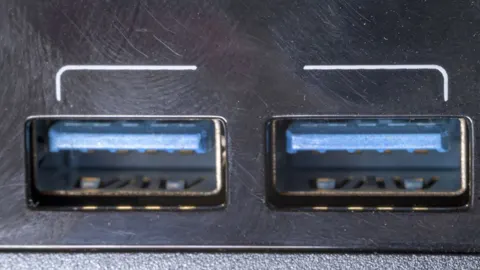
An SS mark on older USB ports signals SuperSpeed of at least 5Gbps
The “SS” mark on a USB port stands for SuperSpeed, the label once used for USB 3.x connections. On older computers and AV gear, it indicates at least 5Gbps transfer speed; the USB-IF dropped the SuperSpeed and USB 3.x marketing names in 2022. -
Open challenge lowers estimated GPU cost of quantum-safe Bitcoin transaction to $67
A one-week open challenge by StarkWare, Yukon Research and Eigen Labs cut the estimated GPU-compute cost of building a quantum-safe Bitcoin transaction from about $320 to roughly $67, with developers using AI models holding the top records.