Technology & Science news summaries — Page 2
Essential facts and source links for recent technology & science stories.
-
Wall beneath Paris hospital may support Île de la Cité as Lutetia’s original site
A roughly 20-meter wall beneath Paris’s Hôtel-Dieu hospital on Île de la Cité may be part of Lutetia’s ramparts, supporting the island—not Nanterre—as the ancient city’s original site. The culture ministry says its function and date still need verification. -
IonQ gains after quantum milestone and Nvidia research partnership
IonQ shares rose Wednesday after IonQ demonstrated real-time error decoding on one CPU across hundreds of logical qubits and millions of logical operations. It will install its Superion 256 at Nvidia’s quantum research center, integrating the platform with Nvidia’s AI systems. -
Dalian team reports oil-refining membrane method used 91% less energy in tests
Interesting Engineering reports a Chinese team's membrane method used 91% less energy than standard distillation in tests. It separated a 15-component light naphtha mixture into three product groups, with 85%–90% recovery; performance at industrial scale remains unproven. -
Anduril takes first in XPRIZE wildfire track; no team fully extinguishes test fire
Anduril won first place in XPRIZE’s autonomous wildfire-response track, earning $1.2 million and a $1 million detection bonus. All three finalists found the target fire within 10 minutes, but none fully extinguished it, leaving the grand prize unclaimed. -
Meta unveils keychain-sized Muse Charm, available for purchase by December
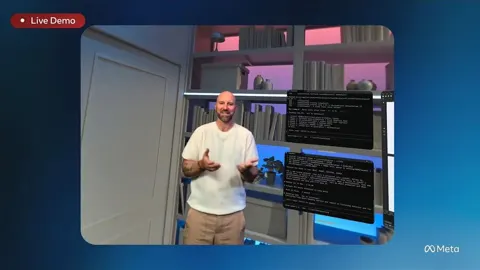
Meta unveiled Muse Charm, a keychain-sized AI handheld for its Muse assistant; it will be available for purchase by December. Muse is adding live video chat, real-time voice conversations with custom voice options and an email address for each user's agent. -
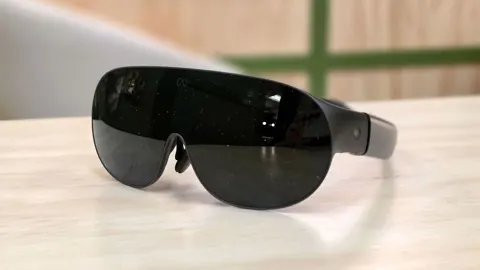
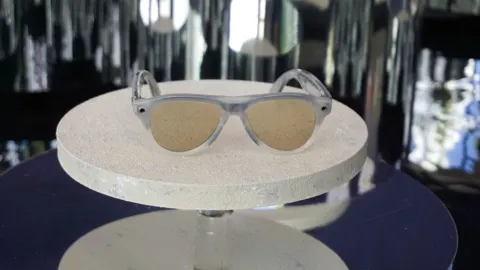
Meta expects its 100-gram VR glasses to ship in spring 2027, starting at $1,299
At Connect 2026, Meta showed VR glasses planned to ship in spring 2027 from $1,299. Meta says the 100-gram device uses eye tracking and hand gestures, but the reviewer found selection cues hard to see and the virtual keyboard difficult to use. -
Tiny drones use two whiskers to map nearby spaces by touch
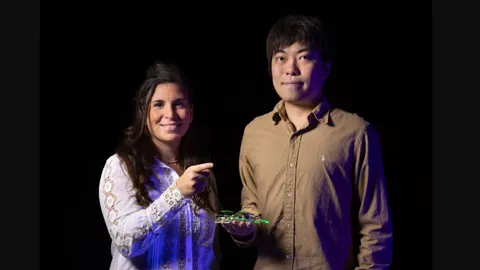
Researchers at Delft University of Technology developed a drone that navigates by touch. Designed for drones under 100 grams, it uses two nose-mounted whiskers and pressure sensors to detect contact, avoid obstacles and build a basic picture of nearby spaces. -
Nansen CEO sees care work and human mentors as harder to automate
Nansen CEO Alex Svanevik said nursing and other hands-on care jobs may be harder to automate because they require physical presence and trust. He expects AI tutors to spread, but says children will still need human mentors; he also sees live entertainment as resilient. -
Polybot’s tomato robot advances from first pick to full greenhouse rows
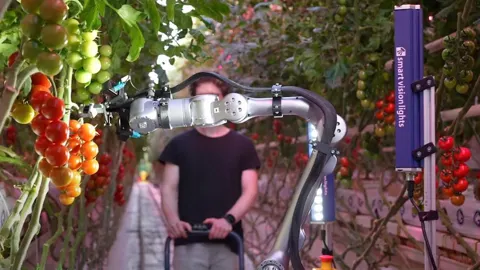
Polybot’s autonomous truss-tomato harvester progressed from its first independent pick in May 2025 to harvesting full greenhouse rows by December, the article reports. The Tübingen startup trains it on human demonstrations rather than hand-coding each step. -
Meta adds an opt-out for smart-glasses visuals used to train its AI
Meta will let smart-glasses users opt out of using camera-based Meta AI interactions to train its models. The company says opted-out visuals can still be processed to answer a request, then are discarded, and won’t be shown to third-party contractors in other countries. -
Oppo's Find X10 Pro Max leads China launch with three 200MP cameras
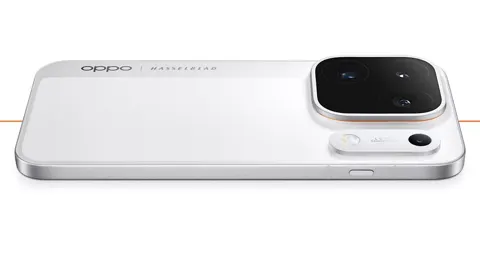
Oppo has launched its Find X10 series in China, led by the Pro Max, which has three 200-megapixel rear cameras developed with Hasselblad and a MediaTek Dimensity 9600 Pro chip. Oppo says a global release is coming soon but has not announced a date. -
Meta’s Ray-Ban Display arrives in the UK, France, Germany, Italy and Canada Oct. 13
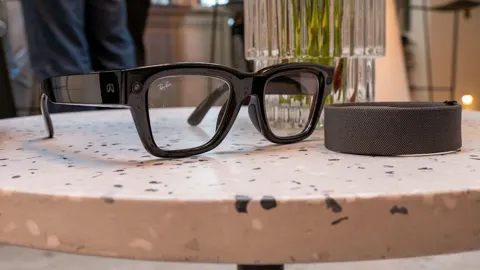
Preorders for Meta’s Ray-Ban Display glasses open today ahead of their Oct. 13 sale in the UK, France, Germany, Italy and Canada. The glasses add a 600 × 600 in-lens screen for app and AI interactions; prices start at £749 in the UK and €899 in Europe. -
$1,299 Meta VR glasses lead a three-model smart-glasses debut
At Meta Connect on Wednesday, the company introduced its first Meta VR Glasses, priced at $1,299 and slated for spring 2027, plus $349 camera-free Ray-Ban Meta Audio glasses and $449 third-generation Ray-Ban Meta glasses with longer battery life and improved microphones. -
Meta demos holographic avatars for Ray-Ban Display and new VR glasses
Meta announced at Connect that holographic avatars are coming to Ray-Ban Display glasses and its new VR glasses; Engadget tried both in demos. The feature remains an early preview, with Ray-Ban Display early access planned for this fall and calls limited by device. -
Quake Champions drops live-service systems in $10 Steam transition
Quake Champions has switched from free-to-play to a $10 Steam game, removing its battle pass, store, loot boxes and premium currencies. All champions are unlocked, most vanity items are available to everyone, and players who previously played on Steam get the new version at no. -
Zuckerberg says Meta expects small fees from Muse transactions
Mark Zuckerberg said Meta expects to earn small fees from transactions through its Muse AI agent over time, while keeping it free for a huge number of tokens. The company added PayPal and retail integrations and is bringing Expedia travel and Instacart grocery services to Muse. -
Openings help military parachutes stay stable in flight
Openings in military parachutes regulate airflow, helping steady the canopy and prevent violent rocking or collapse that could send a jumper into an uncontrolled fall. The T-11 static-line chute has deliberate openings and descends at about 19 feet per second. -
Collectors can track ungraded cards in PSA’s updated app
PSA rolled out a Collection app update on September 23, letting collectors add ungraded cards alongside graded ones, follow individual cards and estimated portfolio values over time, organize them in folders, and share public collections or offer them for sale. -
Russia tests 5.45mm rifle round that splits in flight to target small drones
Russia is developing a 5.45mm cartridge for standard AK-12 rifles that splits into several projectiles in flight to target small drones. Reported tests found elements reaching drone batteries and electronics, but battlefield effectiveness remains unproven. -
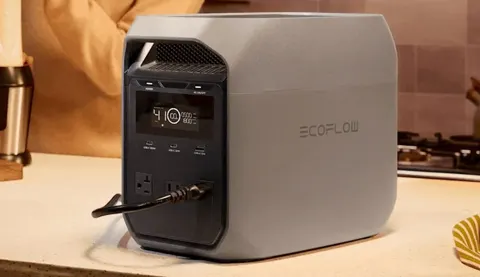
EcoFlow user links overnight battery drain to inverter left on
A Reddit user reported that an EcoFlow Delta 3 Classic powering a garage freezer fell from 60% to 30% overnight—even with the freezer switched off from midnight to 7 a.m.—and said the inverter, left on, appeared to account for about 300 watt-hours of loss. -
Lamar flood network expands with 35 sensors and 50 rain gauges
Lamar University is expanding its Southeast Texas flood network with 35 additional sensors and 50 rain gauges under a General Land Office grant. Its 80 sensor sites cover about 6,000 square miles in seven counties; residents can view data online. -
X's new livestream API adds scheduling and chat moderation tools
X has launched an updated livestream API that lets third-party video platforms facilitate X streams and gives creators tools to schedule broadcasts, publish and monitor them, and read, reply to or moderate live chats, including muting or removing viewers. -
Charlie Blackwell-Thompson encourages students as Artemis III work advances
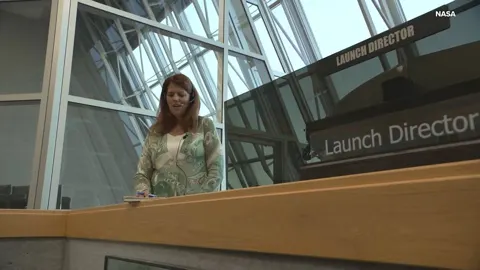
NASA’s first female launch director, Charlie Blackwell-Thompson, visited the Great Lakes Science Center to encourage students to consider STEM careers. She says Artemis III preparations are advancing; the mission is scheduled to launch no earlier than June 2027. -
Meta patched Muse flaw that could let attackers control its Mac AI agent
Meta patched a zero-day in its Muse Mac AI agent after security researcher Patrick Wardle found it could let an attacker with code already running on a Mac redirect dictation, capture voice prompts and a Muse authentication token, then control the agent. -
Mark Cuban’s 2024 answer: trust a guide dog, not a self-driving car
In a 2024 WIRED interview, Mark Cuban said he’d trust a seeing-eye dog over a self-driving car, arguing that a dog can sense issues and identify “adversarial” situations better than AI. The interview is roughly two years old, so the remark should not be read as his current view. -
Qualcomm maps personal AI plans across glasses, hearables and PCs
At its Snapdragon Summit, Qualcomm outlined a personal-AI ecosystem for phones, PCs, cars and wearables, introducing glasses and pin designs and an AI hearables platform. It said workloads could run on-device or in the cloud based on privacy, latency and connectivity. -
iFi’s UP Play Max brings aptX Lossless to USB-C devices for $89
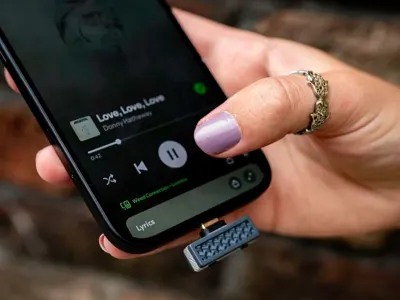
iFi Audio has announced the UP Play Max, a USB-C Bluetooth transmitter available for $89 in the U.S. It supports codecs including aptX Lossless and, through an app, an aptX Adaptive low-latency mode; it can connect two headphone pairs using SBC.