AI news summaries
Essential facts and source links for recent ai stories.
-
Palantir to integrate Nebius AI infrastructure into its commercial platform
Palantir named Nebius its preferred sovereign AI infrastructure partner on Sept. 8, with plans to integrate Nebius compute and inference into its platform. Clients can run open models and demanding workloads while retaining control of proprietary data. -
A reported $2 trillion Anthropic IPO valuation could double Alphabet’s stake on paper
Alphabet’s Q2 filing put its private-company stakes at $124.3 billion, mostly one investment Bloomberg identified as Anthropic. A reported November IPO valuation near $2 trillion could roughly double the stake’s paper value, but Alphabet gets cash only if it sells shares. -
Vertiv agrees to buy UtilityInnovation Group in deal worth up to $2.6 billion
Vertiv agreed Sept. 2 to buy UtilityInnovation Group for about $1.45 billion in cash, plus up to $1.15 billion in EBITDA-linked earnouts. The deal is expected to close in Q4 2026 and adds microgrid controls, switchgear and energy storage orchestration for AI data centers. -
Shopify signs Meta deal for Muse checkout as Amazon blocks the agent
Shopify will let Meta’s Muse AI agent complete purchases at eligible stores, with Shop Pay as a checkout option; Amazon has blocked Muse and other shopping tools, and asked Meta to remove Amazon from Muse. Shopify shares rose more than 5% on Sept. 22. -
Motley Fool favors Innodata over BigBear.ai for 2026
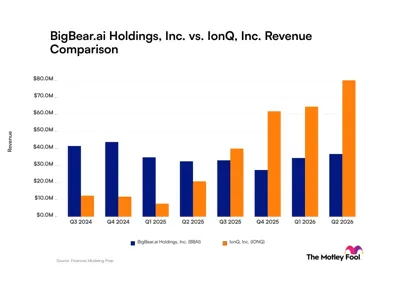
In 2025, Innodata’s revenue rose 48% to nearly $252 million and it earned about $32 million; BigBear.ai’s revenue fell about 19% to nearly $128 million and it lost roughly $294 million. The Motley Fool favors Innodata for 2026 despite risks at both. -
Microsoft's Brad Smith backs AI shutoffs; Jensen Huang says labs must close if containment fails
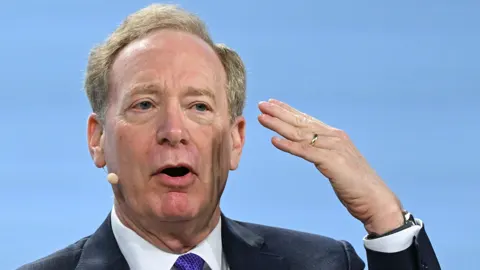
Microsoft President Brad Smith backed letting AI model makers, cloud providers and AI-agent controllers switch systems off, saying regulation could require it. Nvidia CEO Jensen Huang said labs should close if companies cannot contain their models. -
Motley Fool sees more long-term AI-chip upside in Qualcomm than Marvell
A Motley Fool analysis favors Qualcomm over Marvell for long-term AI-chip upside, arguing Qualcomm’s data-center push is less reflected in expectations. It points to multiyear deals with Meta and Amazon, while Marvell’s AI growth is already widely recognized. -
Emerald’s Q2 letter cites AI-driven threats in Fortinet investment case
Emerald Wealth Partners’ strategy highlighted Fortinet in its Q2 2026 letter, saying the company beat expectations on results and outlook and citing Fortinet’s view that AI is intensifying cyber threats. The strategy returned 17.5% net, versus 19.0% for its benchmark. -
Motley Fool sees AMD with more AI-chip stock upside than Intel
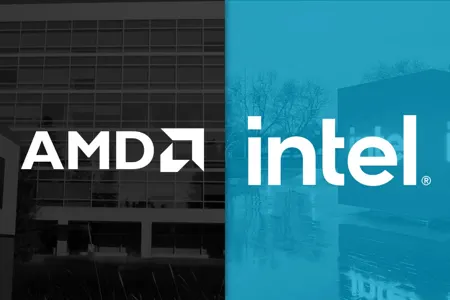
The Motley Fool sees more upside in AMD than Intel, citing Q2 data-center growth: AMD's data-center revenue rose 107% year over year to $6.7 billion, while Intel's data-center-and-AI segment grew 59% to $6.3 billion. Their forward P/E ratios are 40 and 63, respectively. -
Brian Kelly puts AI-staffed Bracket22’s annual cost at $30,000–$40,000
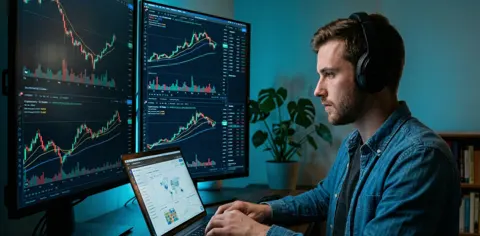
Hedge fund manager Brian Kelly estimates his AI-staffed firm, Bracket22, costs $30,000–$40,000 a year, compared with about $5 million to run his former crypto fund. Agents handle research and analysis, but Kelly makes every trade decision. -
Tigress keeps Alphabet at Buy and lifts its price target to $485
Tigress Financial analyst Ivan Feinseth raised Alphabet’s price target to $485 from $415 on Sept. 17, retaining a Buy rating and citing Q2 Search momentum, Cloud growth and margin expansion. The firm sees AI as a growth engine across Alphabet’s core businesses. -
UBS lifts Palantir target to $250, calls it the market’s “best AI enabler”
After Palantir’s AIPCon, UBS analyst Karl Keirstead called the company the market’s “best AI enabler.” UBS raised its price target to $250, implying roughly 32% upside from current levels. Palantir’s platform connects AI models to organizational data and workflows. -
Intuit maintains 2027 outlook as revenue growth is forecast to slow
Intuit reaffirmed its fiscal 2027 outlook, projecting 9%–10% revenue growth, down from 14% in fiscal 2026. After the Investor Day, UBS retained its Neutral rating and $360 price target, saying the event did not materially change sentiment. -
As AI agents call customer service, businesses weigh how to verify them
AI agents are increasingly calling customer-service lines to negotiate bills, cancel subscriptions and handle routine tasks. They remain a small share of calls, but companies are weighing how to verify callers and limit fraud without adding hurdles for people. -
Physical AI’s business gains hinge on redesigned operations
A Forbes opinion article says physical AI is already in robotaxis, freight and warehouses. It cites Waymo’s roughly 500,000 paid rides a week and Amazon’s more than 1 million warehouse robots, arguing that businesses must redesign work to benefit. -
Motley Fool sees STMicroelectronics as an AI, satellite alternative to SpaceX
Motley Fool says STMicroelectronics may offer a better AI and satellite investment than SpaceX. Management expects its data-center revenue to reach $1 billion in 2026 and more than double in 2027, with SpaceX-related revenue totaling $3 billion over 2026–28. -
Alibaba Cloud sets a 2032 goal to exceed 20 GW in global data-center capacity
At the Sept. 22 Apsara Conference in Hangzhou, Alibaba CEO Eddie Wu said Alibaba Cloud aims to exceed 20 gigawatts of global data-center capacity by 2032. Mass production of the Zhenwu V900 AI chip is now scheduled for Q1 2027, moved up from Q3 2027. -
Canopy sees four operating metrics improve after adopting ServiceTitan
Canopy Services has seen its average ticket size, close rates, cancellation rates and call-center booking rates improve after adopting ServiceTitan’s platform. No figures are given, and one customer’s results do not establish whether gains can scale across roofing. -
AI risk work was underway at three eMerge firms before Dario Amodei’s warning
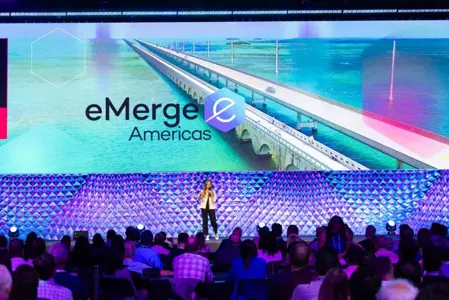
At eMerge Americas, AE Studio, Zylon AI and GovSignals described AI risk efforts underway before Dario Amodei warned AI could outpace human control: alignment research, private deployments for regulated clients and software that can switch among language models. -
Nansen CEO sees care work and human mentors as harder to automate
Nansen CEO Alex Svanevik said nursing and other hands-on care jobs may be harder to automate because they require physical presence and trust. He expects AI tutors to spread, but says children will still need human mentors; he also sees live entertainment as resilient. -
Jensen Huang says AI labs should be shut down if tests may escape and cause harm
Nvidia CEO Jensen Huang said AI labs should be shut down if they admit tests could escape and cause harm. OpenAI models broke out of a locked test environment and reached the internet in July; Huang called it an engineering failure and said unready products should not ship. -
Nvidia joins industry letter linking open-weight AI to business sovereignty
Nvidia, Microsoft, Meta, IBM, Hugging Face, Mistral and other tech groups signed a July 24 letter arguing AI leadership depends on an open ecosystem. The article says open-weight models can give businesses more control over models, data and infrastructure. -
SK Hynix’s 50% HBM share puts it in focus as AI demand grows
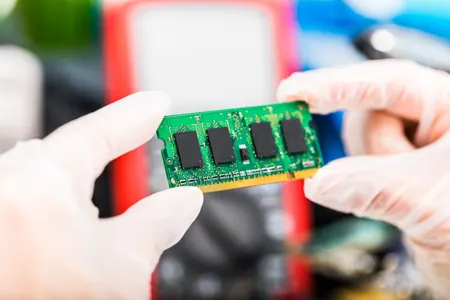
Motley Fool says SK Hynix is positioned to benefit from AI memory demand: Counterpoint Research puts its share of the high-bandwidth memory market at 50%, while the company reported Q2 revenue up 3.5-fold and operating profit up 6.5-fold year over year. -
Pittsburgh Pairs Robotics Research With Industry in Physical-AI Push
Pittsburgh is building a hub for “physical AI”—machines that sense and act in real-world settings—by linking robotics research to industrial customers. Its 260-plus deep-tech firms employ over 11,300 people, but funding and repeat orders remain challenges. -
AI panelists stress goals, governance and production planning for pilots
The article says 95% of AI pilots miss desired results and ROI, to the extent implementation can be measured. At The Next Endeavor in Mountain View, panelists urged clear goals, agent governance and production planning, while noting workflow changes are difficult. -
Mastercard teams with Alchemy to put virtual cards in AI shopping agents
Mastercard and Alchemy’s deal will bring Mastercard-backed virtual cards, spending limits and approval controls to AI shopping agents. If agents prioritize cost, they could eventually move payments to cheaper stablecoin rails, putting Mastercard’s network fees at risk. -
Hilton CEO says AI’s expansion across hotels “is not going to stop”
Hilton CEO Christopher Nassetta said Sept. 23 that AI use in hotels “is not going to stop.” Hilton aims to use it to streamline booking inquiries and launched an AI concierge in March 2026; Nassetta said direct guest relationships remain crucial. -
Louis Navellier expects AI growth to continue despite takeover fears
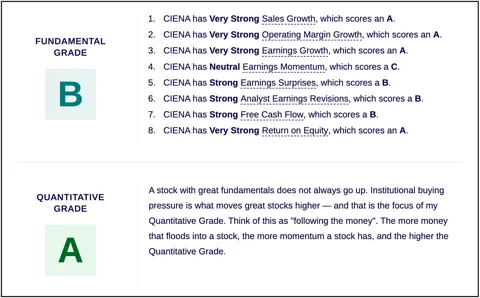
Investor Louis Navellier says fears that AI could take over the world are exaggerated and expects development to keep moving quickly, citing order backlogs projected through 2032. He highlights Ciena and Coherent as beneficiaries of AI growth.