

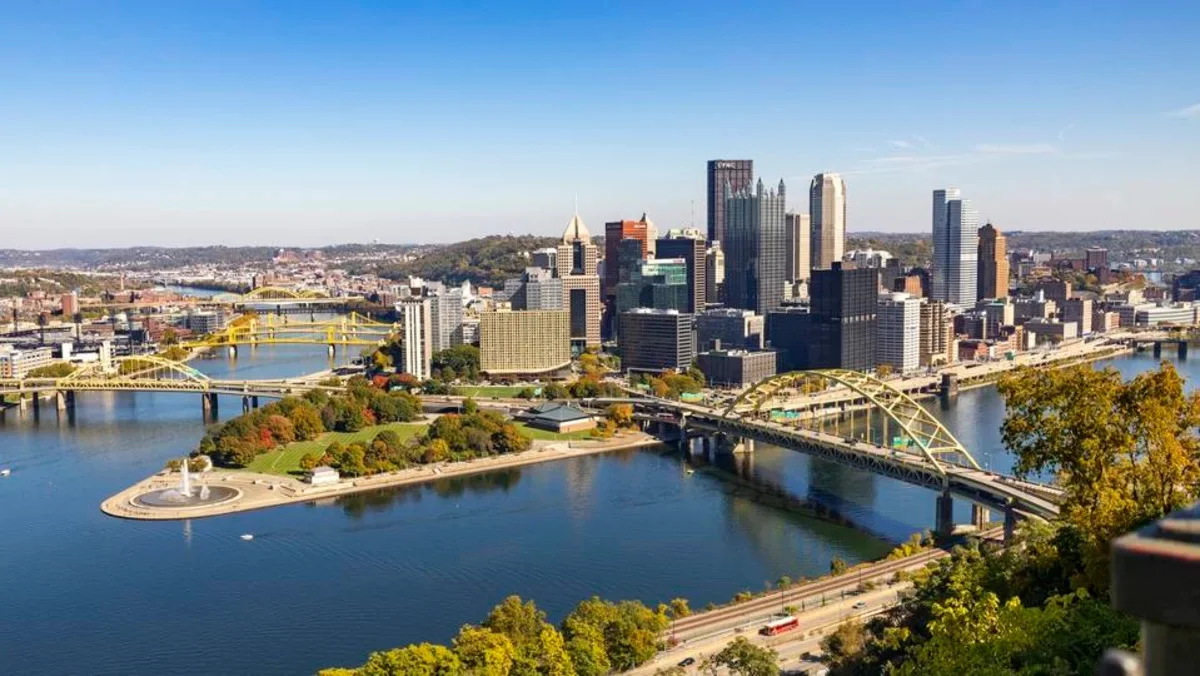
Pittsburgh is building a hub for “physical AI”—machines that sense and act in real-world settings—by linking robotics research to industrial customers. Its 260-plus deep-tech firms employ over 11,300 people, but funding and repeat orders remain challenges.
Aurora had logged nearly 440,000 driverless miles across ten Sun Belt routes by the end of June. In July, it launched a second-generation truck with Roush, which targets production of 1,000 a year. Gecko Robotics sends machines into power plants and refineries to inspect equipment. Crunchbase counted $47.4 billion across 521 physical-AI deals in the first half of 2026, more than in the previous three years combined.
Local funding is concentrated: Pittsburgh companies raised a record $2.06 billion in institutional venture capital in 2025, but four companies took more than three-quarters of it. Uncommitted capital at local venture firms was $23.2 million, down more than 80% since 2022, according to Innovation Works. Firms also need manufacturing and testing space. During September’s AI and Robotics Week, Gov. Josh Shapiro called for federal AI guardrails, while Sens. John Fetterman and Dave McCormick argued against them; local companies prefer one federal rulebook to 50 state rules.
