Health news summaries
Essential facts and source links for recent health stories.
-
Study links smartphones at 12 to eating-disorder symptoms at 14
Among nearly 9,000 U.S. adolescents, almost one-quarter who had a smartphone at 12 reported at least one eating-disorder symptom by 14, compared with fewer than 16% of those without one. Researchers said more studies are needed to understand the link. -
Bristol Myers says arlo-cel met primary endpoint in Phase 2 myeloma trial
Bristol Myers Squibb said its Phase 2 QUINTESSENTIAL trial of arlo-cel met its primary endpoint in quadruple-class-exposed adults with relapsed or refractory myeloma, reporting a statistically significant and clinically meaningful overall response rate. -
Guggenheim's Nanobiotix Buy rating centers on J&J-backed 2027 trial
Guggenheim began covering Nanobiotix with a Buy rating and $64 target, citing J&J-partnered JNJ-1900’s Phase 3 trial in head and neck cancer patients ineligible for platinum chemotherapy; it sees high odds of success, with final data expected in H1 2027. -
Some retirees’ minor children may qualify for Social Security benefits
Minor children of retirees receiving Social Security may qualify for up to half a parent’s benefit; those whose deceased parent received benefits may get up to 75%. Payments end at 16, or at 18 for a child with a disability, the agency says. -
Drooling during sleep is common, but alone it cannot identify sleep apnea
Sleep drooling is common and often harmless: people swallow less at night, and an open mouth can let saliva escape. Frequent or excessive drooling may accompany swallowing or breathing problems, but alone it is not a reliable sign of sleep apnea. -
Merck agrees to $400 million upfront for global rights to China-developed cancer drug
Merck agreed Monday to pay Chinese biotech SciBrunch Therapeutics $400 million upfront for global rights to experimental cancer drug SPR2015; the deal could be worth up to $2.13 billion. It is the latest U.S. license of a China-developed medicine. -
Arizona man faces charges over alleged $33 million Medicaid fraud
Maurice Marcell Williams, 48, faces health care fraud and money laundering charges. Prosecutors allege he billed Arizona Medicaid more than $33 million and was paid about $19.7 million from May 2022 to May 2023, targeting American Indian Health Care Program members. -
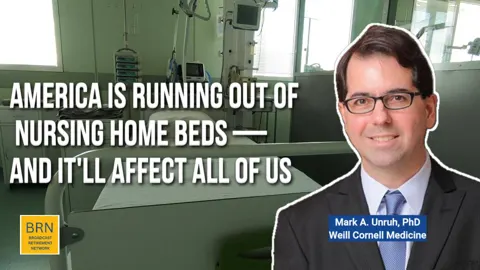
U.S. nursing-home capacity falls as the 80-plus population is projected to grow
The U.S. faces a growing nursing-home capacity gap: the population aged 80 and older is projected to rise 45% over the next decade, while staffing shortages have led about half of nursing homes to limit new admissions, Weill Cornell's Mark Aaron Unruh says. -
700,000 seniors started GLP-1 drugs since Medicare coverage began, Lilly CEO says
Eli Lilly CEO Dave Ricks told CNBC that 700,000 seniors have started GLP-1 drugs since Medicare coverage for them began, and Lilly is capturing 7 in 10 prescriptions. Reuters reported that Lilly said 30% of new U.S. oral GLP-1 patients chose its Foundayo pill. -
FDA fast-tracks Insmed’s bid to broaden ARIKAYCE use for MAC lung disease
FDA accepted Insmed’s application to expand ARIKAYCE use for MAC lung disease and granted priority review; the target decision date is Jan. 28, 2027. Its accelerated approval covers adults whose sputum cultures remain positive after at least six months of multidrug treatment. -
FDA approves Lilly’s Olumiant for severe alopecia areata in patients 12 and older
On Sept. 25, the FDA approved Eli Lilly’s once-daily Olumiant (baricitinib) for severe alopecia areata in patients 12 and older, extending its use beyond adults. Its boxed warnings include serious infections, death, cancer, major heart events and blood clots. -
Gilead’s faster growth contrasts with Medtronic’s diversification and dividend record
Gilead’s Q2 sales excluding Veklury rose 10%, with HIV sales up 12%; Medtronic posted 13.7% organic growth in Q1 FY2027, partly boosted by an extra fiscal week. Gilead has faster underlying growth; Medtronic is more diversified and has a 49-year dividend-growth record. -
Medtronic’s revenue growth makes its turnaround more convincing than Pfizer’s
Medtronic’s turnaround looks more convincing for now, the analysis concludes: fiscal 2026 organic revenue grew 5.8%, while Pfizer’s operational revenue growth was 1% in Q2. Pfizer’s newer products are expanding, but falling COVID sales and generic competition remain headwinds. -
Novo Nordisk and Orbis sign up-to-$1.4 billion oral-drug deal
Novo Nordisk and Orbis Medicines signed a deal worth up to $1.4 billion to discover oral treatments for cardiometabolic diseases often treated with injections. The collaboration remains at the discovery stage, so any commercial payoff depends on further development. -
Pfizer agrees to share overseas drug-price gains with HHS
Pfizer agreed to share with HHS part of extra net revenue from higher overseas prices on existing drugs under its MFN deal. The provision runs Jan. 1, 2026–Jan. 20, 2029; the share and covered drugs are redacted. HHS says the money is intended to lower U.S. costs. -
Novo Nordisk targets over five multi-blockbuster launches by 2030
Novo Nordisk is open to deals as it broadens beyond obesity, targeting more than five multi-blockbuster drug launches by 2030 and over DKK 150 billion ($23 billion) in pipeline sales by 2035. Obesity and diabetes generated over 90% of 2025 sales. -
Howden report puts European clubs’ five-year injury bill at €3.45 billion
Howden’s latest men’s European football injury index puts clubs’ injury costs at €3.45 billion ($3.94 billion) over five years. Paris Saint-Germain ranked first, followed by Real Madrid and Barcelona; the ranking predates this season’s injury list. -
Medtronic lifts FY27 growth forecast after strong first-quarter results
Medtronic raised its fiscal 2027 organic revenue-growth outlook to 7.25%–7.75%, from 6.75%–7.25%, after a strong first quarter. Q1 organic growth was 13.7%, including $570 million from an extra fiscal week, a one-time contribution. -
California produces about a quarter of U.S. food, yet hunger persists
A MarketWatch columnist advised a 77-year-old living on Social Security, who gives leftover money to homeless people, to protect her own finances. California produces about a quarter of U.S. food, but that supply alone cannot guarantee access or affordability. -
Immunovant ends IMVT-1402 development for cutaneous lupus after Phase 2b miss
Immunovant ended IMVT-1402’s cutaneous lupus program after its Phase 2b trial missed the primary endpoint: no statistically significant placebo difference in Week 12 percent change in CLASI-A score. Five other program timelines are unchanged, the company said. -
Viking trial found patients maintained 97% of weight loss on VK2735 injections
Viking Therapeutics said patients lost 17.8% of their weight after 21 weeks on injectable VK2735 at 17.5 mg weekly. After 12 weeks on 17 mg every two weeks, they retained 97% of that loss; oral dosing was not included and is due for testing in the trial’s next part. -
From journaling to gardening, eight hobbies may ease stress and anxiety
Eight hobbies—art, writing, running, dancing, gardening, cooking, knitting and reading—may help ease stress and anxiety. A 2016 study found a 45-minute art session lowered cortisol; 2024 research reported that five minutes of reading could reduce stress by nearly 20%. -
Ligand stages up to $41 million for AvenCell drug programs
On Sept. 24, Ligand agreed to provide AvenCell Therapeutics up to $47 million: up to $6 million for its Series C and up to $41 million for drug development. The first development tranche is due at closing; three more depend on clinical milestones and financing conditions. -
Fundraiser for Don Johnson tops $730,000 as wife battles cancer
An online fundraiser for Don Johnson, an 81-year-old Texan delivering lost luggage 12 to 14 hours a day to help pay for his wife Josephine’s pancreatic cancer care, has raised more than $730,000. He says he may now be able to stop working and focus on her care. -
Experts describe irritable male syndrome as a symptom cluster, not a clinical diagnosis
Irritable male syndrome (IMS) is not a clinical diagnosis; experts use it for symptoms often seen in aging men, including irritability, low mood, fatigue and reduced libido. Urologist Justin Houman links the cluster to gradual testosterone decline and hormonal changes. -
Doctors detail five bowel-cancer signs often mistaken for other conditions
Doctors list five often-missed bowel-cancer signs: unexplained weight loss, dark stools, rectal bleeding, new bowel changes and sudden-onset gut symptoms. Some are mistaken for IBS, hemorrhoids or stress; they urge medical evaluation for persistent or unexplained symptoms. -
Dr. Mike Evans urges retirees to invest in health, purpose and friendships
Dr. Mike Evans, a semi-retired University of Toronto professor of family medicine, says retirement plans should include health, purpose and relationships alongside savings. He urges retirees to stay mentally and physically active rather than slip into a passive routine. -
Orman cites $185,500 lifetime health-spending estimate for people turning 65
Suze Orman cited a Fidelity estimate that someone turning 65 this year who enrolls in Original Medicare could spend about $185,500 out of pocket on health care over the rest of their life. The estimate is 7.5% higher than last year and excludes ongoing long-term care. -
Warsh’s inflation warning puts big pharma dividends to a higher-rate test
At its Sept. 16 meeting, the Fed raised rates, and Chair Kevin Warsh said inflation “is too high and has been for too long.” The article reads his remarks as implying further hikes and elevated rates, which could pressure big pharma dividends as Treasuries compete for income.