Technology & Science news summaries — Page 4
Essential facts and source links for recent technology & science stories.
-
Qualcomm pitches two Snapdragon chips for on-device AI in premium Android phones
Qualcomm unveiled the Snapdragon 8 Elite Gen 6 and 8 Elite Extreme Gen 6, two smartphone chips it is pitching for on-device AI and AI agents. The chips are intended for premium Android phones, where downloaded models can run on the device rather than relying on cloud services. -
AI panelists stress goals, governance and production planning for pilots
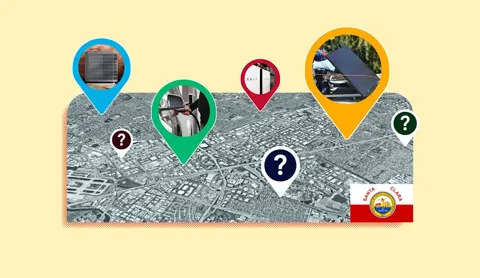
The article says 95% of AI pilots miss desired results and ROI, to the extent implementation can be measured. At The Next Endeavor in Mountain View, panelists urged clear goals, agent governance and production planning, while noting workflow changes are difficult. -
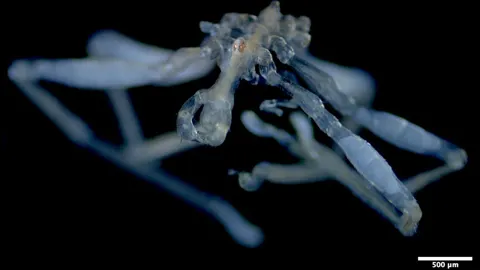
UBC study describes two new sea spiders from Canada's Salish Sea
University of British Columbia researchers described Callipallene pilosuspedes and Tanystylum kiixin, two new sea spiders found in the Salish Sea near Vancouver at about 60 feet deep. They are the first sea spider species newly described from the area in nearly 100 years. -
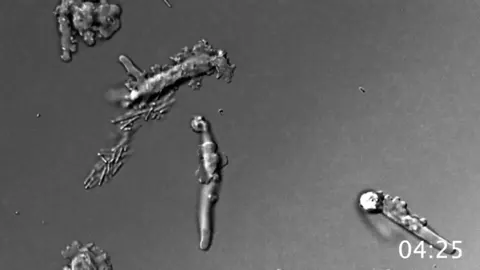
Lassen's fire amoeba reproduces at a record 145°F for eukaryotes
NASA-supported researchers discovered Incendiamoeba cascadensis, the “fire amoeba,” in Lassen Volcanic National Park. It reproduced in water recorded at 145°F, five degrees above the previous known eukaryote limit, setting a new heat-tolerance record for complex life. -
Hilton CEO says AI’s expansion across hotels “is not going to stop”
Hilton CEO Christopher Nassetta said Sept. 23 that AI use in hotels “is not going to stop.” Hilton aims to use it to streamline booking inquiries and launched an AI concierge in March 2026; Nassetta said direct guest relationships remain crucial. -
Halliday’s $599 G2 glasses promise AI meeting help without a camera
Halliday’s camera-free G2 smart glasses cost $599 and target meetings with live captions, translation in 45-plus languages and AI summaries. Shipments are expected to begin in September 2026; independent testing has not yet verified their performance. -
Okta teams with AWS, CrowdStrike and Salesforce on AI-agent safeguards
At Oktane, Okta formed a Blueprint Alliance with AWS, CrowdStrike and Salesforce to develop shared safeguards for AI agents accessing enterprise systems: unique identities, least-privilege access, runtime monitoring and emergency controls to disconnect agents. -
Oregon woman seeks $75,000 from Apple over alleged AirTag alert failure
Jane Doe, an Oregon woman, is suing Apple for $75,000, alleging her former partner hid an AirTag under her car and her iPhone never alerted her that an unknown AirTag was traveling with her. No court has ruled on Apple's liability. -
Xiaomi launches 18 Pro phones with reported 2nm chips and privacy displays
Xiaomi launched the 18 Pro and 18 Pro Max in China on Sept. 23; reports describe their Snapdragon platforms as 2nm, and the phones reportedly have hardware-level privacy screens. Prices start at CNY 5,999; batteries are 7,000mAh and 8,500mAh, respectively. -
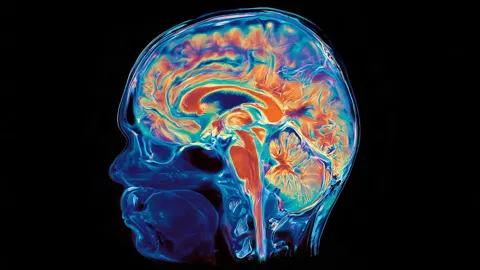
Stanford researchers trace brain regions to two embryonic cell lineages
Stanford researchers found that the forebrain and midbrain arise from Otx2-expressing progenitors, while the hindbrain comes from a separate Gbx2 lineage. The finding could improve lab models of ALS and spinal muscular atrophy, but does not demonstrate a treatment. -
Red Sift launches free tool for BIMI certificate applications
Red Sift has launched a free self-service tool to help brands pursue certificates for displaying logos beside emails through BIMI. The company says 87% of firms that start deployment do not finish, often because of logo, trademark or certificate hurdles. -
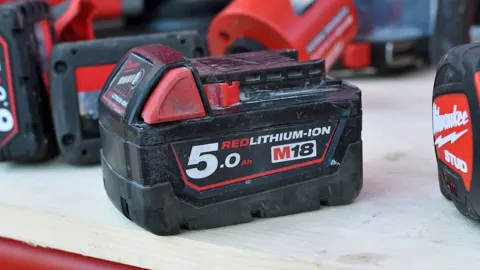
Fully draining Milwaukee tool batteries may reduce capacity and lifespan
SlashGear recommends recharging Milwaukee M12 and M18 lithium-ion batteries before they run flat: full discharge may reduce capacity and lifespan, slow charging and affect battery-management systems. It also warns that low voltage could cause overheating and, in some cases, fire. -
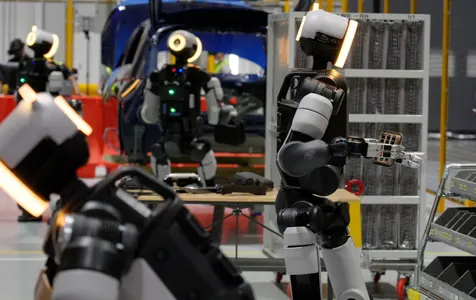
Toyota targets about 400,000 robots from 2028 as workers reportedly train ELEY
Toyota plans to start deploying roughly 400,000 robots across its manufacturing network in 2028; the humanoid share remains unspecified. Workers are reportedly training its wheeled, two-handed ELEY by demonstrating assembly movements with finger-shaped jigs. -
YouTube will let U.S. users shape homepages with custom video feeds
On Wednesday, YouTube announced Custom Feeds, letting users describe a theme and get a matching video carousel on the homepage; they can save multiple feeds. YouTube says the feature will be available to U.S. users on web, mobile and TVs soon. -
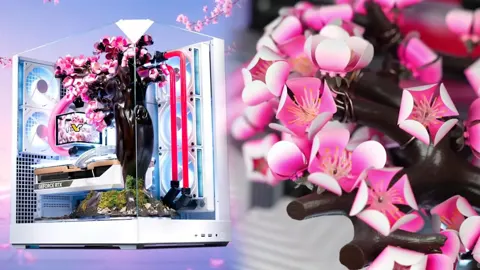
Aftershock’s AU$19,995 Cherry Bloom PC unfurls 70 heat-responsive flowers
Aftershock PC’s Cherry Bloom gaming rig is listed for AU$19,995 (about US$14,200 before shipping), with 70 handcrafted titanium-alloy flowers that passively open as the computer heats up and close as it cools; available descriptions say the movement uses no motors. -
Bentley unveils first EV, Torcal SUV, with 876-hp S version
Bentley unveiled the all-electric Torcal SUV, its first EV and fourth model line. The S version makes 876 hp and hits 60 mph in 2.8 seconds; range is up to 375 miles under WLTP, while pricing, not announced at launch, is estimated at about $250,000. -
Users report stuck iPhone Settings badges for iCloud+ sales prompts
iPhone users report red Settings badges for iCloud+ sales prompts that some cannot dismiss, including among existing subscribers. The promotions can resemble account alerts, but user reports do not establish how widely the behavior occurs across devices or iOS versions. -
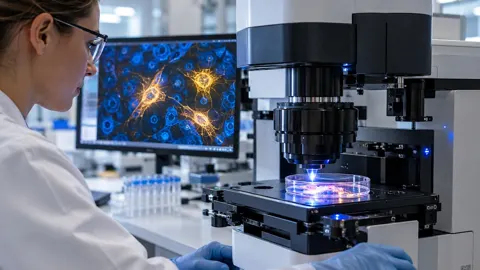
MIT team builds a machine-learning barcode for senescent cells in mice
MIT researchers combined Raman microscopy and gene-expression data to identify signatures linked to senescent cells in mouse lung and skin. A machine-learning classifier turned the signals into a barcode; the method remains preclinical and unvalidated in people. -
PG&E’s Google-backed virtual power plant aims to enroll over 20,000 customers
PG&E’s SHARE program will recruit more than 20,000 California customers willing to let the utility control their Sunrun or Tesla solar-charged batteries or Renew Home smart thermostats to support the grid; participant rewards remain unspecified. -
The A-1 Skyraider’s endurance made it valuable in Vietnam’s jet age
During the Vietnam War, the U.S. Navy and Air Force used the piston-engine Douglas A-1 Skyraider for close air support and rescue escorts. It could carry over 8,000 pounds of ordnance and stay over battlefields for hours; 266 Skyraiders were lost in combat. -
Austrian Danube find is Europe’s largest known Iron Age iron-bar cache
A 2019 Danube discovery by gravel workers near Deinham, Austria, is Europe’s largest known mass find of Iron Age bars: at least 500 bars totaling over a ton, dated to the 3rd or 2nd century B.C. Researchers say the cargo was likely lost in a shipwreck. -
Meta pulls back Muse call test after racist remark and disclosure lapse
Meta rolled back its Muse human-assisted calling test after a contractor made a racist remark during an employee’s bill-negotiation call. The test involved roughly half of Meta’s employees, who were not clearly told a human might take over. -
Bradesco reworked agentic-payments architecture after beta testing
Bradesco found its first agentic-payments system slow, costly and unable to scale safely in employee beta testing, prompting a five-month architecture redesign. The bank now runs customer-facing AI across several core banking experiences for 22 million customers. -
Meta’s Muse agent handled errands but invented a phone number in testing
Meta’s Muse handled moving-quote requests and booked dinner in a test, but also surfaced a long-closed restaurant and invented a phone number. Sensor Tower said the app reached 560,000 daily active users in 11 days and topped Apple’s App Store and Google Play. -
Yahoo Finance panel debates giving Meta’s Muse access to financial details
Yahoo Finance panelists debated giving Meta’s Muse access to passwords or financial information. One said a friend refused when Muse prompted him for a password; another proposed a separate computer or bank account to limit AI access. -
Study ties snail growth spurts to two Queensland cyclones
University of Queensland researchers linked Biggenden Banded Snails’ shell-growth spurts to extreme rainfall after cyclones Marcia (2015) and Debbie (2017) at Coalstoun Lakes in southeast Queensland. One snail was radiocarbon-dated to about 4.5 years old.