Science news summaries — Page 3
Essential facts and source links for recent science stories.
-
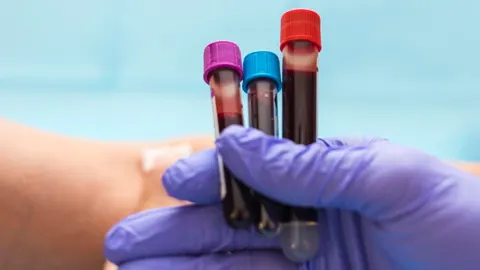
FDA to consider approval of Grail’s Galleri multi-cancer blood test
FDA officials will consider approval of Grail’s Galleri blood test. A study of nearly 143,000 people missed its primary endpoints, but Grail said annual testing with standard screening increased screen-detected cancers and reduced stage IV cases and emergency presentations. -
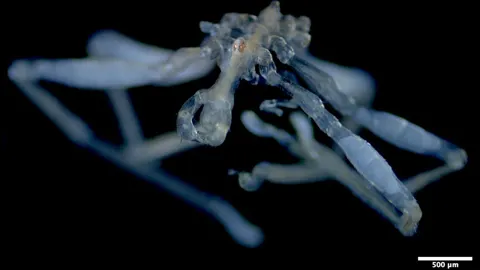
UBC study describes two new sea spiders from Canada's Salish Sea
University of British Columbia researchers described Callipallene pilosuspedes and Tanystylum kiixin, two new sea spiders found in the Salish Sea near Vancouver at about 60 feet deep. They are the first sea spider species newly described from the area in nearly 100 years. -
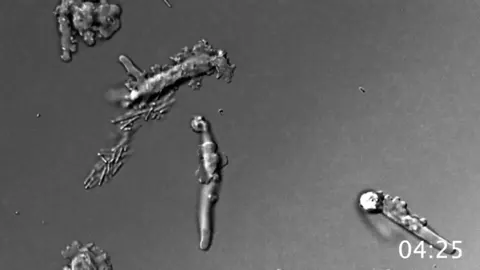
Lassen's fire amoeba reproduces at a record 145°F for eukaryotes
NASA-supported researchers discovered Incendiamoeba cascadensis, the “fire amoeba,” in Lassen Volcanic National Park. It reproduced in water recorded at 145°F, five degrees above the previous known eukaryote limit, setting a new heat-tolerance record for complex life. -
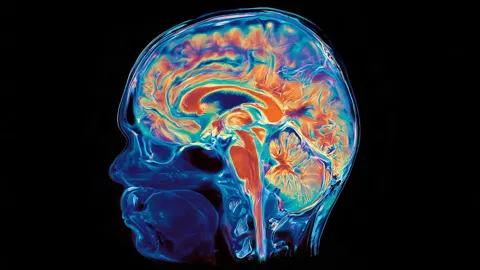
Stanford researchers trace brain regions to two embryonic cell lineages
Stanford researchers found that the forebrain and midbrain arise from Otx2-expressing progenitors, while the hindbrain comes from a separate Gbx2 lineage. The finding could improve lab models of ALS and spinal muscular atrophy, but does not demonstrate a treatment. -
Aug. 27 Chicago-bound train exposure tied to a third measles case
A third measles case has been linked to exposure aboard a Chicago-bound train on Aug. 27, St. Louis County health officials said. The state listed possible exposure sites the person visited during a two-day St. Louis stay, including Busch Stadium and a popular bar. -
Reintroduced elk herd in Great Smoky Mountains now exceeds 250
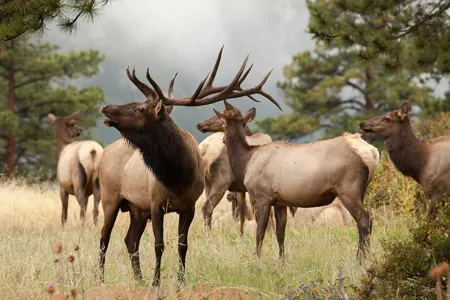
According to WBIR-TV, the Great Smoky Mountains National Park’s elk herd now exceeds 250, after 25 elk were relocated from Kentucky in 2001 and 27 from Alberta in 2002. Native elk had been absent from the area for more than 150 years after hunters drove them to extinction. -
MIT team builds a machine-learning barcode for senescent cells in mice
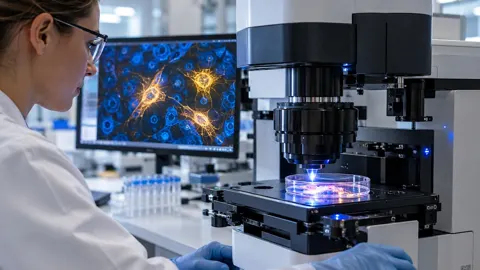
MIT researchers combined Raman microscopy and gene-expression data to identify signatures linked to senescent cells in mouse lung and skin. A machine-learning classifier turned the signals into a barcode; the method remains preclinical and unvalidated in people. -
GPS has not made geography skills obsolete, educators say
Geography educators say GPS has not made the subject obsolete: students still need map-reading skills and mental maps to ask informed questions, interpret spatial information and connect local places with wider economic, political and environmental systems. -
PG&E’s Google-backed virtual power plant aims to enroll over 20,000 customers
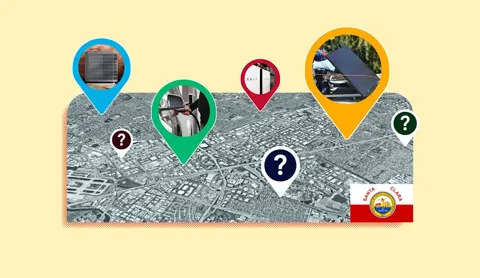
PG&E’s SHARE program will recruit more than 20,000 California customers willing to let the utility control their Sunrun or Tesla solar-charged batteries or Renew Home smart thermostats to support the grid; participant rewards remain unspecified. -
Havant Thicket reservoir delayed to 2034 as Ofwat consults on nearly £1bn budget
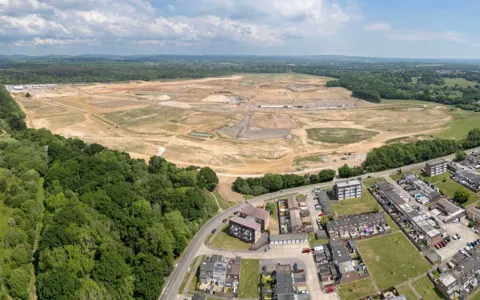
Havant Thicket reservoir in Hampshire is now expected to be completed in 2034, five years later than planned, after Ofwat paused the project over rising costs. The regulator is consulting for three weeks on a nearly £1bn budget, up from £339m in 2022. -
Austrian Danube find is Europe’s largest known Iron Age iron-bar cache
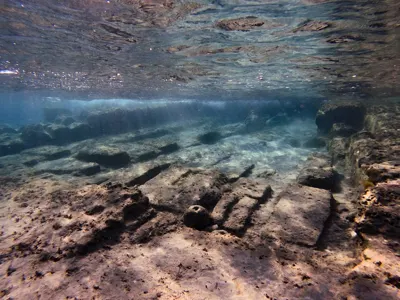
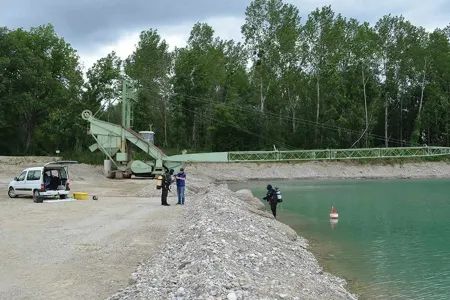
A 2019 Danube discovery by gravel workers near Deinham, Austria, is Europe’s largest known mass find of Iron Age bars: at least 500 bars totaling over a ton, dated to the 3rd or 2nd century B.C. Researchers say the cargo was likely lost in a shipwreck. -
Study ties snail growth spurts to two Queensland cyclones
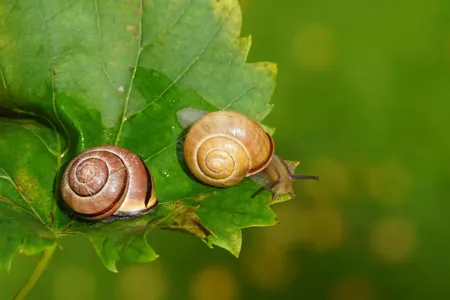
University of Queensland researchers linked Biggenden Banded Snails’ shell-growth spurts to extreme rainfall after cyclones Marcia (2015) and Debbie (2017) at Coalstoun Lakes in southeast Queensland. One snail was radiocarbon-dated to about 4.5 years old. -
UKHSA to expand wastewater checks in England for Ebola and other threats
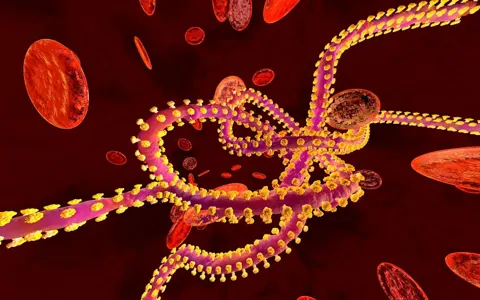
The UK Health Security Agency will expand wastewater surveillance in England over the next two years, testing samples from sewers, hospitals and busy sites for Ebola, Marburg, Lassa fever and other threats to provide an early warning of outbreaks. -
Climate Central ties later fall freezes to longer ragweed seasons
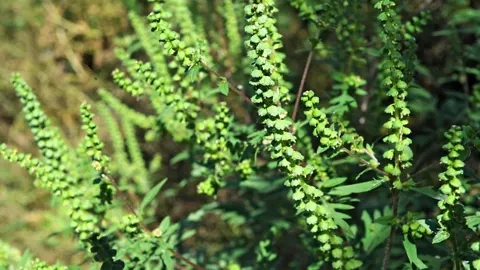
Climate Central found that the freeze-free fall season has lengthened by an average of 11 days since 1970 in 202 U.S. cities, with 177 seeing later first freezes. The nonprofit says human-caused climate change is extending ragweed’s pollen season. -
Alveo expects USDA approval for a 45-minute test as farm data gaps complicate bird flu surveillance
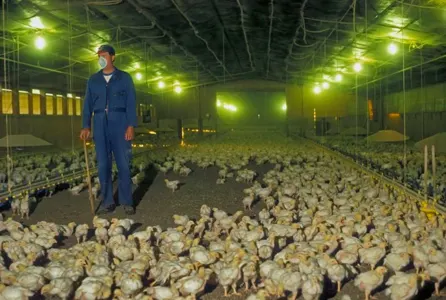
Alveo expects USDA approval in coming months for a handheld test that detects influenza A and, if positive, identifies H5 or H7 in 45 minutes. Waterfowl alerts could be sharpened with farm-level outbreak records the poultry industry has not released. -
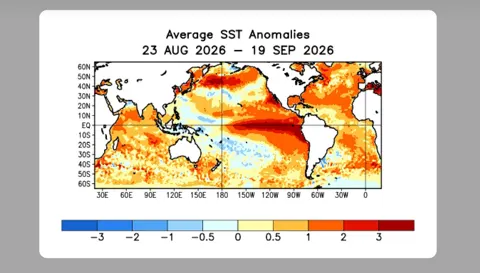
CPC calls El Niño 'very strong' after ocean index tops 2°C
The Climate Prediction Center says El Niño is now “very strong” after its latest weekly Relative Oceanic Niño Index reading topped 2°C, calling it likely a historic intraseasonal event. Niño 3.4 was 2.1°C above average, up from 2.0°C on Sept. 17. -
SpaceX schedules Starship’s first payload-to-orbit attempt for Sept. 28
Starship Flight 14 is scheduled to launch from SpaceX’s Starbase in south Texas at 7:15 a.m. local time Sept. 28, carrying 26 Starlink V3 satellites in its first attempt to deliver a payload to orbit. The 10-hour flight aims for six orbits before a Pacific splashdown.