

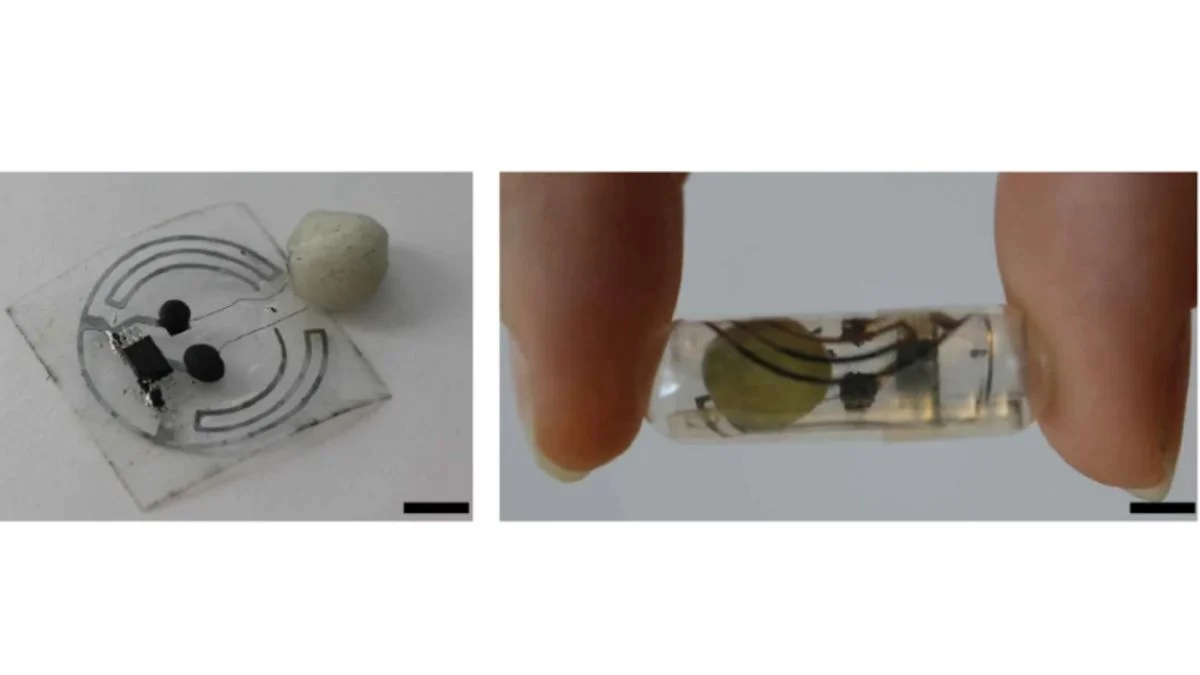
MIT researchers tested a paper-thin, dissolvable battery in pigs, where it powered ingestible medical devices for up to three days before dissolving in the gut. The prototype is for low-power electronics, and the circuit boards it powered remained intact.
One pig’s battery powered an RFID pill-taking monitor that sent a signal to a receiver five feet away each time the animal swallowed a pill. In another pig, the battery powered a capsule that stimulated the stomach lining and raised ghrelin; researchers observed no visible tissue damage. Because the circuit boards did not dissolve, solid components could still get stuck in the gut.
The battery uses a magnesium anode and molybdenum trioxide cathode bound with cellulose nanofibrils, and is coated with beeswax to protect it from stomach acid. Batteries from the same batch varied in how long they lasted, linked to uneven wax and loose layers. If researchers resolve these issues, human trials of the pill-tracking sensor could begin in roughly two years.
