

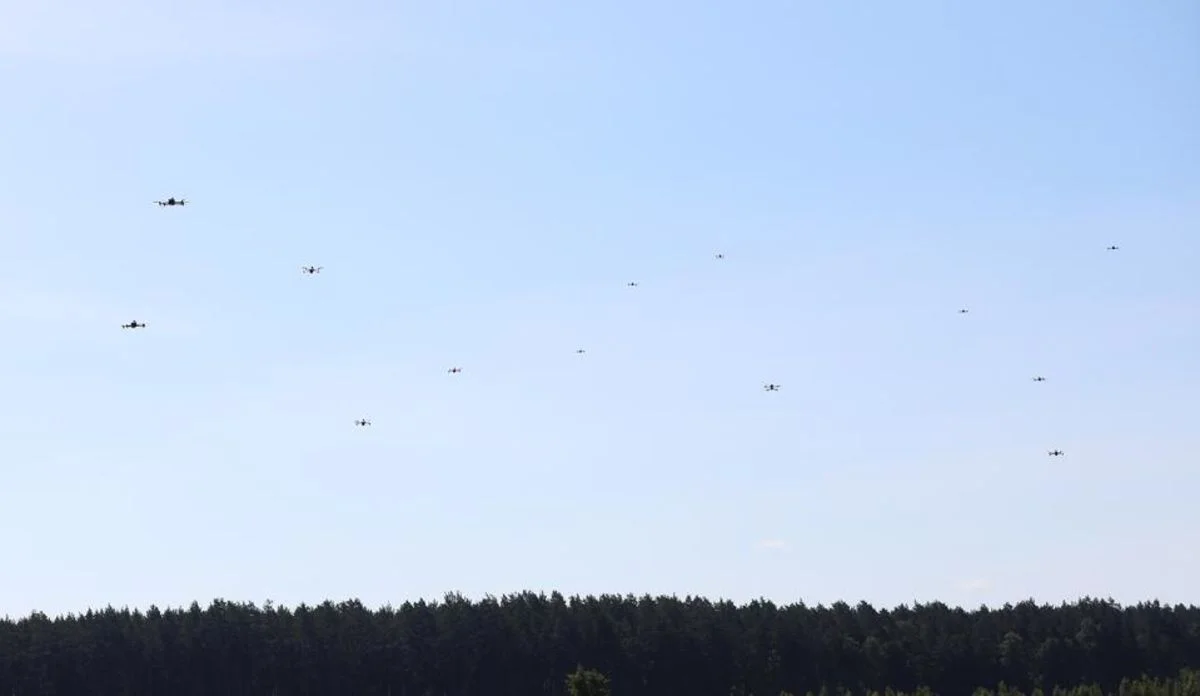
At Fort Bragg earlier this month, the U.S. Army tested whether Apache helicopters and ground sensors could detect and stop swarms of 25 to 100 drones. Participants said a layered mix of sensors is needed; the Army did not release details of any weak points exposed.
The XVIII Airborne Corps hosted Scarlet Dragon 26-3. The Army said it was the first time it had launched separate large drone swarms to attack en masse in a single exercise. AH-64 Apaches from the 82nd Airborne Brigade worked with Sentinel radar sensors to build a shared picture of the surrounding airspace.
Some small drones were released midair from a larger “mothership” aircraft, testing whether AI and sensors could distinguish it from the “daughter” drones and prioritize targets. Low-flying F11 Core drones tried to penetrate defenses. The Army also tested a catapult-launched fixed-wing drone and a Light-Sport NI84SR aircraft, which can be piloted or used unmanned and carry payloads up to 800 pounds. The article also cites an August exercise in which one U.S. soldier controlled up to 21 drones at once.
