

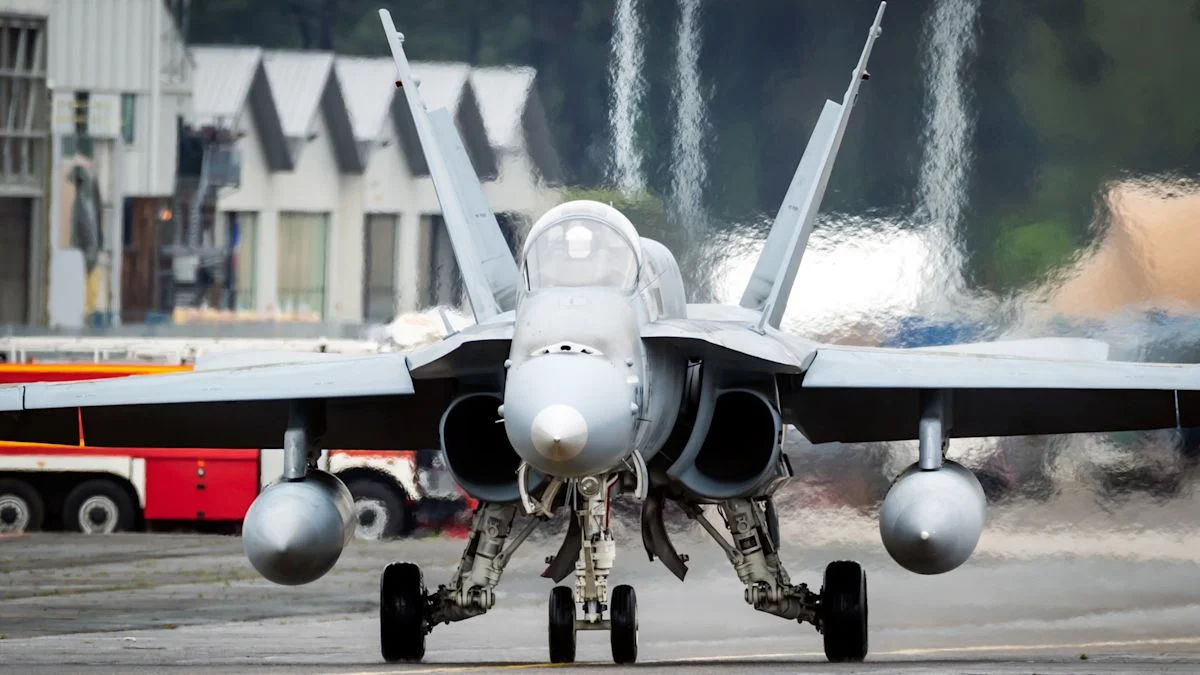
On aircraft such as the F-4 Phantom II, F-15 Eagle and F/A-18 Hornet, splitter plates create a gap between the fuselage and engine intakes. The opening lets slow, turbulent boundary-layer air pass by rather than enter the intakes, where it could destabilize the engines.
Space between the engines can also provide room for fuel, equipment, landing-gear bays and payloads; the F-14 carries AIM-54 Phoenix missiles there. A broad, flat fuselage surface between the engines can add lift. On twin-engine aircraft, one powerplant can keep operating if the other is disabled; the F-14’s reinforced engine housing is designed to contain turbine-blade damage if an engine is hit.
As aircraft began reaching transonic and supersonic speeds in the 1950s and 1960s, engineers used splitter plates to manage boundary-layer air. Later, radar concerns encouraged designs with smaller gaps. The F-35 uses a Diverterless Supersonic Intake, whose shaped bump redirects disturbed air away from the engine. The F-22 and Su-57 use hidden ducts, bumps and bleed systems to manage airflow with intakes that sit flush with the fuselage, reducing radar detection.
