Science news summaries — Page 2
Essential facts and source links for recent science stories.
-
PFOA readings suggest higher health risks for 70% of Lancashire volunteers
49 Thornton-Cleveleys residents volunteered for PFOA blood tests; 70% had readings that could indicate increased health risks under US and German guidelines. The UK has no recommendation on acceptable PFAS levels in people; elevated readings do not mean illness is certain. -
CBP calls Detroit airport find the first recorded U.S. port encounter with giant scale insects
CBP officers found giant scale insects on pine bark in a passenger’s luggage at Detroit Metro Airport; CBP called it the agency’s first recorded encounter with the species at a U.S. port of entry. The traveler from Cameroon was allowed to continue after officers seized the bark. -
At final UN climate meeting, Guterres urges detailed fossil-fuel exit plans
At his final New York climate meeting as UN chief, Antonio Guterres urged countries to raise emissions-cutting targets and publish plans to quit fossil fuels, saying renewables are the cheapest, fastest and most secure source of new electricity almost everywhere. -
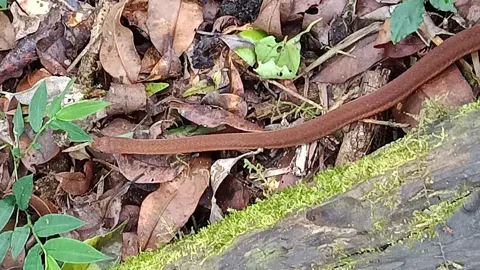
After seven years, researchers confirm a new egg-eating snake species in Ethiopia
Researchers identified Dasypeltis albigularis, a new snake species from Ethiopia’s Harenna Forest that feeds exclusively on bird eggs. It swallows eggs whole, then cracks their shells with modified throat vertebrae; the species is harmless to humans. -
Western Narrows earns first passing grade in 2026 Long Island Sound report
Save the Sound’s 2026 report card says water quality improved or stayed stable in all five open-water regions of Long Island Sound. The Western Narrows received a D, its first passing grade since grading began in 2008; the other regions earned A-range or B grades. -
Wall beneath Paris hospital may support Île de la Cité as Lutetia’s original site
A roughly 20-meter wall beneath Paris’s Hôtel-Dieu hospital on Île de la Cité may be part of Lutetia’s ramparts, supporting the island—not Nanterre—as the ancient city’s original site. The culture ministry says its function and date still need verification. -
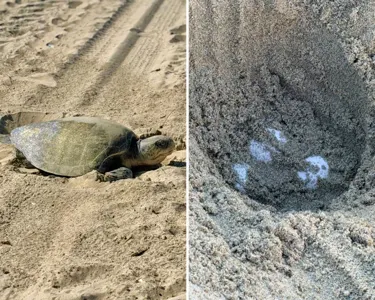
Two olive ridley turtles make California’s first documented West Coast nests
Two different olive ridley sea turtles laid eggs at Seal Beach and Huntington Beach in Orange County within a week, marking the first documented nesting on the US West Coast. Scientists say it is too soon to know whether the sightings signal a northward shift. -
Dalian team reports oil-refining membrane method used 91% less energy in tests
Interesting Engineering reports a Chinese team's membrane method used 91% less energy than standard distillation in tests. It separated a 15-component light naphtha mixture into three product groups, with 85%–90% recovery; performance at industrial scale remains unproven. -
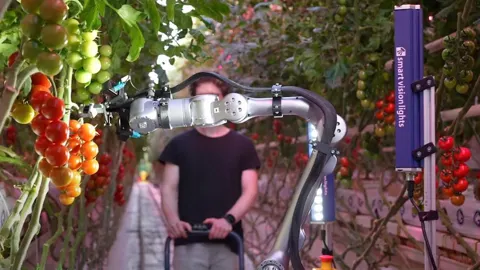
Polybot’s tomato robot advances from first pick to full greenhouse rows
Polybot’s autonomous truss-tomato harvester progressed from its first independent pick in May 2025 to harvesting full greenhouse rows by December, the article reports. The Tübingen startup trains it on human demonstrations rather than hand-coding each step. -
Openings help military parachutes stay stable in flight
Openings in military parachutes regulate airflow, helping steady the canopy and prevent violent rocking or collapse that could send a jumper into an uncontrolled fall. The T-11 static-line chute has deliberate openings and descends at about 19 feet per second. -
Alkermes reports dose-linked ADHD symptom declines with ALKS 7290
Alkermes reported dose-dependent reductions in ADHD symptom scores with investigational ALKS 7290 in a 14-day Phase 1b trial of 50 adults; median declines from baseline were 14 points at 20 mg and 19 at 50 mg. The drug was generally well tolerated. -
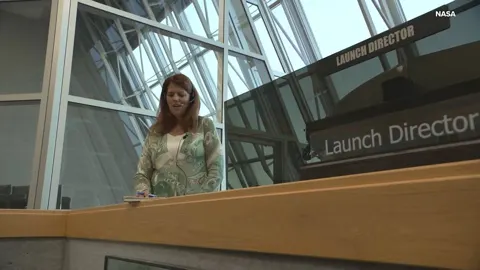
Charlie Blackwell-Thompson encourages students as Artemis III work advances
NASA’s first female launch director, Charlie Blackwell-Thompson, visited the Great Lakes Science Center to encourage students to consider STEM careers. She says Artemis III preparations are advancing; the mission is scheduled to launch no earlier than June 2027. -
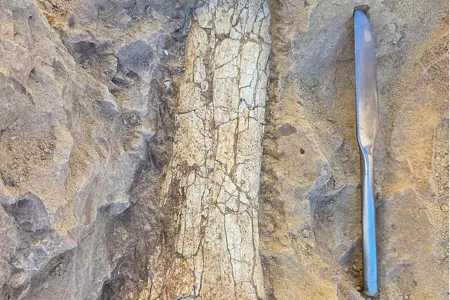
Oceanside water project finds fossils of possible brontothere or amynodont
Workers on an Oceanside, California, water project found fossils of a large hoofed mammal that lived 40–45 million years ago. Paleontologist Joseph El Adli says the animal likely was a brontothere or amynodont; his team spent more than seven days exposing the bones. -
Global outbreak records track clinic access more than forest loss, study finds
A Nature analysis of 58,319 records for 32 diseases in 169 countries found that reported outbreaks tracked health-facility access more consistently than forest loss or warming. For the median disease, recording odds fell about a third per extra travel hour to care. -
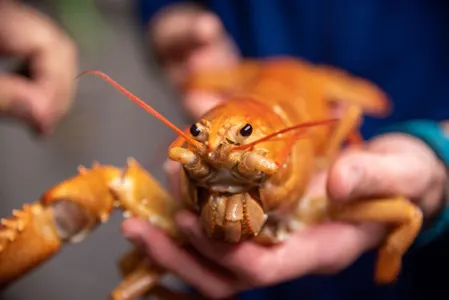
Casper, a 1-in-100-million white lobster, joins UNE study
Casper, a one-in-100-million white lobster, has joined a University of New England study in Biddeford, Maine, examining why American lobsters develop rare shell colors. Donated by the Maine State Aquarium, he will be studied using non-invasive genetic methods. -
Galleri gets unanimous safety vote as FDA panel splits on effectiveness
The FDA panel unanimously backed the safety of Grail's Galleri blood-based cancer test, but voted 6-4 that evidence supports its effectiveness. The agency is expected to decide in coming months whether the test can be sold nationwide. -
Neptune has completed only one orbit around the Sun since its 1846 discovery
Neptune has completed only one orbit around the Sun since its 1846 discovery: a year there lasts just under 165 Earth years, and its first birthday after discovery came in 2011. It was the first planet found through mathematical prediction. -
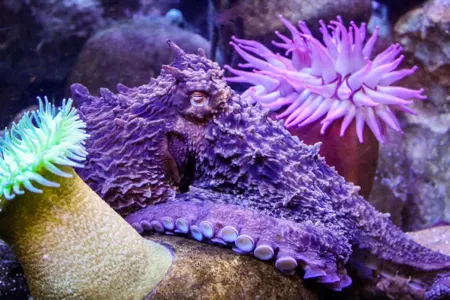
Octopus camouflage is nerve-driven, but color matching remains a puzzle
Octopuses can alter their appearance in milliseconds to blend into their surroundings, and experiments show nerves directly control the changes. How they match backgrounds so precisely remains unresolved; evidence suggests their color vision is limited. -
REK says Frankie LaPenna defeated Rekbot in human-robot MMA bout
REK said on X that Frankie LaPenna kept going and defeated Rekbot in a Sept. 18 bout the startup billed as the first human-versus-robot MMA fight. The 6-foot robot was remotely controlled by a human and knocked LaPenna across the ring with a kick. -
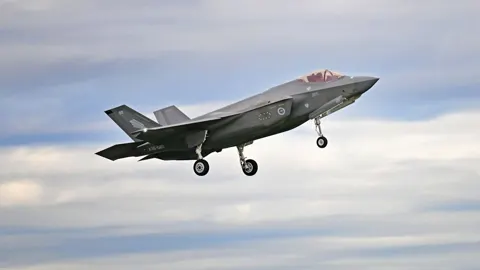
Article estimates F-35A and F-35C can stay aloft over an hour on a full tank
The article's estimates put F-35A and F-35C flight time above an hour on a full tank, with combat durations of about 33 and 35 minutes. It gives the F-35B a 450-nautical-mile combat radius, about 25 minutes; all figures assume ideal conditions. -
Al Gore says climate fight can be won, but questions whether it’s in time
At a New York event marking 20 years since An Inconvenient Truth, Al Gore said public opinion is nearing a “positive tipping point” despite stronger-than-expected fossil fuel resistance. He said the question is whether progress will come in time to avert climate tipping points. -
US-approved vaccines contain no peanut oil; evidence does not link them to peanut allergies
US-approved vaccines contain no peanut oil; evidence does not link vaccine ingredients, including aluminum, to peanut allergies, despite social media claims. About 1–2% of Americans have the allergy, the American Academy of Allergy, Asthma & Immunology says. -
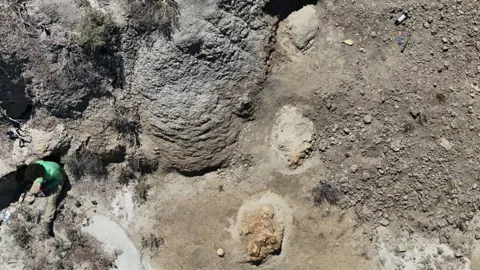
Five North Dakota prints form the first known T. rex trackway
Colorado science teacher Kent Hups found the first known T. rex trackway in North Dakota’s Hell Creek Formation. Researchers identified at least five prints; four suggest a 13-foot stride and walking speed of 3.5–4.5 mph, according to study coauthor Tyler Lyson. -
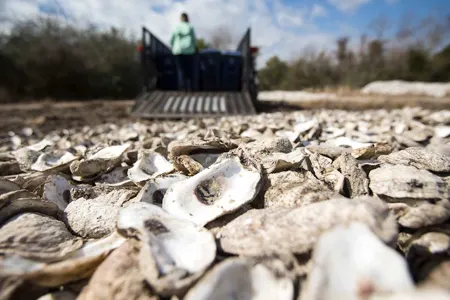
Recycled restaurant shells support oyster reef recovery in Apalachicola Bay
Local groups are returning restaurant oyster shells to Florida’s Apalachicola Bay, where they give young oysters a hard surface to grow on. The bay reopened to limited harvesting this year; the next season is scheduled for Oct. 1 through Feb. 28, 2027. -
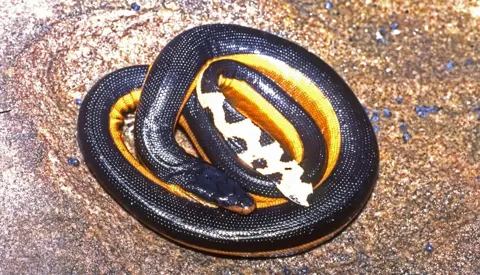
Yellow-bellied sea snake sighting at Crystal Cove may be California's first since 2018
A yellow-bellied sea snake was filmed ashore at Crystal Cove in Orange County, potentially California’s first sighting since 2018. Reptile expert Greg Pauly is seeking more video to verify it; experts say the venomous snake is not dangerous if left alone. -
Regional study finds stroke rates nearly doubled among adults ages 20 to 54
A study of adults ages 20–54 in greater Cincinnati and northern Kentucky found stroke rates nearly doubled, from 33.9 per 100,000 in 1993–94 to 62.2 in 2020. Ischemic strokes drove the increase; experts recommend addressing cardiovascular risks early. -
Analysis of 50-plus studies links ultra-processed diets to higher health risks
A new analysis of more than 50 studies involving nearly 9 million adults linked diets high in ultra-processed foods to nearly 25% higher risks of cardiovascular events, diabetes and obesity; depression and anxiety risks were 27% higher and digestive-disease risk 31% higher. -
Two Wabtec battery locomotives arrive for Union Pacific California trials
Two of the four Wabtec FLXdrive battery-electric locomotives ordered for Union Pacific have arrived in Southern California for testing in the greater Los Angeles area. The remaining two are due in October; trials will use the locomotives in yard and local service. -
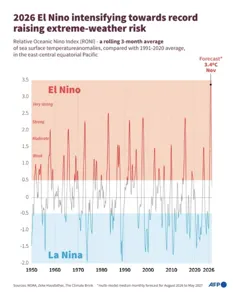
Climate Impact Lab projects about 450,000 El Niño-linked deaths
Climate Impact Lab projects about 450,000 deaths linked to El Niño-related heat, drought, wildfires and flooding. The timeline is unclear: it cites a six-month estimate but also says deaths are likely during the event’s first nine months, June through February.