

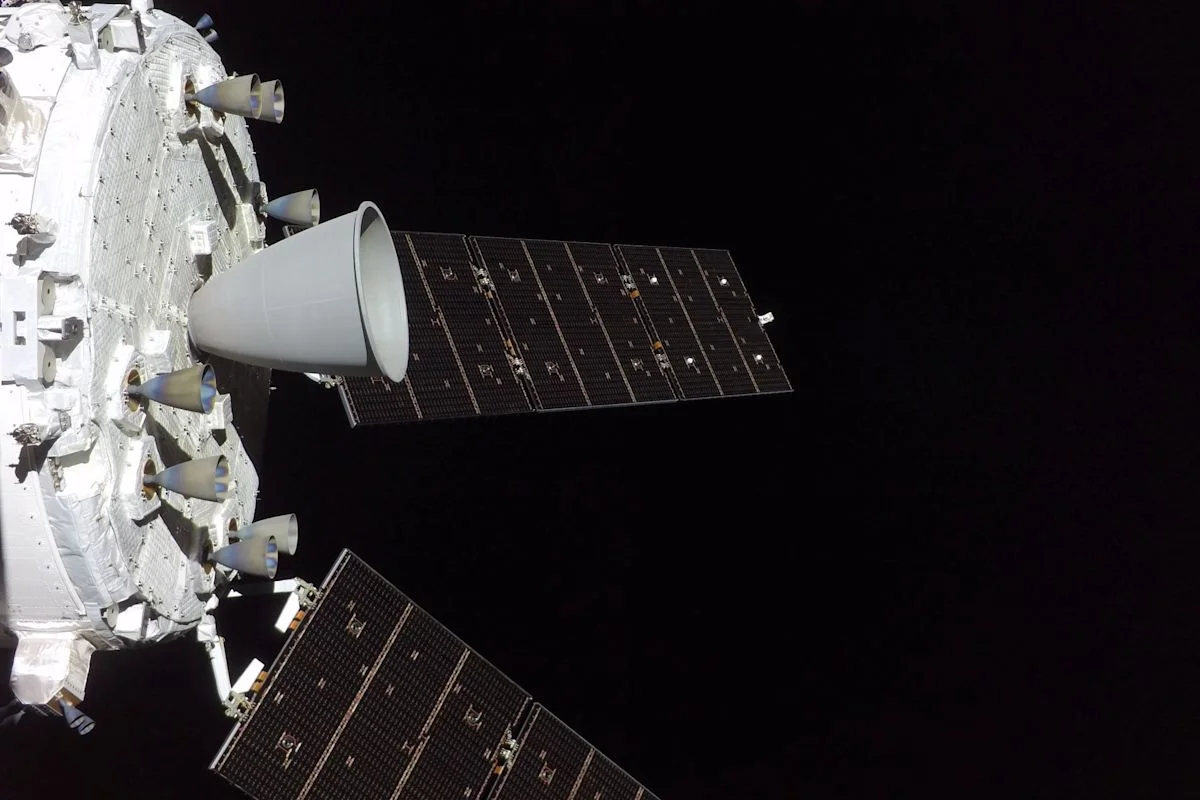
A University of Surrey-led review estimates silicon solar cells could cut satellite power costs by 85%–90%, even with protective space-qualified glass, and reduce the solar-cell mass needed by about half. Its models covered one side of a 3U CubeSat and a Micro Sat.
Spacecraft have long relied on triple-junction cells made with materials such as gallium, indium and germanium, which cost about $250–$450 per watt. The review cites silicon-design averages of $0.275 per watt for PERC, $0.285 for TOPCon and $0.39 for heterojunction cells as of November 2025. Silicon heterostructure cells have reached 27.8% efficiency, while perovskite-silicon tandems have reached 34.85%.
Review first author Tommy Richards said space-qualified coverglass becomes the main expense once silicon cells are used. The study says improving silicon’s radiation tolerance may allow thinner glass or substrates, cutting weight and cost; solving that shielding challenge is the next step.
