

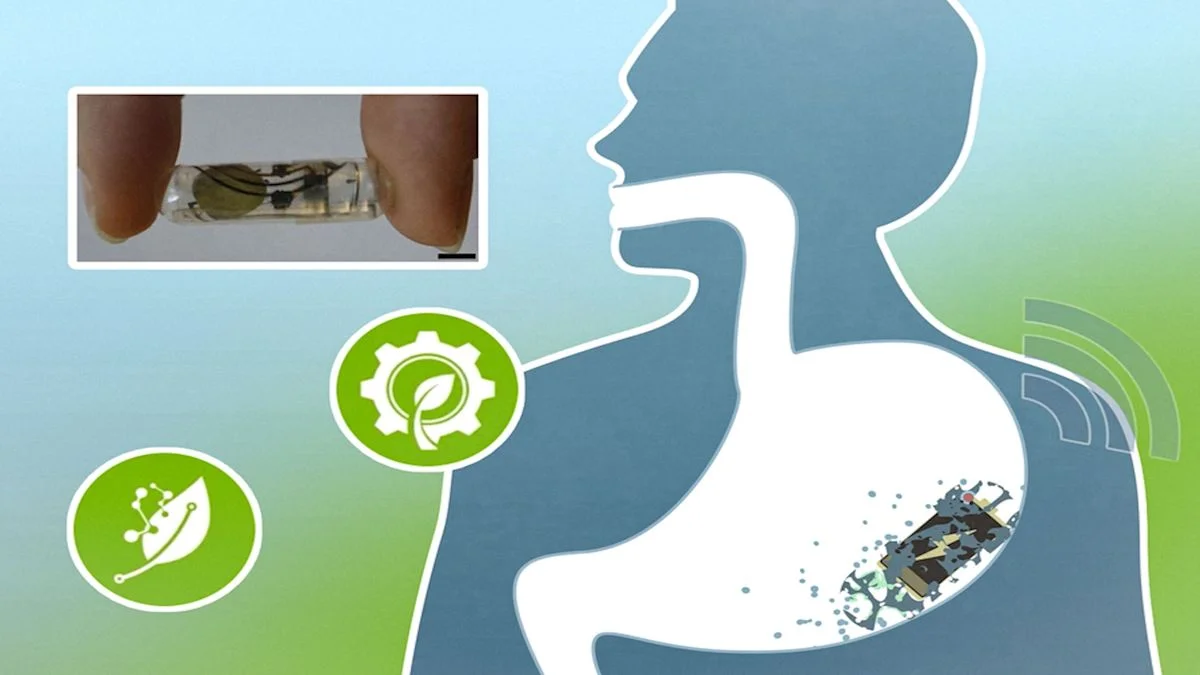
An MIT-led study tested a paper-like, bioresorbable battery that powered ingestible devices for up to three days. In pigs, it ran a medication-tracking capsule and a stomach-stimulation device; the researchers have not tested it in people.
The battery produced 1.84 volts. In tests, the tracking capsule sent an RFID signal to a reader about 5 feet (1.5 meters) away; a separate stomach-stimulation capsule raised ghrelin, a hormone related to hunger, by up to 50% after 20 minutes of stimulation in pigs. The battery’s paper-like form partly comes from cellulose, and it uses magnesium and molybdenum trioxide electrodes with a biodegradable gel that carries charged particles.
The full devices in the study were not completely biodegradable because some parts used conventional electronic components. The MIT team is refining the technology and moving toward clinical trials for its swallowable tracking technology; researchers still need to establish safety and reliability in the more variable conditions of the human digestive system.
