

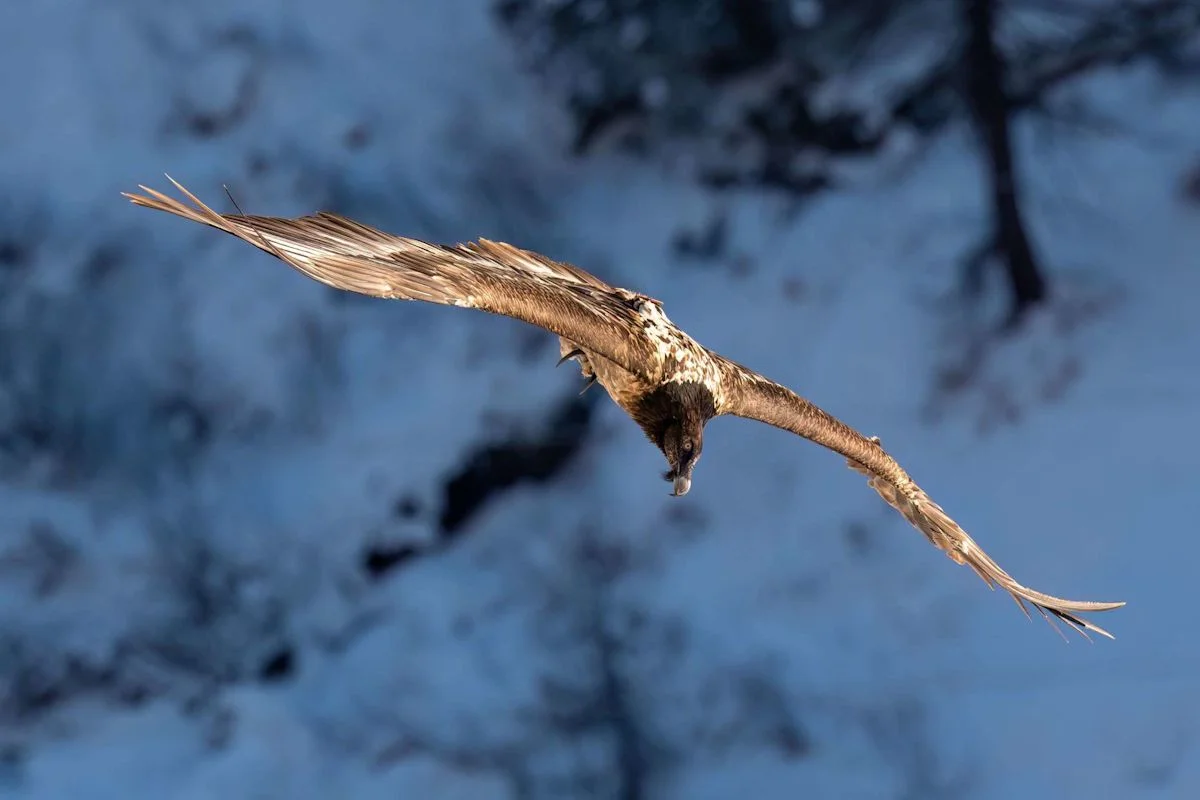
Conservationist Shannon Hoffman’s South African program is working to breed bearded vultures, with fewer than 400 left in the wild in South Africa and Lesotho. Five matched pairs are in breeding chambers; none has produced chicks yet, though Hoffman says it could happen any day.
The birds face electrocution from power lines, poisoning by tainted carcasses and displacement by development. Because the first chick to hatch inevitably starves its younger sibling, Hoffman’s team collects the second egg from wild nests—often rappelling to cliffside nests after flushing the parents—and feeds chicks with a vulture puppet for about a month to prevent them imprinting on people.
Bearded vultures mate for life, do not breed until at least age 8 and raise just one chick a year. The hand-raised birds start on rats and mice before moving to bones and carcasses donated by local butchers and farmers.
