

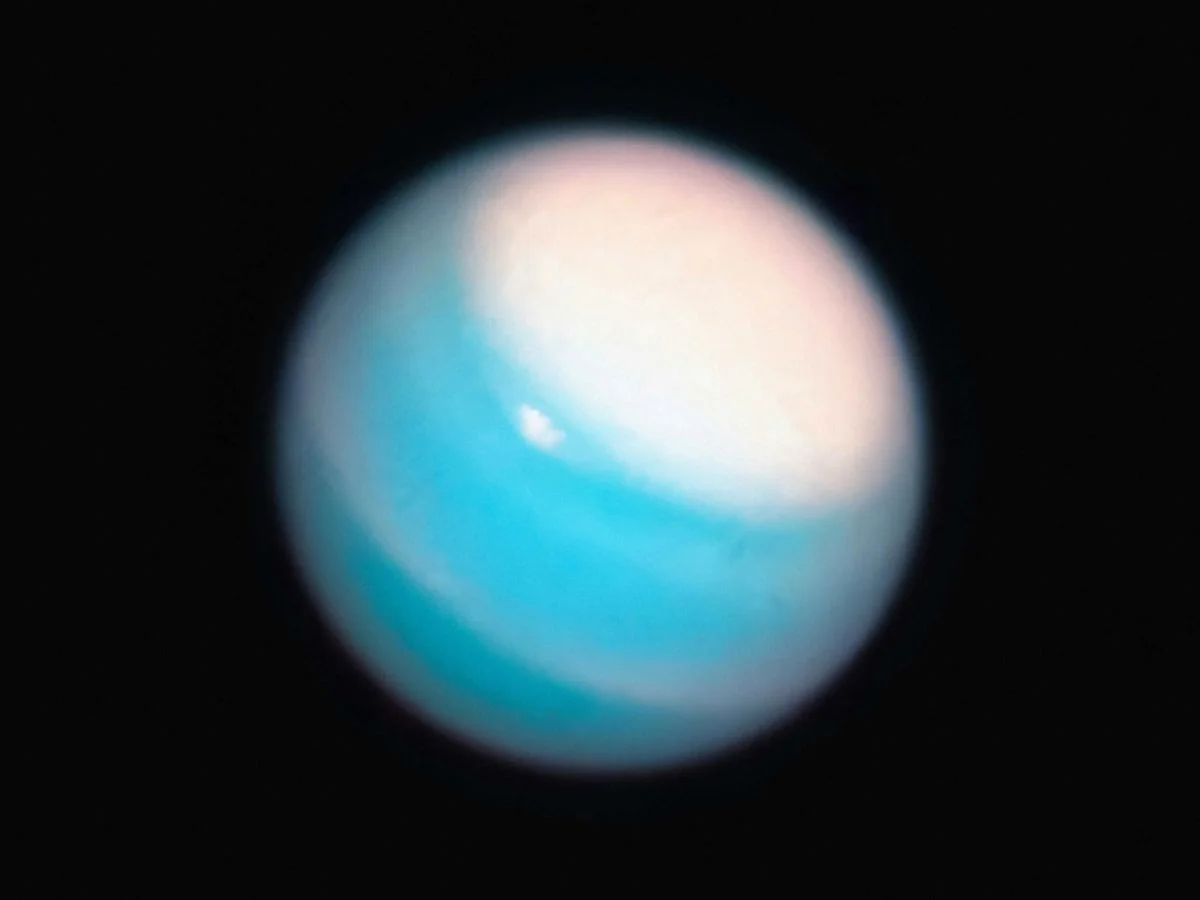
Models in a study published in Icarus suggest Uranus’ moon Ariel may have had a subsurface ocean more than 170 kilometers deep. Researchers say tidal forces from a past, more eccentric orbit could explain its giant fractures and ridges.
Today Ariel’s orbit is nearly circular, but the researchers modeled a past eccentricity of about 0.04—roughly 40 times its current value. As Ariel moved nearer to and farther from Uranus, the planet’s gravity could have repeatedly stretched and squeezed the moon. The models point to either a thin ice shell over a large ocean or a smaller ocean paired with a more eccentric orbit.
The timing and duration of any Ariel ocean are unknown. Earlier work by the same team also suggested Uranus’ moon Miranda may once have had a substantial subsurface ocean. Only the moons’ southern hemispheres have been seen up close; a future Uranus mission could image their largely unexplored northern regions and test whether predicted fractures and ridges match.
