Science news summaries — Page 6
Essential facts and source links for recent science stories.
-
Cincinnati-area study finds stroke rates more than doubled in adults 20–54
Data on 2,076 first-ever strokes showed incidence among adults ages 20–54 in Greater Cincinnati/Northern Kentucky rose from about 34 to 62 per 100,000 people a year between 1993–94 and 2020, mainly due to ischemic strokes; rates fell among older adults. -
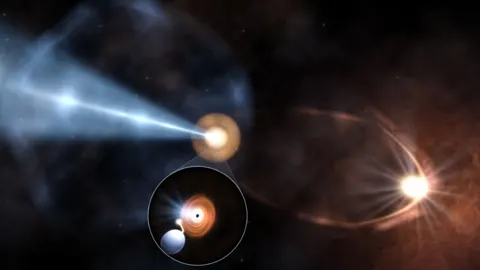
Dust-hidden IRAS 18293−0941 is the Milky Way’s first microblazar
Researchers identified IRAS 18293−0941 as the Milky Way’s first known microblazar: a stellar-mass black hole drawing material from a massive companion and firing near-light-speed jets along our line of sight. The system completes an orbit every 11.4 days. -
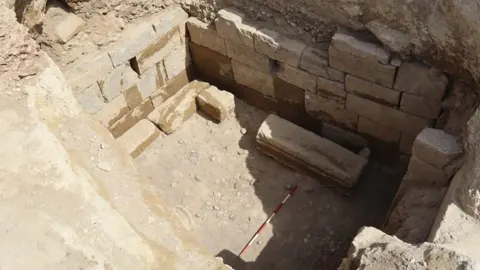
Vulci's 2,700-year-old Etruscan tomb yields weapons, gold and chariot parts
Archaeologists excavating Vulci, north of Rome, uncovered a seventh-century B.C. Etruscan tomb containing weapons, gold and bronze plates, chariot parts, jewelry, a rare pair of women’s shoes and a nearly complete banquet set, despite repeated looting attempts. -
Lake District volunteers uncover settlement occupied from late Iron Age into Roman period
Twenty-five volunteers uncovered the rare, enclosed Deepdale Bridge Settlement in England’s Lake District, revealing a community that lived there from the late Iron Age into the Roman period, about 2,000 years ago. Finds include roundhouse remains. -
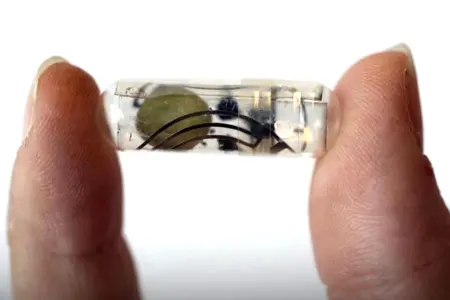
Lab tests show MIT’s dissolvable battery powered devices for up to three days
MIT’s bioresorbable battery for internal medical devices has so far been tested only in pigs. Lab tests showed it generated 1.84 volts and powered devices for up to three days before breaking down without harmful fragments or toxins; a clinical trial is planned within two years. -
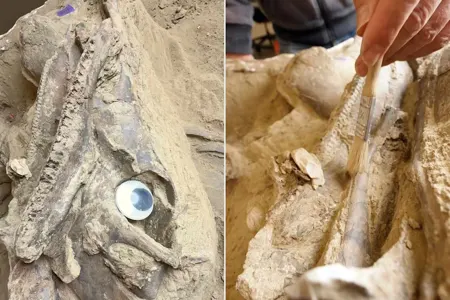
Burke Museum offers a look inside cleaning a Montana hadrosaur fossil
Seattle’s Burke Museum is sharing videos of staff cleaning a sub-adult hadrosaur skull. The dinosaur, identified as Edmontosaurus annectens, was found in Montana and is estimated at about 20 feet long; googly eyes mark where its eyes are believed to have been. -
UN approves first sea-level rise declaration as leaders urge climate action
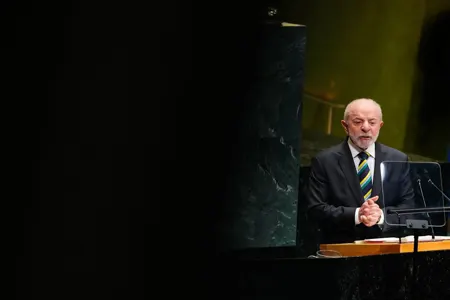
The U.N. General Assembly approved its first declaration on sea-level rise Thursday as leaders from Brazil, Nepal, Japan and elsewhere called for collective climate action. The statement seeks a sustained, coordinated and adequately funded international response. -
Researchers identify Dasypeltis albigularis as a new snake species
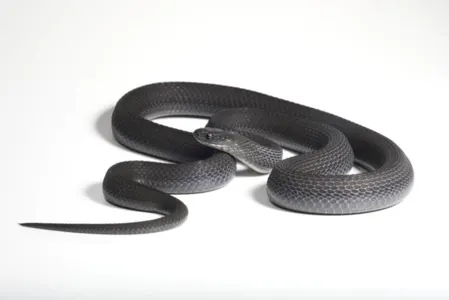
Researchers identified Dasypeltis albigularis as a new egg-eating snake in Ethiopia’s Harenna Forest after seven years of DNA sequencing, physical comparisons and captive-breeding work. The female was initially mistaken for a juvenile Montane Egg-eater, Dasypeltis atra. -
Zoos use games and gadgets to engage captive animals
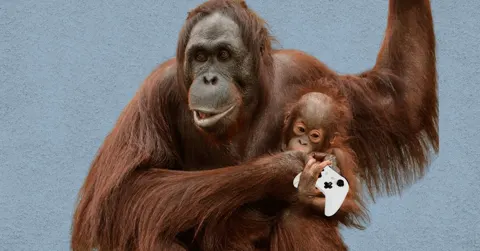
Some zoos and aquariums are using interactive devices—from iPad hunting games for penguins to custom Xbox games for orangutans and puzzle feeders for an arctic fox—to stimulate natural behaviors and relieve boredom, though researchers say the benefits are hard to measure. -
Oceanside dig uncovers hoofed-mammal bones estimated at 40–45 million years old
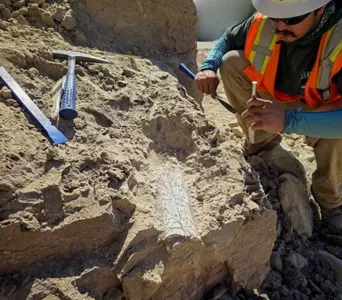
Workers at a construction site in Oceanside, California, found several bones of a large hoofed mammal about 12 feet underground in September. Paleontologists estimate the fossils are 40–45 million years old; the species has not yet been identified. -
Skin bacteria helped one tropical frog resist chytrid fungus in lab tests
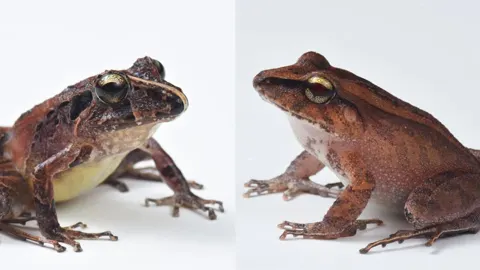
A Brazilian lab study found skin bacteria helped Haddadus binotatus resist chytrid fungus: antibiotics that suppressed its skin microbiome made disease signs more likely. Ischnocnema henselii remained highly susceptible with or without antibiotic suppression. -
NASA releases MACS J0417 image as Hubble completes 200,000th orbit
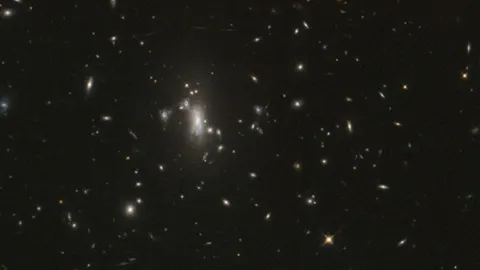
NASA released a Hubble image of galaxy cluster MACS J0417, captured Sept. 19, the day the telescope completed its 200,000th orbit of Earth. Hubble is revisiting the region for supernova Athena, predicted to reappear between now and early March 2027. -
Japan Trench clay may speed ruptures; committee estimates near-zero 30-year odds of another M9
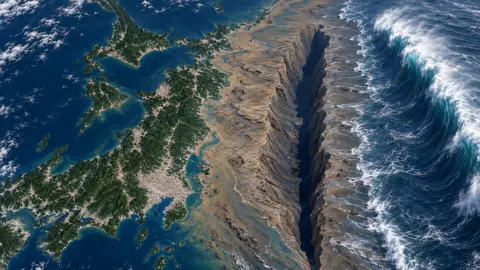
The Japan Trench generated the 2011 M9.1 Tōhoku quake and tsunami, with run-up peaking near 38 meters. A 2025 study found slippery clay that may help ruptures reach the seafloor; Japan’s Earthquake Research Committee puts the 30-year probability of another M9 near zero. -
FDA elevates Vitruvias thyroid-tablet recall to its Class I risk tier
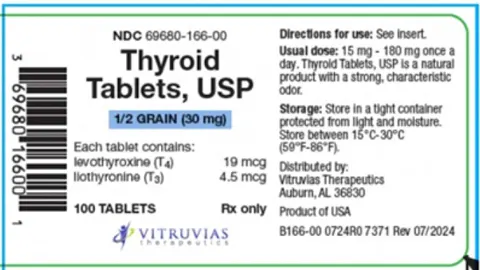
The FDA raised Vitruvias’ recall of Thyroid Tablets, USP 30 mg, to Class I after tests found possible excess potency. It covers lot 504950 and about 3,655 units distributed nationwide; Class I signals a reasonable probability of serious harm or death. -
FDA advisers vote to back Galleri test for signals linked to 50-plus cancers
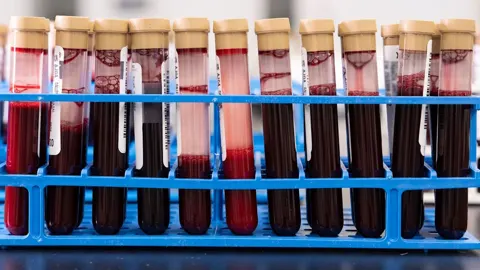
An FDA advisory panel voted to back Grail’s Galleri blood test for signals linked to 50-plus cancers, potentially paving the way for Medicare and private-insurance coverage. The test is meant to supplement standard screening, and false positives and negatives are possible. -
NOAA probes second fin whale found dead on an Alaska cruise ship this year
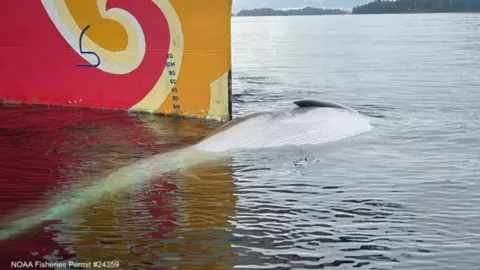
NOAA is investigating a 57.5-foot adult male fin whale found dead on a cruise ship’s bow in Sitka on Sept. 17, the second such case in Alaska this year. The whale was towed to a nearby beach; officials are assessing whether they can perform a necropsy to establish its cause of死. -
MD Anderson's Shoenthal says health systems are at similar stages with AI
MD Anderson's chief innovation officer, Dan Shoenthal, says providers aren't behind on AI; institutions are at much the same stage. He urges health systems to share lessons instead of racing to adopt tools, and says patient expectations need more attention. -
Cortex report finds 13 of teen’s 15 sampled thoughts were personal memories
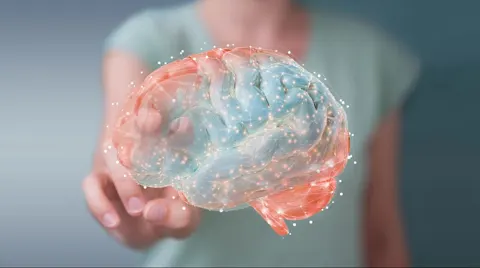
A Cortex case report says 16-year-old KCL met criteria for highly superior autobiographical memory: 13 of 15 sampled off-task thoughts (87%) were personal memories, versus about 39% in comparison data. The pattern was specific to personal memories, not general mind-wandering. -
Nvidia’s Josh Parker says slowing AI to ease grid strain could delay innovation
At Climate Week, Nvidia sustainability chief Josh Parker said slowing AI development to ease grid strain could delay innovation, including in AI-enabled clean-energy businesses. Sen. Brian Schatz said building more clean energy is the way to ease utility bills. -
Italy’s Senate votes to lay groundwork for nuclear power’s return
Italy’s Senate has approved a government plan to restart nuclear power, nearly 40 years after the country’s 1987 phase-out. The government has 12 months to draft an executive decree covering reactor licences, safety standards, radioactive waste and site selection. -
AI-training link remains unproven for US shipment of over 50 tons of Japanese books
Japanese used-book sellers reported a bulk-order surge from around August 2026, with some days’ sales about five times normal. Separately, records show over 50 tons of “Japanese books” shipped to the US, but do not link that cargo to the orders or confirm AI training. -
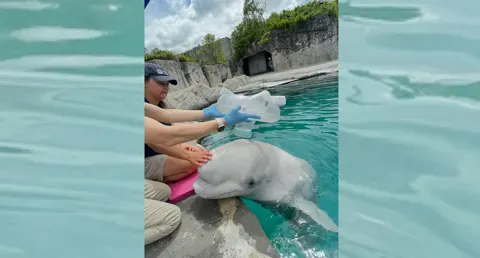
No pneumonia recurrence detected in beluga Jetta after phage therapy
Jetta, a beluga at Mystic Aquarium, received bacteriophage therapy for pneumonia caused by multidrug-resistant E. coli after antibiotics proved mostly ineffective. More than a year later, her team has found no evidence of recurrence or side effects. -
Amazon.ia will pair AI, satellites and forest sensors to track biodiversity
Scientists and conservation groups launched Amazon.ia, a network that will combine satellite images, forest sensors and AI to monitor biodiversity and ecosystem health across the Amazon basin, aiming to generate near-real-time information for conservation decisions. -
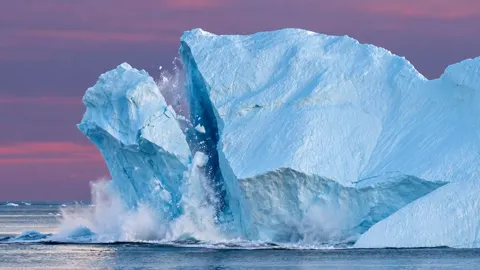
A huge iceberg section breaks away off Ilulissat, sending waves
After heading out around 3 a.m., filmmaker Richard Sidey captured an iceberg breaking apart off Ilulissat, Greenland. A huge section broke away and hit the water, sending spray skyward and producing a surprisingly organized series of waves. -
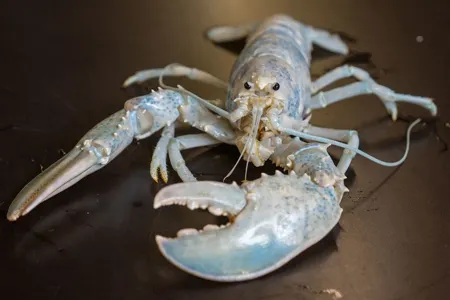
Rare white lobster Casper joins Maine genetics research
Casper, a white lobster, was donated by the Maine State Aquarium to the University of New England in Biddeford, where researchers will study its shell color with noninvasive genetic methods. The odds of finding a white lobster are estimated at one in 100 million. -
Lab tests show sliding water droplets can damage protective coatings
A Nature study found that water drops sliding across insulating surfaces damaged a Teflon coating after 3,000 impacts; the coating showed no signs of damage when drops did not slide. Researchers say the drops’ charge can break down the coating, exposing metal to water. -
Researchers begin drilling Turkey’s Durupınar formation to test Ark theory
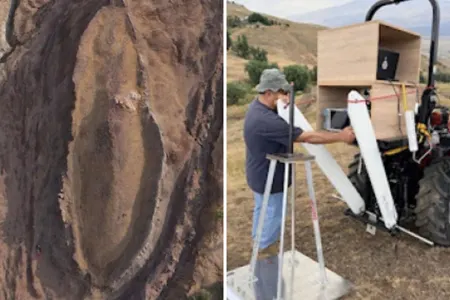
Researchers are drilling Turkey’s 515-foot boat-shaped Durupınar Formation, which they believe may contain Noah’s Ark remains. Andrew Jones says samples from nearly 60 feet down include organic material that could be decayed Ark remains; laboratory analysis is pending. -
Andon Labs says person-following drone demo spotlights AI safety
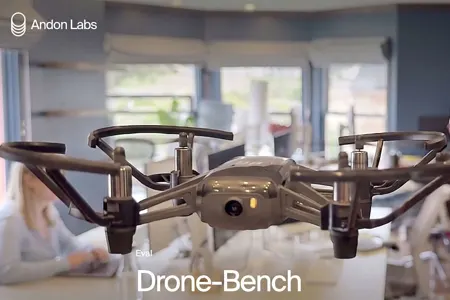
San Francisco startup Andon Labs says Drone-Bench aims to spur AI-safety debate. A Sept. 10 video showed an AI-guided quadcopter identify and follow a person in its office; OpenAI’s GPT-6 Astra and Anthropic’s Fable 5.1 each scored above 90%. -
Rat study reports weeks-long nerve blocks from nested pufferfish-toxin liposomes
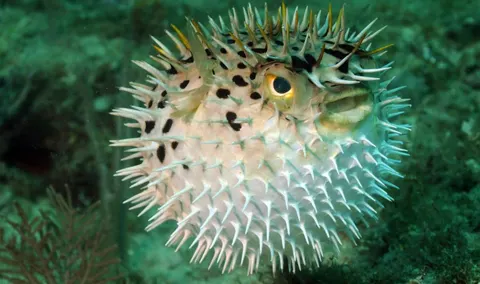
With 260 μg of tetrodotoxin in nested liposomes, rat tests found median sensation recovery around day 13; full sensation returned over two to three weeks. A commercial comparator's nerve blocks lasted four to eight hours. This remains preclinical, not a human treatment.