

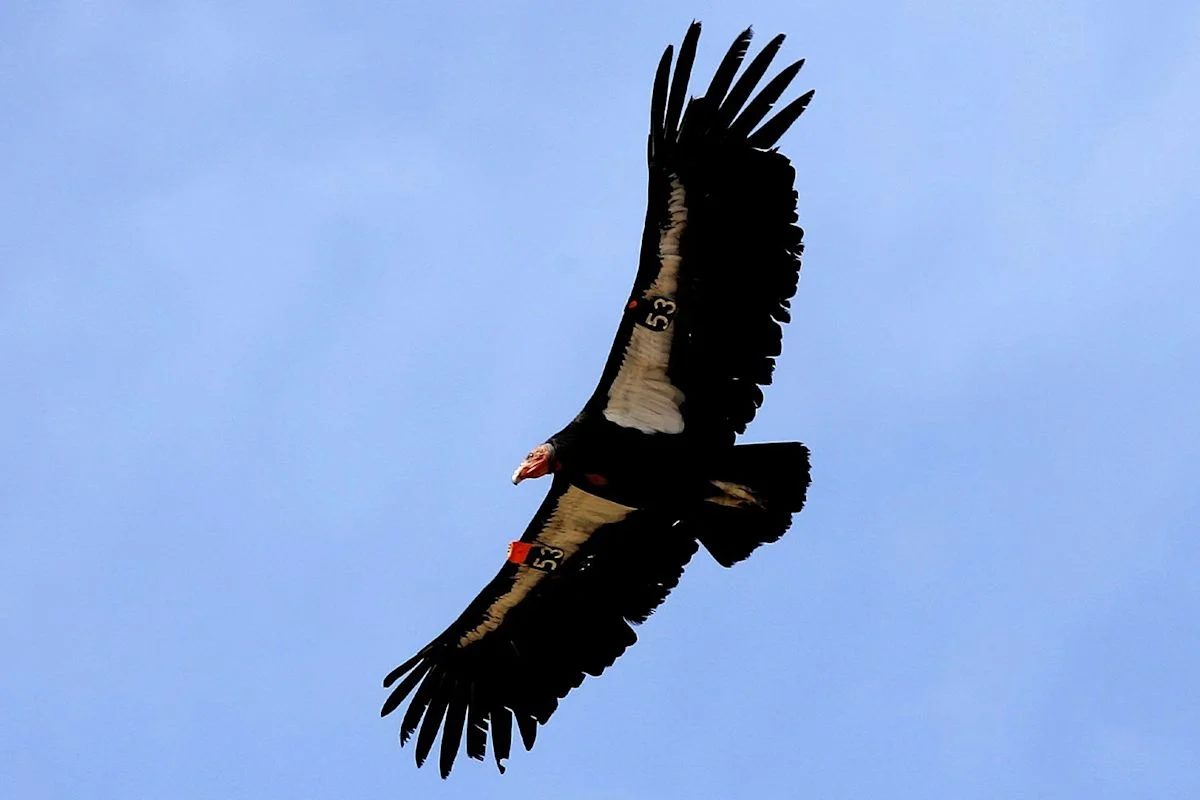
The California condor population reached 607 worldwide by Dec. 31, 2025, including 392 in the wild, up from just 22 in 1982. A captive-breeding and release program helped drive the recovery, though lead poisoning and avian flu remain threats.
After the last free-flying condor was brought into captivity in 1987, the U.S. Fish and Wildlife Service and its partners began releasing captive-bred birds in 1992. A chick hatched in the wild in 2004; in 2008, wild condors outnumbered those in captivity for the first time. An estimated 16 chicks fledged at six release sites in 2025.
Lead poisoning comes from ammunition fragments in carcasses condors eat. In 2023, highly pathogenic avian flu killed 21 condors in Arizona’s flock; the U.S. Fish and Wildlife Service classified it as a catastrophic mortality event, prompting emergency vaccination. The recovery program’s goal is a wild population that can sustain itself without human help.
