

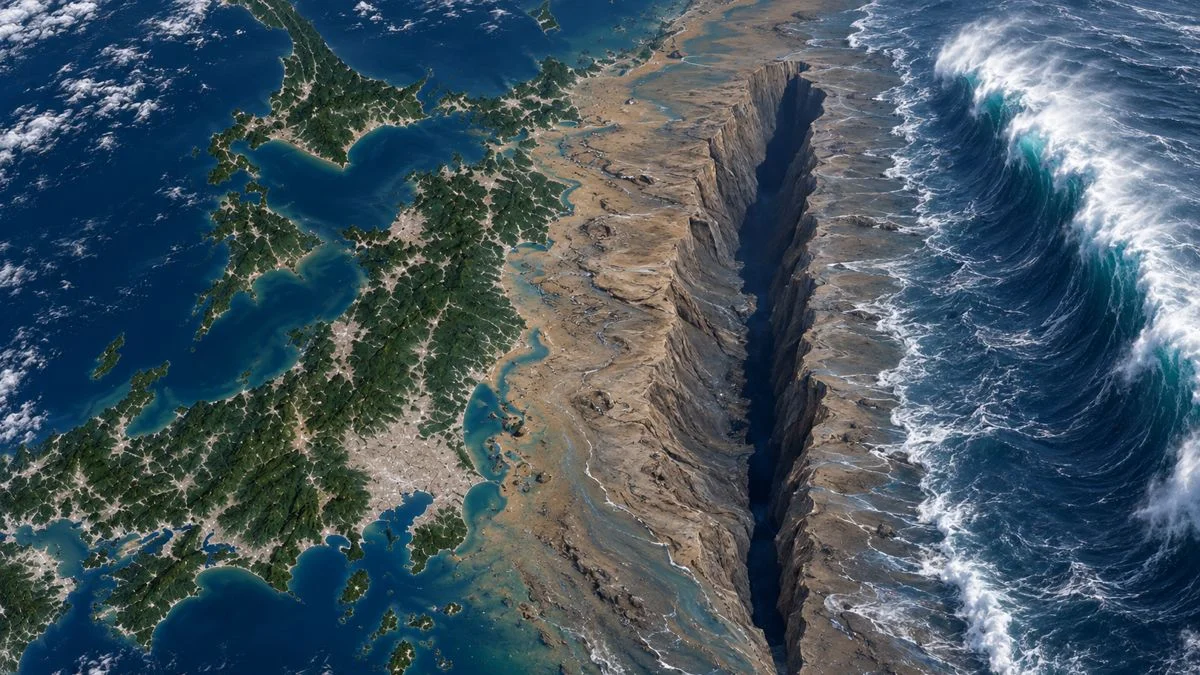
The Japan Trench generated the 2011 M9.1 Tōhoku quake and tsunami, with run-up peaking near 38 meters. A 2025 study found slippery clay that may help ruptures reach the seafloor; Japan’s Earthquake Research Committee puts the 30-year probability of another M9 near zero.
Researchers estimate the shallowest part of the 2011 fault slipped about 50–70 meters. A 2025 Science study identified a thin, slippery clay layer along the plate boundary. Cornell geophysicist Patrick Fulton said the weak surface makes large, shallow slips easier, which can intensify a tsunami.
Japan’s Earthquake Research Committee says the near-zero 30-year probability of another M9 reflects how recently the 2011 quake occurred. It estimates an approximately M7.4 earthquake offshore Miyagi has an 80–90% probability within 30 years, while an M7.9 event off Aomori and northern Iwate is estimated at 20–40%.
