Health news summaries — Page 4
Essential facts and source links for recent health stories.
-
Blue Cross report says AI may add nearly $1bn to US healthcare costs
A Blue Cross Blue Shield Association report says healthcare AI may add nearly $1 billion to US health costs. Blue Cross companies’ costs rose $653 million from 2024 to 2025; hospitals received nearly $12,000 more per case on average through AI coding. -
GSK licenses HUTCHMED's HMPL-A830 outside Greater China
HUTCHMED granted GSK exclusive rights to HMPL-A830 outside Greater China for colorectal, pancreatic and lung cancers. HUTCHMED will receive $110 million upfront, up to $1.3 billion in potential milestones and tiered royalties, and run global Phase I trials from H2 2026. -
Medtronic adds Cornerstone’s Sentire robot in $700 million deal
Medtronic’s Sept. 1 $700 million partnership with Hong Kong-based Cornerstone Robotics gives it rights to distribute Sentire in select markets outside the U.S. where the system is approved. Medtronic will offer the surgical robot alongside Hugo in Europe, China and Singapore. -
FDA approves Pfizer-BioNTech’s XFG COVID vaccine for 2026–27
The FDA approved Pfizer and BioNTech’s 2026–27 COMIRNATY XFG COVID-19 vaccine for adults 65 and older and people ages 5–64 with high-risk conditions. The article says the update may protect recurring seasonal revenue, but normalized booster demand limits growth. -
Motley Fool favors AbbVie over Lilly for value in 2026
The Motley Fool calls AbbVie the more sensible 2026 buy on valuation, although Eli Lilly is growing faster on demand for weight-loss and diabetes drugs. Lilly’s forward P/E and price-to-sales ratios are 24.8 and 13.2, versus 16.4 and 7.3 for AbbVie. -
New migraine guidance adds first-line CGRP drugs, lowers prevention threshold
The American Academy of Neurology’s first migraine-guideline update since 2012 lowers the threshold for considering preventive care from eight monthly migraines to four and adds CGRP inhibitors as first-line options alongside traditional medicines. -
Lilly says its drugs drew 70% of 700,000 Medicare GLP-1 starts
Lilly CEO David Ricks said 700,000 seniors have started GLP-1 treatment since Medicare’s temporary Bridge program began covering obesity drugs in July; seven in 10 chose a Lilly drug. Eligible members pay $50 monthly, and the program runs through 2027. -
Inhibrx shares fall 8.8%; INBRX-106 combo nearly doubles Keytruda-only response rate
Inhibrx Biosciences’ experimental INBRX-106 plus Keytruda produced a 48.3% confirmed response rate in a Phase 2 head-and-neck cancer study, versus 26.5% for Keytruda alone; Inhibrx shares fell 8.8% to $110.45 after the results, Reuters reported. -
Pelacarsen misses cardiovascular-event goal; Citi sees possible CRISPR shift
Pelacarsen significantly lowered lipoprotein(a) in Novartis’ Phase 3 HORIZON trial but did not significantly reduce major cardiovascular events. Citi says the result could prompt CRISPR to favor CTX321 over CTX320 and sees under 5% immediate downside for Ionis shares. -
Haleon’s US consumer-health share reaches 12% amid shelf gains
Haleon has won more prominent shelf positions at Walmart, Target and other US retailers with lower prices, promotions, new products and exclusivity. Its US consumer-health share rose from 11.4% in February to 12% in August, NielsenIQ data cited by Reuters show. -
XLV’s lower fees contrast with IBB’s biotech focus and stronger one-year return
XLV offers broader large-cap healthcare exposure and charges a 0.08% fee; IBB focuses on biotech and charges 0.44%. As of Sept. 24, 2026, IBB’s 12-month return was 45.28%, against XLV’s 24.31%, but IBB had the deeper five-year maximum drawdown. -
Study reports PANXEON detected 87% of stage 1 and 2 pancreatic cancers
An international study found PANXEON, a blood test combining three markers, correctly identified 87% of patients with stage 1 or 2 pancreatic cancer among nearly 1,800 people. False-positive rates were 3% in low-risk and 16% in high-risk groups. -
Fidelity’s broad healthcare ETF outpaced VanEck’s biotech fund over five years
Fidelity’s FHLC covers more than 300 healthcare stocks, while VanEck’s BBH focuses on about two dozen biotech and life-sciences companies. BBH led over one year, but FHLC had stronger five-year growth, a smaller maximum drawdown and lower fees (0.08% vs. 0.35%). -
LIMRA research: 40% of life policyholders rarely or never hear from insurers
Life-insurance adviser Phillip Snyder says weak follow-up can leave buyers unsure of their policies. LIMRA research says 40% of policyholders rarely or never hear from insurers after purchase. Snyder said high upfront commissions contribute to short-term selling. -
Investor letter flags slow Abbott nutrition recovery and tougher device competition
Tributary Capital Management’s Q2 2026 letter said Abbott Laboratories’ nutrition recovery is slow and competition is intensifying in Structural Heart and continuous glucose monitoring. It said those pressures appear to outweigh the growing tailwind in electrophysiology. -
A Motley Fool stock comparison favors Vertex over CRISPR in 2026
The Motley Fool article’s author favors Vertex Pharmaceuticals over CRISPR Therapeutics for 2026, citing Vertex’s nearly $12.1 billion in FY2025 revenue and 32.7% net margin, versus CRISPR’s approximately $581.6 million loss as it invests in research. -
Pfizer gets the long-term nod over Bristol Myers Squibb in 2026 stock analysis
The article favors Pfizer for long-term investors, citing its $10 billion Metsera deal and obesity pipeline; it sees Bristol Myers Squibb as stronger near term after raising its full-year revenue outlook and reporting growth in newer brands and Eliquis. -
Atavistik-Roche pact sets $70 million upfront and up to $1.9 billion in milestones
Atavistik Bio signed a Roche deal to develop oral drugs for cardiovascular, kidney and metabolic diseases. It will receive $70 million upfront and could earn up to $1.9 billion in research, development and commercial milestones, plus royalties on sales of approved drugs. -
Mid-stage Alzheimer’s psychosis trial falls short for Acadia’s remlifanserin
Acadia said remlifanserin missed a mid-stage trial’s main goal for Alzheimer’s psychosis: 60 mg improved hallucinations and delusions versus placebo, but not enough after six weeks. The result was statistically significant on a key secondary measure of psychosis severity. -
Grifols says Winnipeg plasma halt predated Health Canada license suspension
Health Canada suspended Grifols’ license to collect plasma at its Taylor Avenue centre in Winnipeg over quality-management concerns. Grifols says operations are unaffected because it had already voluntarily stopped collection there. -
IHH subsidiary appeals Tokyo ruling in Fortis-related damages claim against Daiichi
IHH Healthcare says its subsidiary Northern TK Venture has appealed a Tokyo court’s September 10 dismissal of a claim seeking up to 109.3 billion rupees ($1.14 billion) in damages from Daiichi Sankyo over NTK’s purchase of a stake in India’s Fortis Healthcare. -
US COVID-19 activity rises in late summer, hospitalizations remain relatively low
COVID-19 activity is increasing in many U.S. states in a late-summer/early-fall surge, experts say, with wastewater levels and cases rising. Cases are highest in the South, along the Atlantic seaboard and in the West, while hospitalizations remain relatively low. -
PicPay targets insurance platform with Kovr deal and 53% Estrutural stake
PicPay’s Kovr acquisition and 53% controlling stake in Estrutural Corretora support its push for an end-to-end insurance platform. The plan pairs Kovr’s digital insurance and underwriting with Estrutural’s brokerage, aiming to give PicPay more control. -
An ER doctor's advice: use AI to understand results, not diagnose
An ER physician says AI chatbots can explain medical reports and help patients prepare for appointments, but should not replace a clinician for diagnosis or treatment decisions. In an Oxford study, people using AI identified relevant conditions in fewer than 35% of cases. -
Blue Cross study links AI use to $942 million in added care costs over two years
A Blue Cross Blue Shield Association study attributes $942 million in added insurer costs to more intensive care over 2024–25, compared with 2023; more frequent billing for secondary diagnoses accounted for $653 million, as providers used AI to identify them. -
Dietitians outline possible liver risks from taking multiple supplements
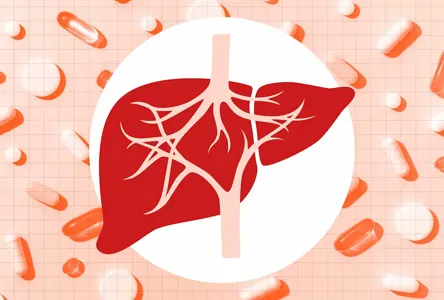
Several supplements can burden the liver and may cause inflammation or injury, dietitians say. Fat-soluble vitamins can build up; herbal products may interact with medicines, and some weight-loss or muscle-building products have contained undeclared ingredients. -
Warmer freshwater may favor Naegleria behind a nearly always-fatal brain infection
Warmer freshwater could favor Naegleria fowleri, researchers say, though fewer than 10 U.S. cases of its nearly always-fatal brain infection are diagnosed each year. The amoeba has recently been detected farther north, including in Nebraska and Iowa. -
Thyroid concerns fuel a boom in online wellness advice
People seek thyroid answers online, where influencers promote diets and supplements; some claim thyroid conditions can be reversed. Experts say symptom overlap and feeling dismissed help create a market where useful guidance mixes with harmful claims. -
Hims & Hers reports 38% revenue growth alongside $86 million GAAP loss
Hims & Hers revenue rose 38% year over year to $753 million. U.S. revenue rose 16% year over year, while Eucalyptus, acquired in June, contributed about $40 million in quarterly sales. The company reported an $86 million GAAP loss and $36 million in negative cash flow. -
Needham initiates GE HealthCare coverage with Buy rating, $93 target
GE HealthCare closed at $64.81 on September 21, 28% below its 52-week high. On September 22, Needham began coverage with a Buy rating and a $93 target, about 44% above the close, saying market skepticism had made the shares attractively valued.