

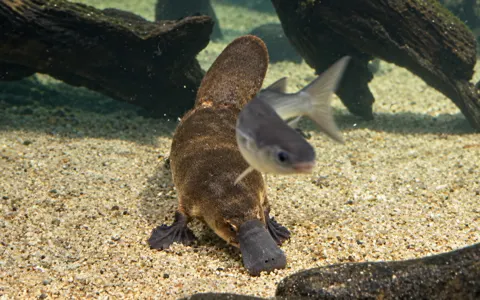
Fur on preserved platypus specimens that appears brown in ordinary light glowed blue-green under ultraviolet light, the article reports. It calls the fluorescence another mystery but does not identify the researchers or explain how they tested the specimens.
Platypuses are monotremes, the surviving egg-laying group that also includes echidnas. Females seal themselves in burrows and hold their eggs between their body and tail. The eggs hatch after about 10 days, and the young feed on milk for three to four months before swimming independently.
The article says marsupials reached Australia roughly 70 million years ago and suggests that moving into rivers may have helped platypuses escape competitive pressure. Their bills contain about 100,000 specialized receptors that detect vibrations and tiny electrical signals from moving prey.