

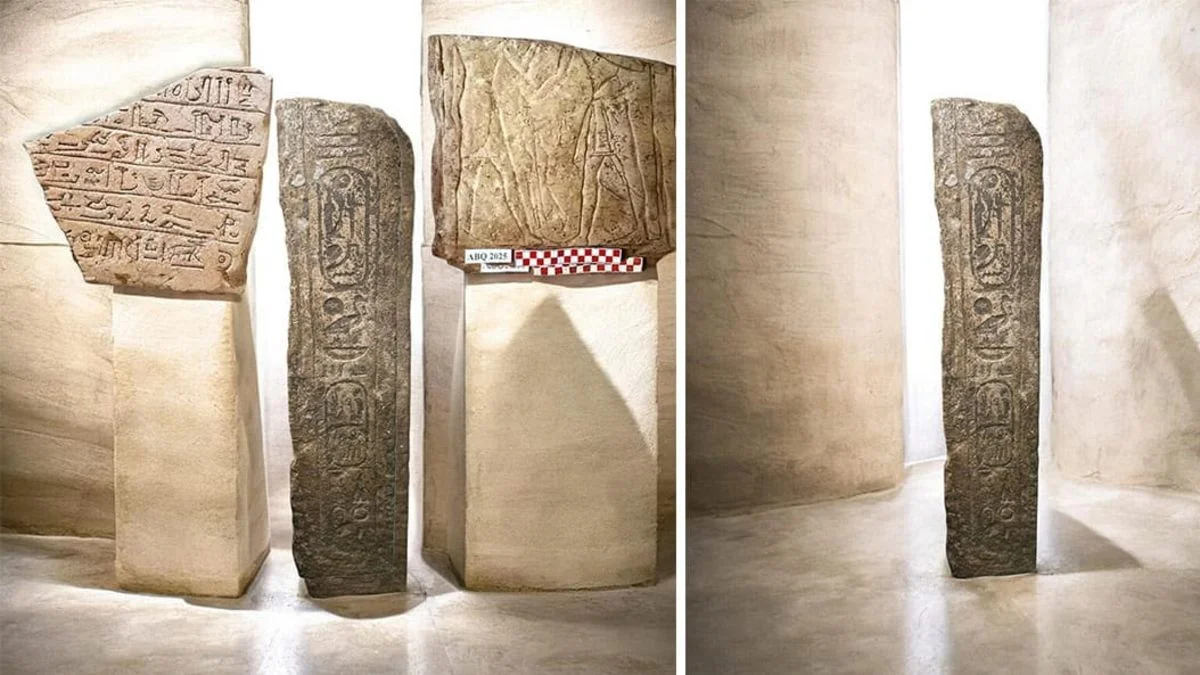
Excavations at Egypt’s Tell el-Abqain fortress uncovered New Kingdom soldiers’ homes, wheat stores, royal inscriptions and a horse burial. The antiquities ministry says the finds underline the site’s role in protecting Egypt from Libyan tribal attacks.
A four-meter-wide east-west road intersected a north-south street and connected the residential area to the fortress’s southern entrance. Rooms contained grain silos and cylindrical pottery ovens; large jars holding carbonized wheat grains provided direct evidence of food storage.
Preliminary study identified the complete horse remains as a medium-sized, agile breed that may have been used for training, military activity or pulling chariots. Its orderly placement suggested a deliberate, possibly ceremonial burial; nearby alabaster and limestone pieces were believed to be harness fittings. Stelae carried inscriptions for Merneptah and Ramesses II, while another depicted a bound Libyan captive. Scarabs bore royal and deity names, and amulets represented protection, fertility, renewal and strength.
