

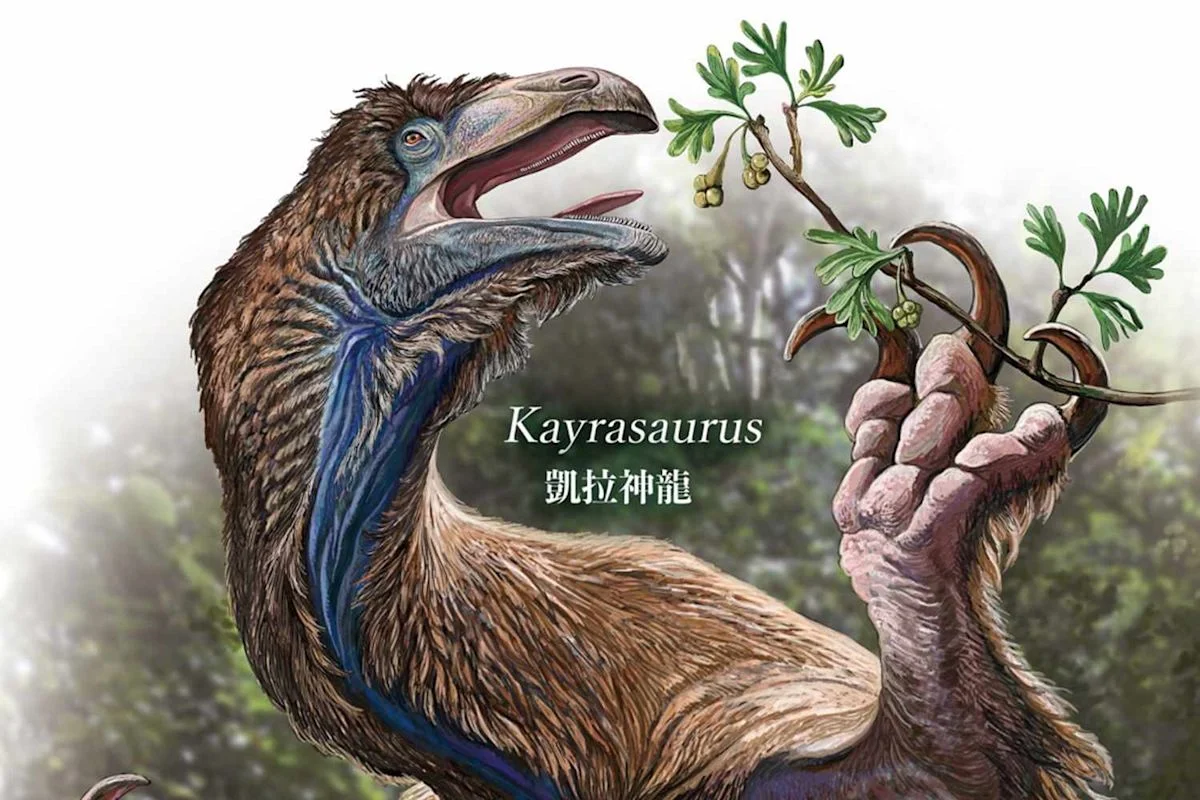
Researchers describe Kayrasaurus changliensis, a therizinosaur from western China, based on a nearly complete skeleton missing its hind limbs. It lived about 125 million years ago, was estimated at 11.8 feet long and had strongly curved claws on three fingers.
The specimen came from the Lower Cretaceous Yixian Formation in western Liaoning. Researchers estimate the dinosaur weighed 258 to 604 pounds; they interpreted its tiny, densely packed teeth as indicating stronger bite force and a more robust body plan less adapted to running.
Researchers call it the largest therizinosaurian known from the Jehol Biota and say it offers insights into the group’s evolution and ecological adaptations. They caution that these interpretations remain provisional and need further analysis and more complete, well-preserved fossils.
