

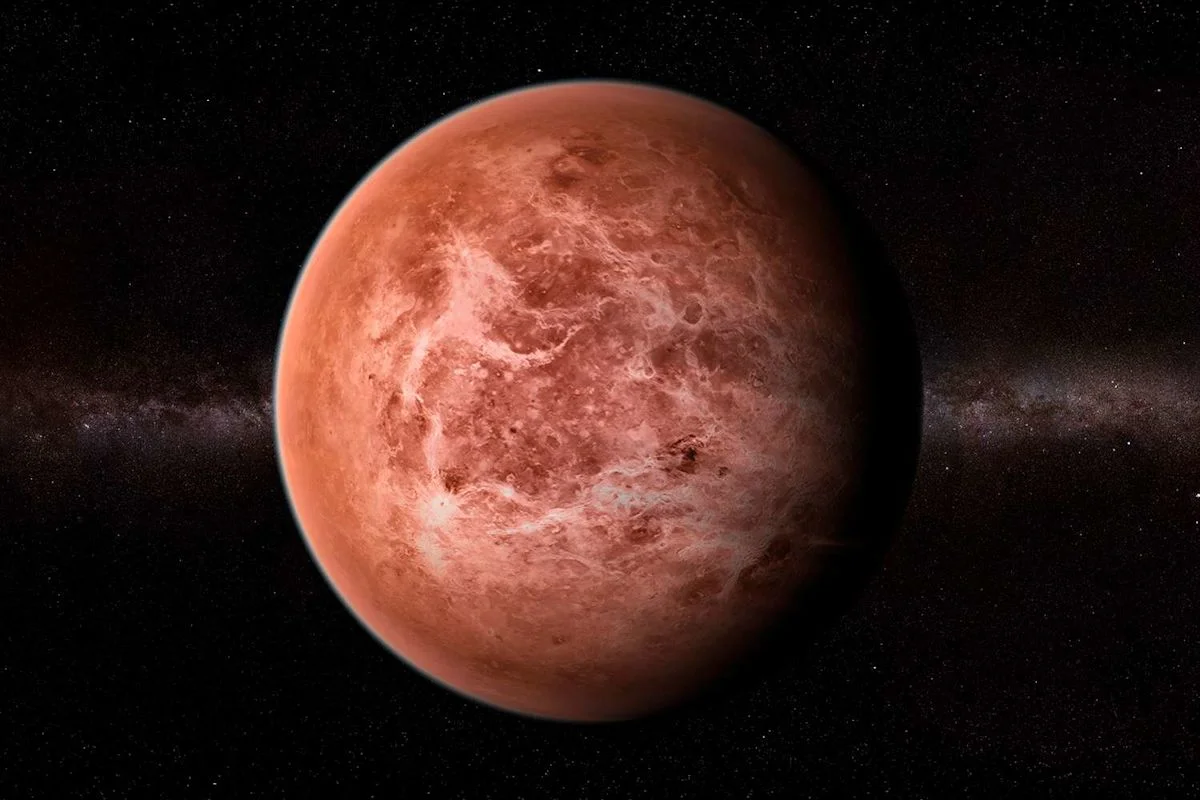
A new study modeled hypothetical moons around Venus and found that the planet’s 243-Earth-day rotation could pull them inward; many simulations ended in a collision. The researchers stress the work does not establish that Venus ever had a moon.
Researchers tested their computer model using Earth’s moon, then varied Venus’s rotation speed and the hypothetical moon’s mass, from half to 10 times the mass of Earth’s moon. Some scenarios kept a moon in orbit for billions of years; larger moons reached Venus sooner in simulations that ended in a collision.
A collision could transfer substantial energy and angular momentum to Venus, potentially changing its rotation, geology and climate, the researchers said. They added that the findings may help scientists study slowly rotating planets around other stars.
