

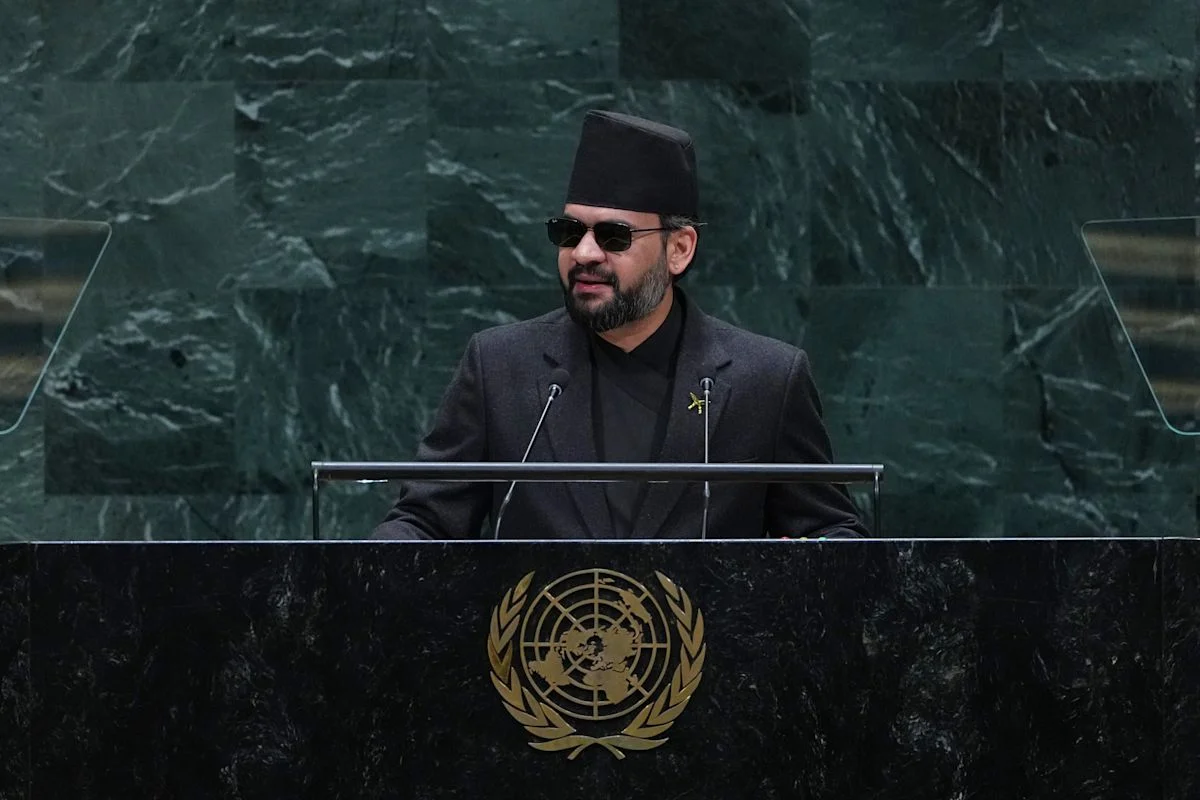
At the U.N. Thursday, Nepal’s Prime Minister Balendra Shah called August’s flood a climate warning and urged action. It killed at least 1,400 people, with more still missing; scientists link climate-driven permafrost melt to instability in the partly collapsed glacier.
Shah did not ask for a specific aid amount. He called international climate finance inadequate and too bureaucratic, including the loss-and-damage fund agreed for poorer countries hit by disasters they did not cause; he urged relief, rehabilitation and reconstruction alongside responsibility, reparation and resilience. The U.S. announced $31 million in flood-recovery aid this week, bringing its total financial help to Nepal to $36 million—less than 1% of what Nepal needs, according to the article.
Nepal’s Foreign Minister Shisir Khanal said preliminary assessments put losses from the disaster above $5 billion—nearly 15% of GDP and a third of the annual budget. Shah said Nepal contributes less than 0.1% of heat-trapping gases and gets about 99% of its electricity from hydropower; many workers were trapped in tunnels by the flooding. Global Carbon Project figures cited in the report put U.S. carbon emissions over the past 75 years at about 1,500 times Nepal’s.
