

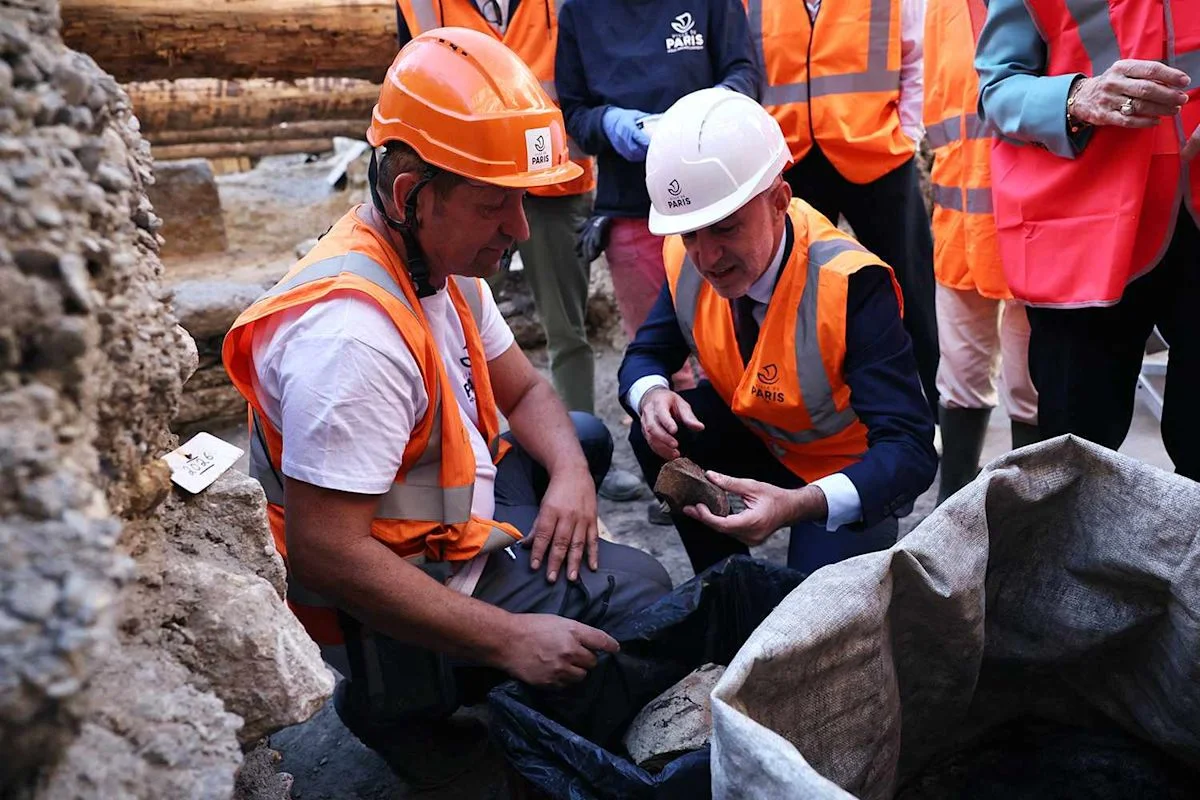
Archaeologists found a 72-foot stone-and-wood wall at Hôtel Dieu on Paris’s Île de la Cité. Initial carbon dating of wood at the site suggests it dates to 200–10 B.C., potentially shedding light on Gallic Lutetia, the settlement that became Paris.
The structure resembles Gallic fortifications from around the first century B.C. French officials also reported signs of a violent fire and nearby burnt wood. Culture Minister Catherine Pégard said the remains may be among the most important for understanding Gallic Lutetia, but added that further research is needed.
The wall is too fragile to preserve completely. Officials said archaeologists will use modern technology to create a 3D reconstruction for study; a reconstructed section will also be displayed at a Paris museum. Excavations at the site will continue.
