

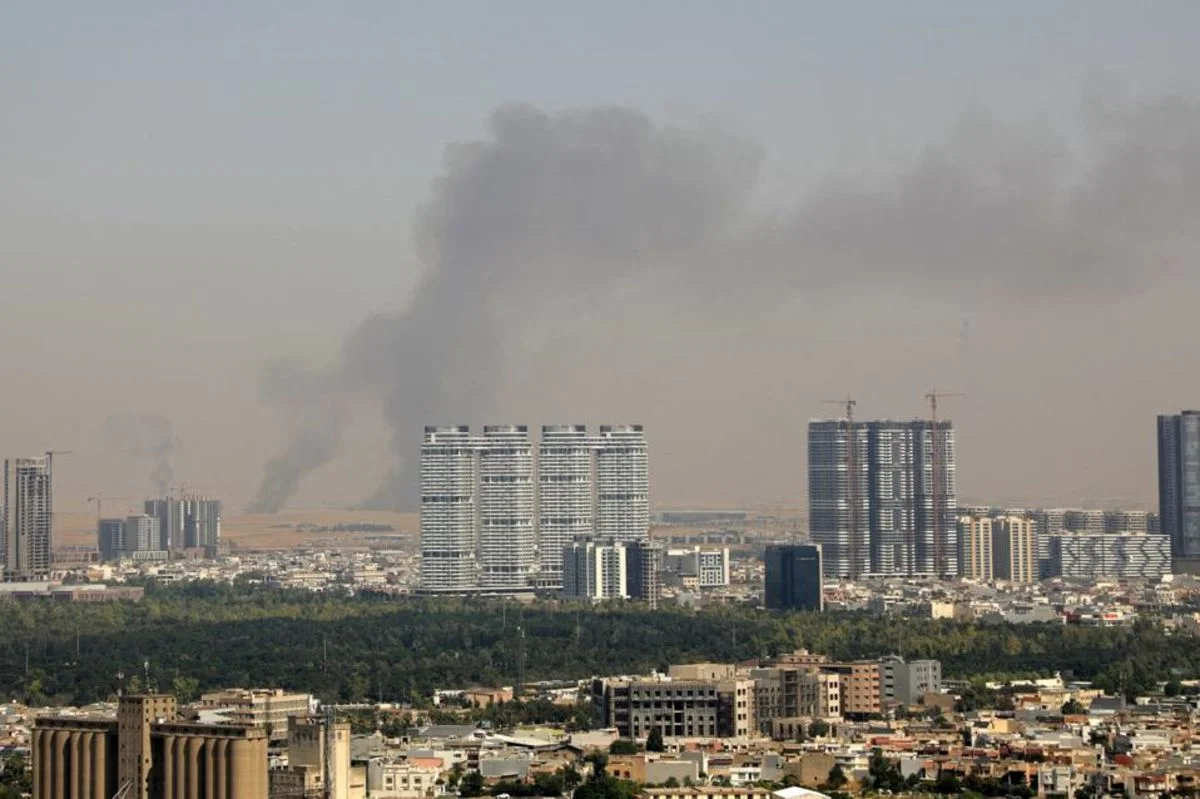
Iraqi Kurdistan’s leaders fear the U.S.-led coalition’s scheduled Wednesday withdrawal will take away air defenses that intercepted Iranian and militia drones and missiles. Its Peshmerga lack equipment to counter such attacks, and Baghdad’s support is uncertain.
During the Iran war, Iran and Iraqi militia proxies fired about 1,000 drones and missiles into the region, many targeting Erbil airport; U.S. and British air defenses intercepted many. On Aug. 17, a jet-powered Hadid-110 drone launched from Iranian territory hit Prime Minister Masrour Barzani’s private office. Kurdish residents are divided: some fear reduced protection, while others believe the U.S. exit could remove a reason for attacks.
The coalition withdrawal coincides with the end of U.S. salaries paid to Peshmerga under the officially concluded anti-ISIS campaign. Baghdad has limited air defenses and is acquiring South Korea’s medium-range Cheongung-II systems and unspecified systems from Turkey and France, but it is unclear whether Baghdad will share them with Erbil or whether they can replace coalition defenses. The UAE newspaper The National said the pullout removes a defense layer along a route repeatedly used by Iranian missiles and drones, affecting security calculations in Jordan, Syria and, to some extent, Israel.
