

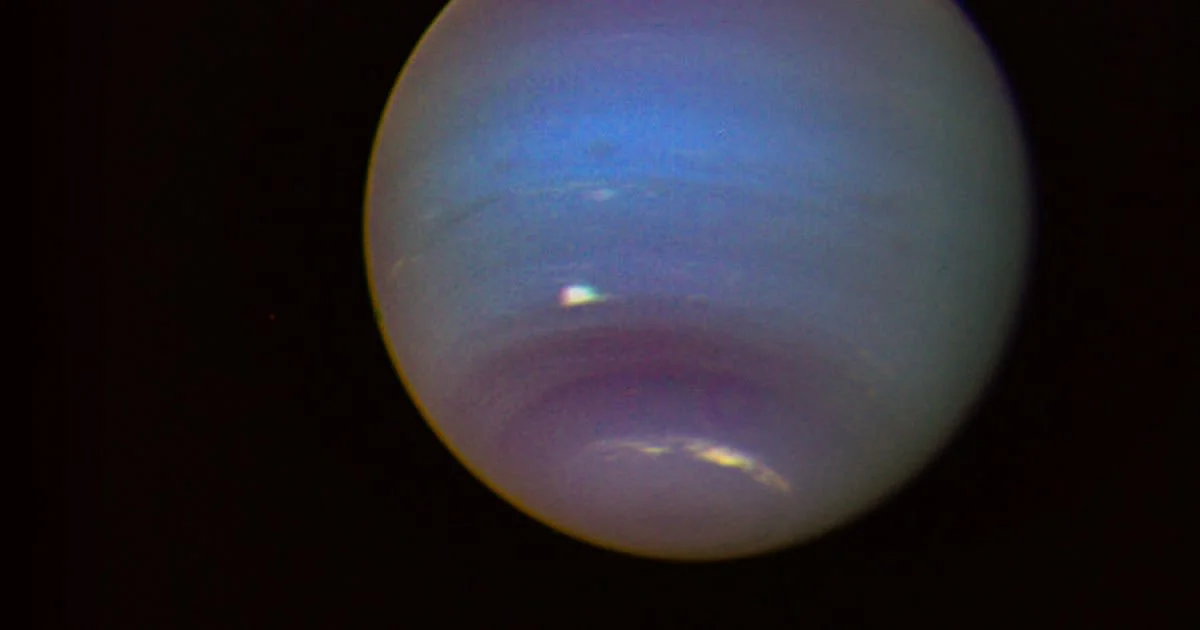
Neptune reaches opposition at 10 p.m. EDT Sept. 25, putting it at its best for viewing, but a nearly full Moon nearby may make it harder to spot. In southern Pisces, it stands nearly 50° high around local midnight and requires binoculars or a telescope to see.
To locate Neptune, look about 7° east of the Moon or 9° west-southwest of Saturn. Its 2-arcsecond disk looks like a small bluish-gray star, and the planet is 2.68 billion miles (4.32 billion kilometers) from Earth. The guide says Neptune will remain well placed for a while, so viewers can try again a couple of days later, after the Moon moves away.
The Full Moon occurs at 12:49 p.m. EDT Sept. 26 and is this year's Harvest Moon because it is closest to the Sept. 22 autumnal equinox. On Sept. 29, Ganymede transits Jupiter for more than three hours, with part of the event visible to observers across the U.S.; asteroid 192 Nausikaa reaches opposition Sept. 30. The Moon reaches perigee Oct. 1 at 229,494 miles (369,335 km), and Venus and Mercury appear low in the western sky after sunset Oct. 2.
