

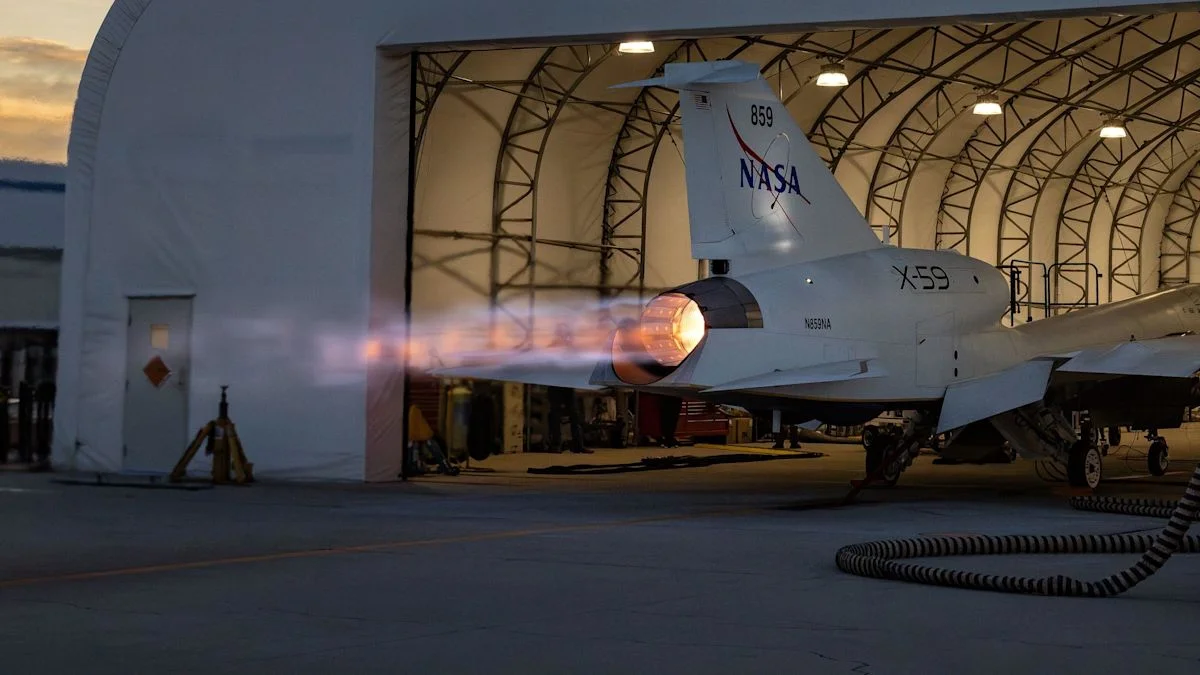
NASA’s X-59, which first flew in 2025, is breaking the sound barrier over selected US towns to test whether its elongated nose can soften sonic booms; community surveys will gauge public reaction as experts debate when experimental jets need pilots.
NASA considered flying the X-59 without a pilot, but doing so would have added the cost and complexity of certifying a robot aircraft for fast flights over urban areas. The jet also had to be large enough to resemble an airliner. Programme manager Peter Coen says future X-planes will probably be uncrewed unless piloting is part of the research or a crewed aircraft is more cost-effective. Test pilot Guy Gratton says pilots can identify lessons remote teams might miss, and that drone testing can take four times as many people on the ground.
Separately, BAE Systems is developing a UK technology demonstrator with 100 suppliers, including Rolls-Royce, to test ideas that could feed into the Global Combat Air Programme, a UK-Italy-Japan effort. The demonstrator is expected to use engines from the existing Typhoon and fly in 2028; the fighter programme aims to fly in the 2030s.
