

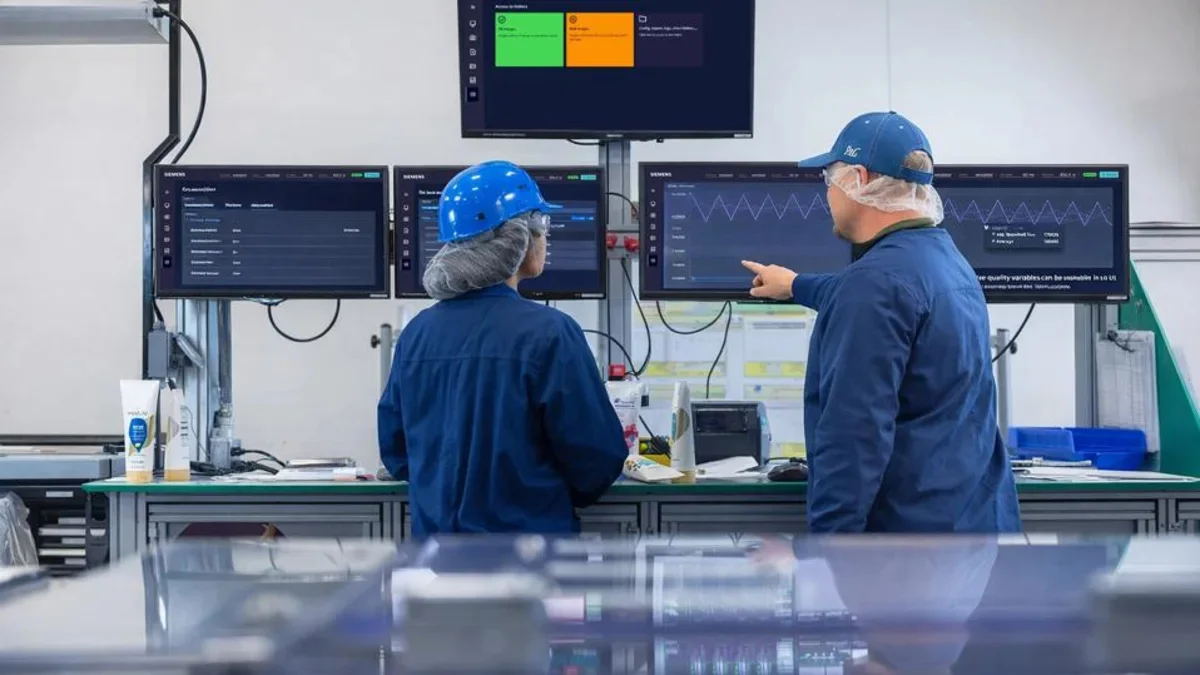
Manufacturers are moving from isolated AI projects to connected production systems that inspect products and coordinate operations with less human input. Siemens and P&G are expanding AI inspection globally as others expand digital twins, simulations and robotics.
Siemens and P&G say their AI inspection system has reduced manufacturing scrap by 10% to 20%; new installations can be commissioned five to 10 times faster than traditional custom vision systems. It analyzes live camera images and can trigger alerts or automatically remove defective products without stopping production.
Unilever plans more than 40 additional digital twins over 18 months; it says a model at its North Carolina deodorant plant predicts 95% of process-flow restrictions, contributing to 20% less waste and 10% more capacity. PepsiCo reported 20% higher throughput at an initial U.S. deployment. BMW is piloting humanoid robots, though its trials do not establish that entire automotive factories are autonomous. A 2024 Deloitte and The Manufacturing Institute study projected U.S. manufacturing could require about 3.8 million more workers by 2033; up to 1.9 million jobs could remain unfilled if recruitment and skills challenges are not addressed.
