

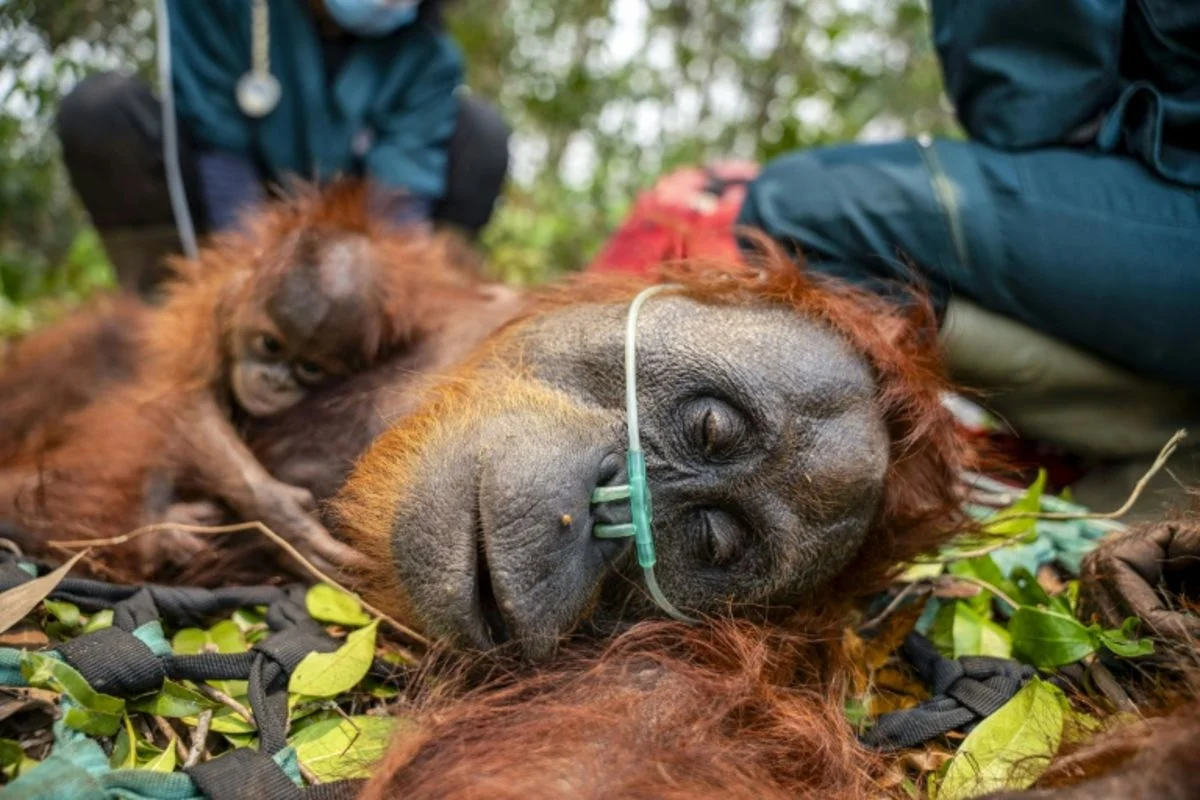
Wildfires in Indonesian Borneo are burning in habitats containing 52% of Borneo’s critically endangered orangutan population, including 13 of Borneo’s 20 largest remaining populations, the IUCN said Saturday. Indonesia has battled the fires for weeks.
The IUCN said fire and smoke impose physiological, behavioral and ecological costs on orangutans in peat forests. During haze, they show signs of fat breakdown despite eating and resting more, suggesting higher energy demands, likely because their immune systems are working harder. Fires have also been reported in habitats of five gibbon species in Borneo and Sumatra. The IUCN said there is reason to expect gibbons to suffer respiratory harm from smoke, as well as habitat loss and disruption to behaviors that keep wild populations viable.
As of Tuesday, Indonesia had rescued 100 animals threatened by the fires, including 53 orangutans, a forestry ministry spokesman said. Ronna Saab of FORINA called for sustained fire prevention, including protecting and rewetting peatlands, addressing drainage and deforestation, and protecting burned forests from later conversion and restoring them. The government said more than 202,000 hectares burned nationwide from January through July; the Nusantara Atlas project put the figure closer to 900,000 hectares from January through August.
