

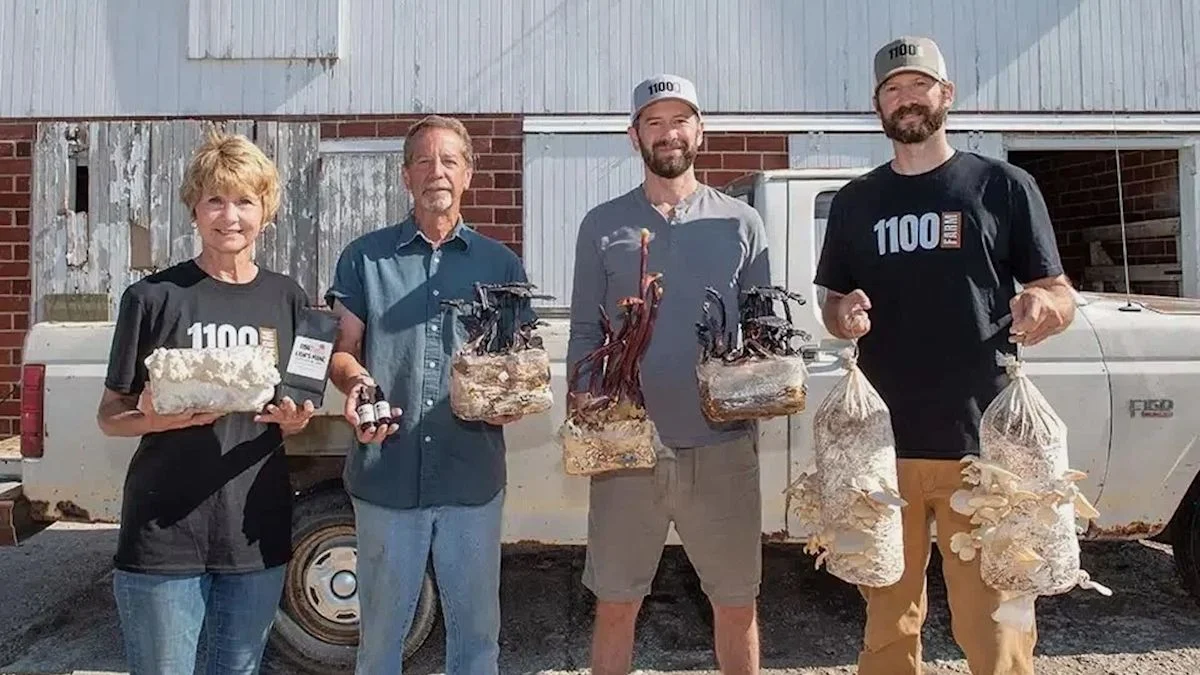
The Faaborg family turned half of a former Iowa hog barn into a controlled room for specialty mushrooms, including lion’s mane. The farm sells them in tinctures, coffee blends and flavored salt, and other farmers can visit to study the transition.
According to NPR, the family began working with The Transfarmation Project in 2021, ended hog production in 2022 and received a $15,000 grant in 2023 for a yearlong mushroom pilot. The farm is the project’s second U.S. demonstration hub and is set to receive $216,000 over four years to document and share the process; visiting farmers can review labor, costs and margins. Tyler Faaborg said 25 years in hog work took a physical toll.
Before the switch, the farm produced about 8,000 hogs a year and generated nearly 1 million gallons of liquid manure that had to be stored and hauled; the EPA says waste at that scale can contribute to methane pollution and water contamination. The former manure pit is now a freshwater pond, with native grasses and flowers planted and hundreds of trees and shrubs being added along a creek. Iowa’s count of large concentrated animal feeding operations rose from 789 in 1990 to 4,444 by 2025, NPR reported, citing an Environmental Working Group analysis.
