

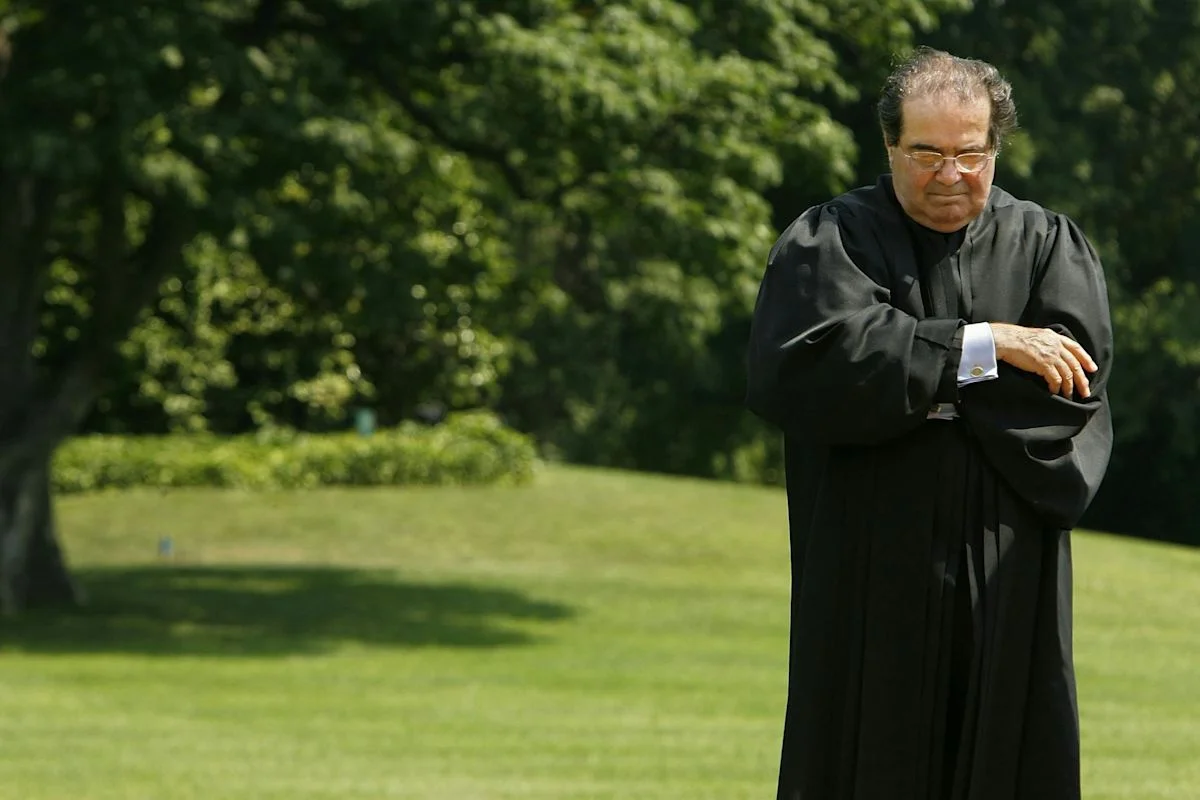
Most U.S. Supreme Court justices partly follow originalism, reading the Constitution as understood when written. Supporters say amendments, not judges, should change it; critics cite unclear history and the exclusion of women and Black people from its creation.
Brian Fitzpatrick, a Vanderbilt University law professor and former Scalia clerk, contrasts originalism with “living constitutionalism,” which lets judges reinterpret the Constitution to meet changing needs. He traces originalism’s renewed prominence to Scalia’s 1986 appointment by President Ronald Reagan; it is now increasingly popular among lower-court judges, lawyers and law professors.
Fitzpatrick cites Scalia’s deciding 1989 vote to strike down a law criminalizing flag burning, despite Scalia’s opposition to the act, as evidence that originalists may rule against personal preference. Critics say the amendment process can preserve provisions that lack majority support because changing the Constitution requires a supermajority; originalists reply that unelected, life-tenured judges choosing what they deem best is no more democratic. Fitzpatrick says originalism may still be the “lesser evil,” though Scalia acknowledged amendments make change burdensome.
