

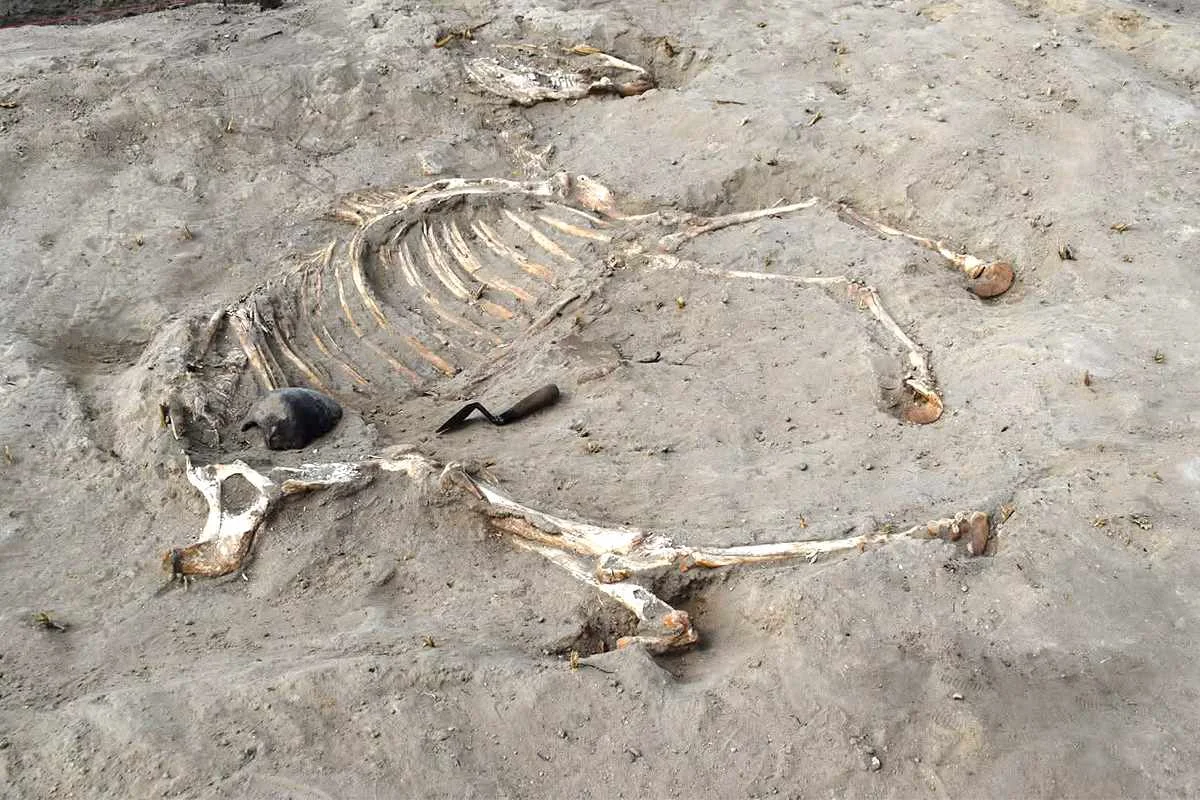
Archaeologists found a roughly 3,000-year-old horse skeleton at Egypt’s Tell el-Abqa’in fortress; preliminary studies suggest it may have been used for training, military activity or chariot pulling. They also found grain silos and wells inscribed with Ramses II’s titles.
The ministry said the horse’s posture and head direction suggested a ceremonial burial; alabaster and limestone fragments found nearby may have decorated a chariot horse. The fortress thrived during the New Kingdom (about 1550–1069 BCE), and the ministry said the find reinforced its belief that the fortress protected Egypt’s borders from attacks by Libyan tribes.
Other finds included a limestone stela fragment bearing hieroglyphs about Ramses II’s birth, coronation and Horus names, scarabs bearing the names of Ramses II, Seti I and several deities, protective amulets, jewelry and pottery. A water jug was associated with pilgrimage to Abydos. The ministry said the finds shed light on residents’ religious and daily lives; excavation will continue.
