

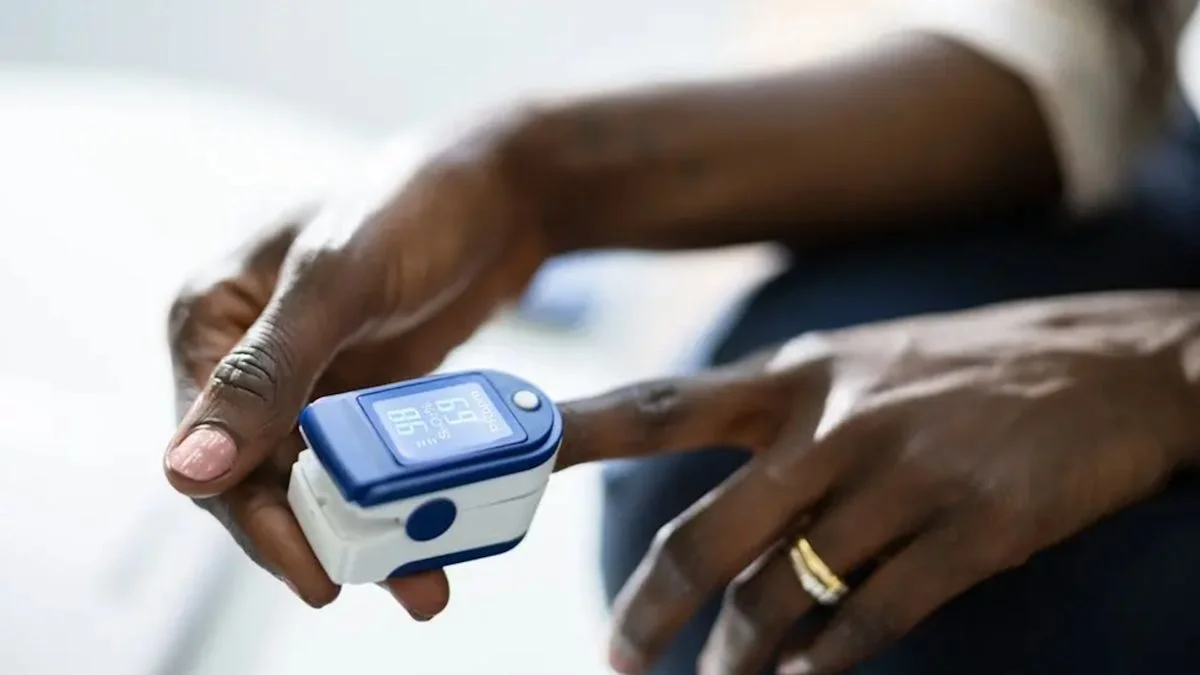
A University Hospitals Birmingham study is testing an EarSwitch monitor that shines light into the ear canal to see if it measures blood oxygen more accurately across skin tones than fingertip devices. Twenty-nine volunteers took part; no findings are reported.
Researchers have raised concerns that fingertip pulse oximeters may overestimate oxygen levels in people with darker skin, particularly when levels are already low. In clinical settings, staff generally use the devices alongside other observations and tests, but home monitoring can leave people without that additional assessment.
Volunteers’ oxygen levels were lowered slightly, and researchers compared the monitor’s readings with arterial blood samples analysed using laboratory equipment. The study was designed to meet international testing requirements calling for at least 24 volunteers and 480 data points.
