

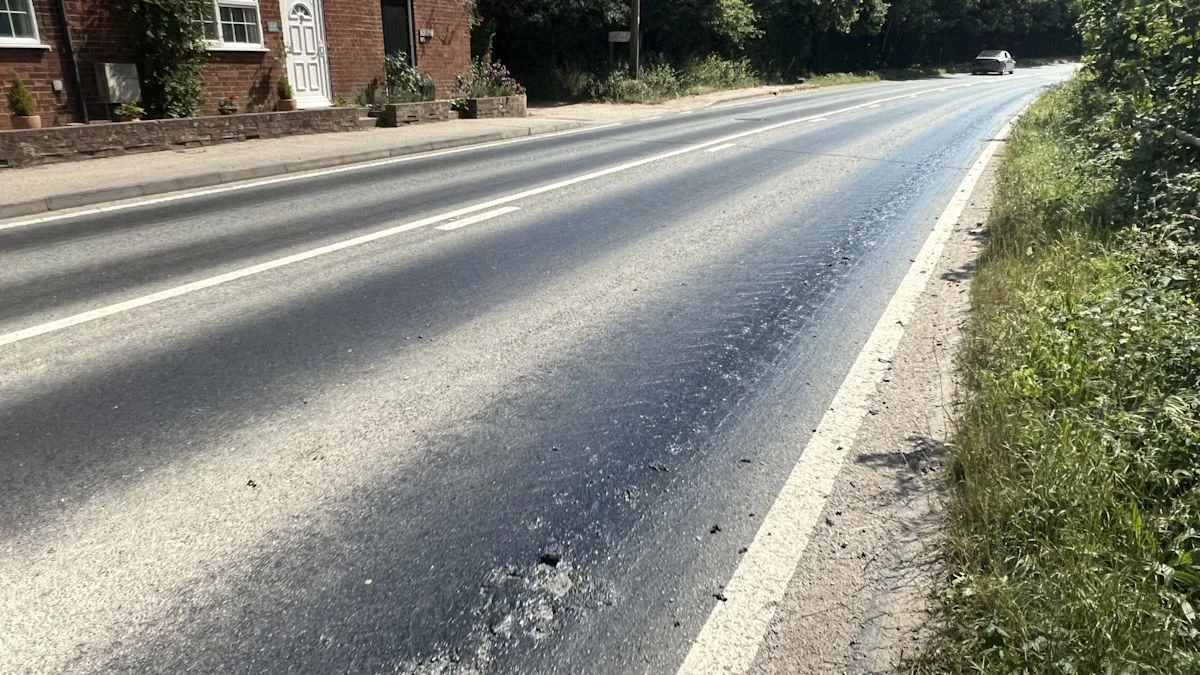
Comparable figures from eight East of England authorities show 55 reported road-melting cases in 2025-26, up from 33 in 2023-24—a 67% rise. Across the region, authorities reported more than 200 cases over four years, according to the BBC.
Experts said many UK roads were designed for cooler conditions. Cambridge researcher Mashael Kamran said roads can reach 50C when air temperatures are 30C, and heavy traffic can cause rutting. She said tight council budgets have led many authorities to patch or surface-dress roads rather than relay them, leaving roads vulnerable to heat. The Chartered Institution of Highways and Transportation said some roads start to soften above 50C.
In Suffolk, the A143 at Stanton was closed as an emergency measure amid reports that cars using the road were lifting asphalt patches; it was the road’s second reported heat-related melt that year. Suffolk said it uses granite dust during extreme heat. Norfolk’s preventive “dustings”—light applications of sand or stone to stop tarmac melting—increased from 29 to 46. The Department for Transport said it is supporting local authorities and investing a record £7.3bn in local highway maintenance.
