

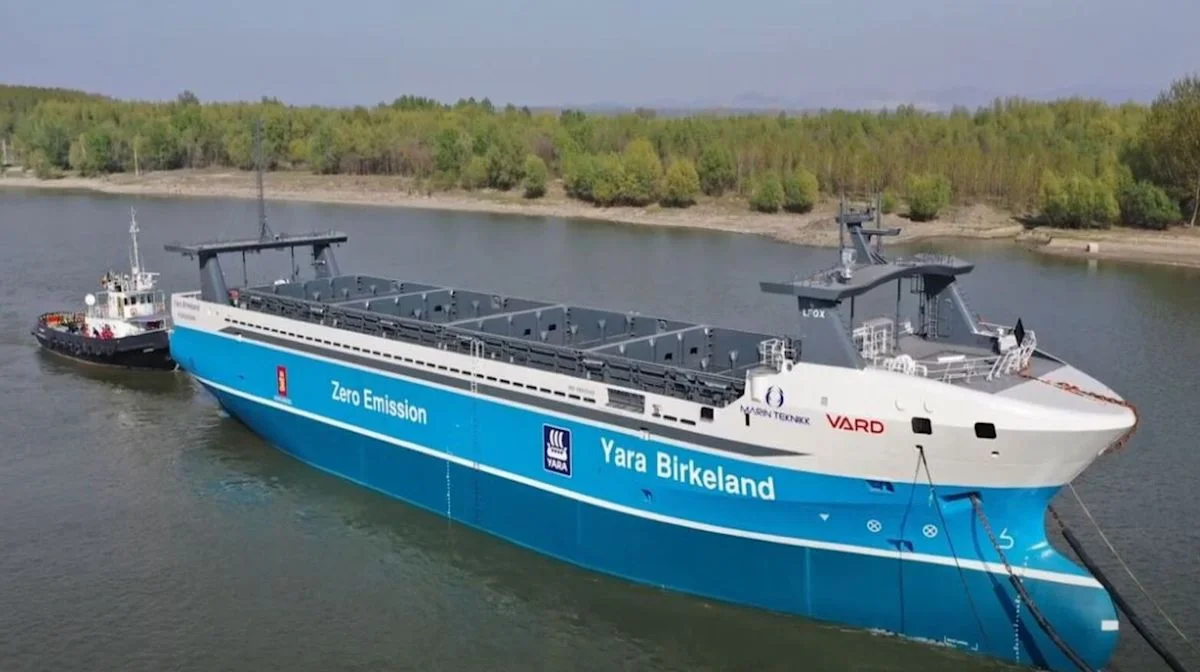
Electric cargo ships use either hybrid power—combining combustion engines and electric motors—or batteries alone to run propulsion and onboard equipment. Fully electric vessels need large battery stores, but limited range and charging infrastructure constrain their use.
Norway’s Yara Birkeland stores its batteries below deck and charges at terminals while unloading. China’s Greenwater 01 carries batteries in containers that are exchanged for fresh ones in port; the article identifies the two as the biggest electric ships.
Electric cargo ships can be more efficient on shorter routes, quieter and easier to maintain, with reduced or zero emissions and less risk of oil or fuel spills. Greenwater 01 has capacity for 700 TEU, a stated range of 621 miles and an average speed of 12 mph; charging facilities are described as limited and sometimes incompatible.
