

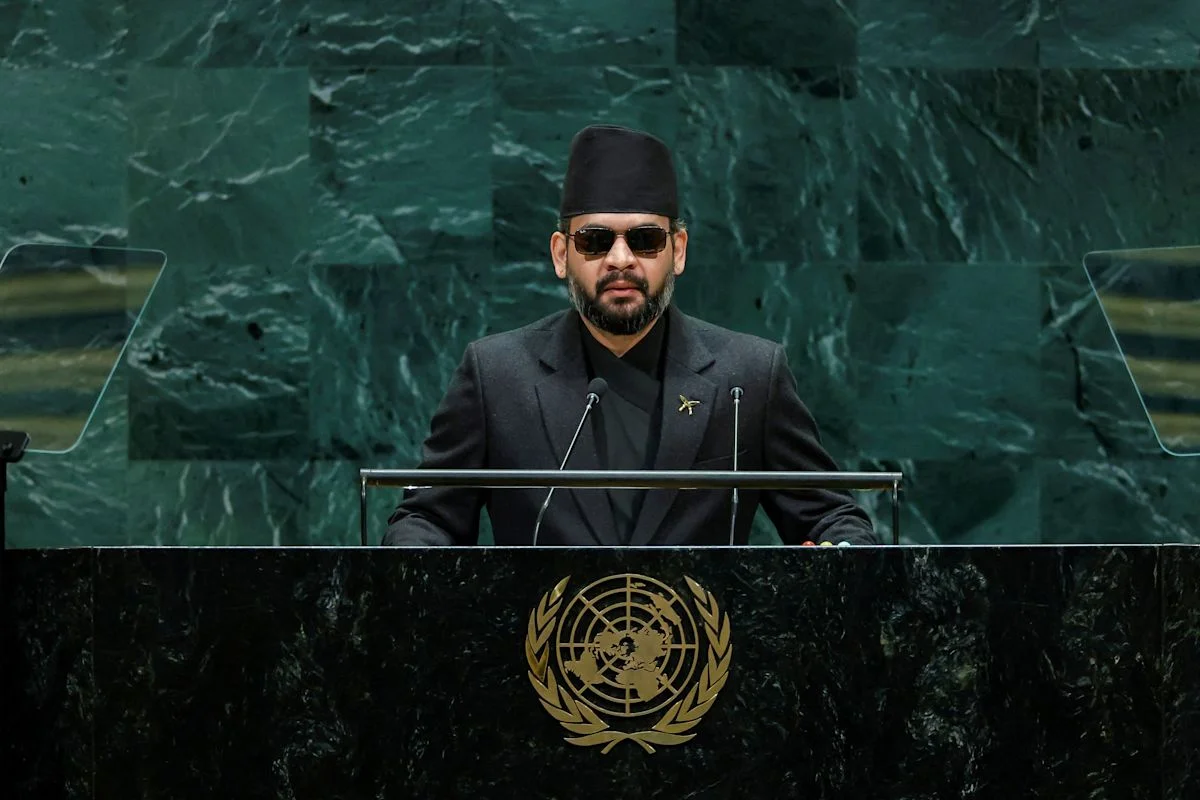
At the UN General Assembly, Nepal’s Prime Minister Balendra Shah called the August flood that killed at least 1,453 people “a warning to the world” and urged faster climate action; Nepal’s disaster authority said 5,500 people remained missing and 13,795 had been rescued.
The torrent of mud, rock and water struck northern Nepal and the China-Tibet border on August 26, triggered by a glacial collapse. World Weather Attribution researchers said the disaster was a compound crisis shaped by long-term warming, glacier retreat, permafrost thaw and geological instability, rather than a single extreme weather event.
Shah said Nepal contributes less than 0.1 percent of the heat-trapping gases behind climate change and called for international help with adaptation. He proposed a Himalaya Climate Resilience Mechanism with India and China to share satellite data and expertise, monitor glacial lakes and strengthen joint early-warning systems. Nepal requested $20m from the UN loss and damage fund, the maximum allowed; a preliminary government assessment put the disaster’s cost at $5bn. The fund has yet to make its first disbursement, while the US pledged an additional $31m in recovery support earlier this week.
