

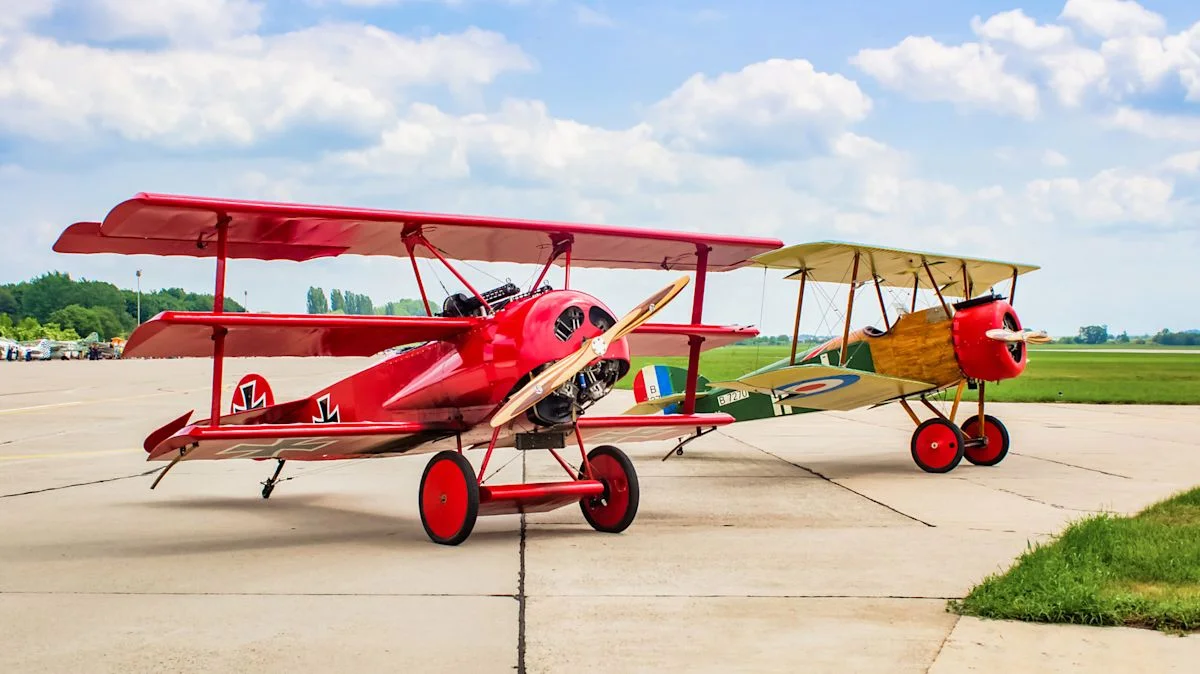
Biplanes largely gave way to monoplanes by the late 1930s because their second wing and supports created drag and hurt fuel efficiency. Stronger engines and improved materials helped monoplanes offer greater speed and structural strength, while giving pilots better visibility.
In 1903, the Wright Flyer used a biplane layout because engines were weak and materials fragile; its two wings supplied lift and structural strength with little power. Shorter wings also gave biplanes quicker roll rates, helping make them useful in World War I combat. Triplanes briefly appeared for low-speed agility, but the third wing added drag and structural complexity.
Biplanes remain in aerobatics and leisure flying, and new models are still built. Aviat Aircraft produces the Pitts Special for stunt pilots; WACO Aircraft makes the open-cockpit YMF-5, with modern avionics and safety systems, including an amphibious version. Vintage planes are restored for airshows and private events, while kits such as the Sherwood Ranger DS let hobbyists build aircraft.
