

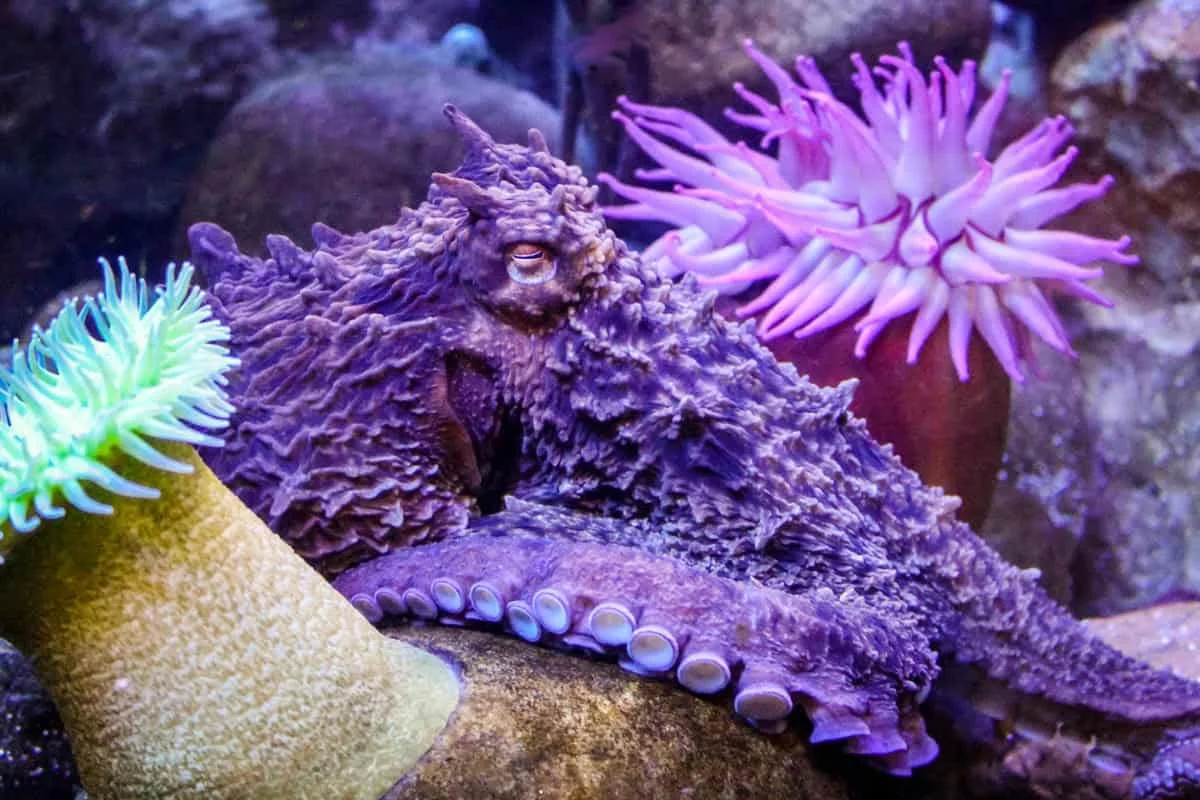
Octopuses can alter their appearance in milliseconds to blend into their surroundings, and experiments show nerves directly control the changes. How they match backgrounds so precisely remains unresolved; evidence suggests their color vision is limited.
Specialized skin cells called chromatophores change color, contrast and patterns. Muscles beneath the skin can raise bumps or smooth ridges, altering texture to resemble surfaces such as rock, sand and coral.
More than half an octopus's neurons are located throughout its arms, which can move independently and manipulate objects. Laboratory research has also found that octopuses can learn associations and solve problems, including opening containers and navigating mazes; whether they plan ahead remains debated.
