

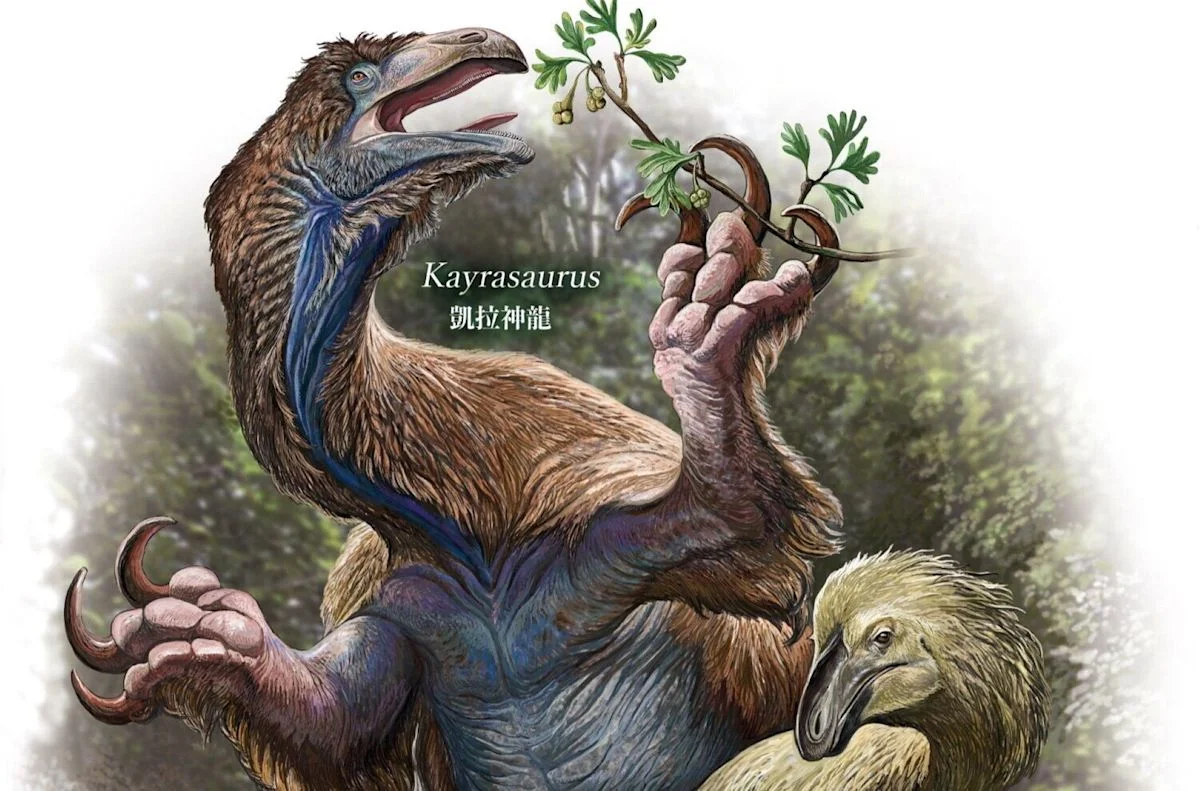
Researchers identified Kayrasaurus changliensis from an almost complete Early Cretaceous fossil in Liaoning, China. Estimated at 3.6 meters long, it is the largest therizinosaur known from the Jehol Biota, at least 1.6 times the size of the previous record-holder.
Researchers estimated its body mass at 117 to 274 kilograms. Traits distinguishing the fossil include very small, tightly packed teeth, elongated neck vertebrae and a claw with a raised lip not found in other known therizinosaurs. It also has unusual openings in both jaws and fork-tipped nasal bones.
Therizinosaurs were theropods, the group that includes Tyrannosaurus rex, but many are thought to have fed mainly on plants. Researchers proposed that Beipiaosaurus and perhaps Kayrasaurus were more heavily built, had stronger bites and were less adapted for running than Jianchangosaurus and Lingyuanosaurus, which seem better adapted for running and may have relied more on their forelimbs for feeding.
