

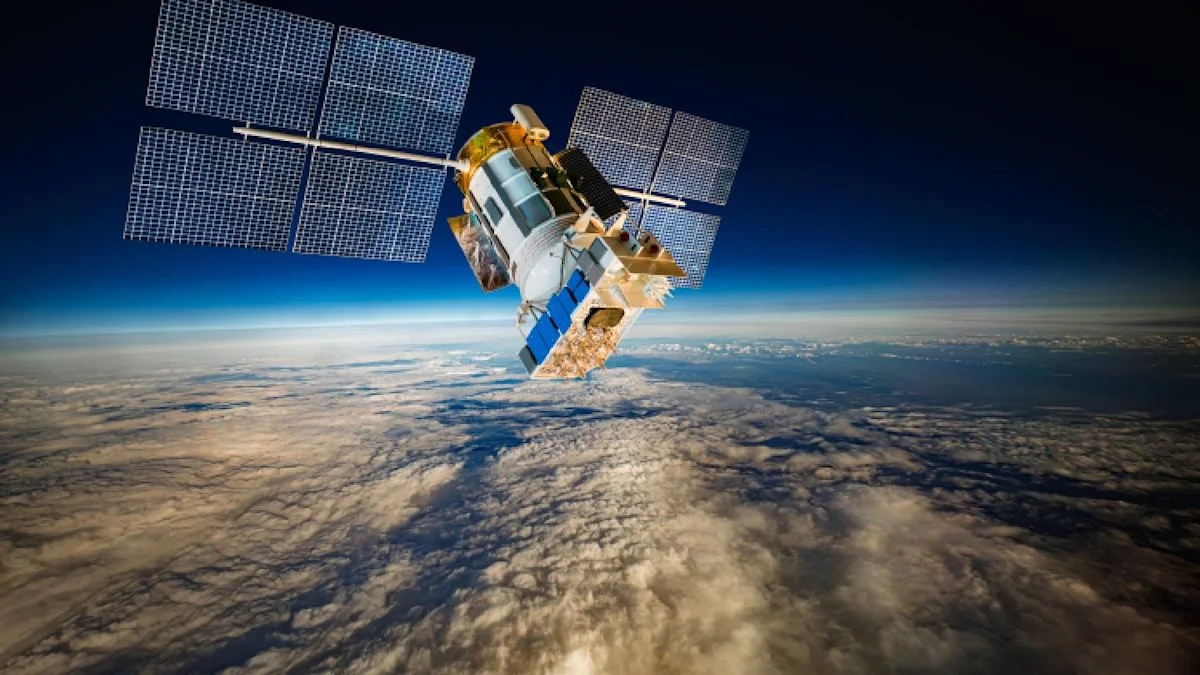
Google plans to launch a prototype satellite next week aboard SpaceX’s Transporter-18 rideshare. Carrying Tensor Processing Units (TPUs), it will test how the AI chips withstand launch forces, radiation and temperature extremes in low Earth orbit.
Google says it simulated launch conditions by shaking the satellite on three axes at rocket-launch frequencies. The spacecraft can face sustained acceleration up to 10g during ascent, while TPUs can experience peak forces of 50g–100g. In proton-beam tests at UC Davis, Trillium TPUs tolerated an ionising-radiation dose exceeding what they would accumulate over five years in orbit, according to Google. Ground facilities cannot replicate every space condition. The mission’s heat-pipe-and-radiator cooling approach, validated in a thermal vacuum chamber, will get its first in-space test; the mission was developed with satellite operator Planet Labs.
Google says low Earth orbit could offer near-continuous sunlight and up to eight times the solar power achievable on Earth. Project Suncatcher is studying whether solar-powered satellite constellations could eventually run machine-learning workloads; Google plans to put two satellites in orbit in 2027 to test high-bandwidth laser links between them.
