

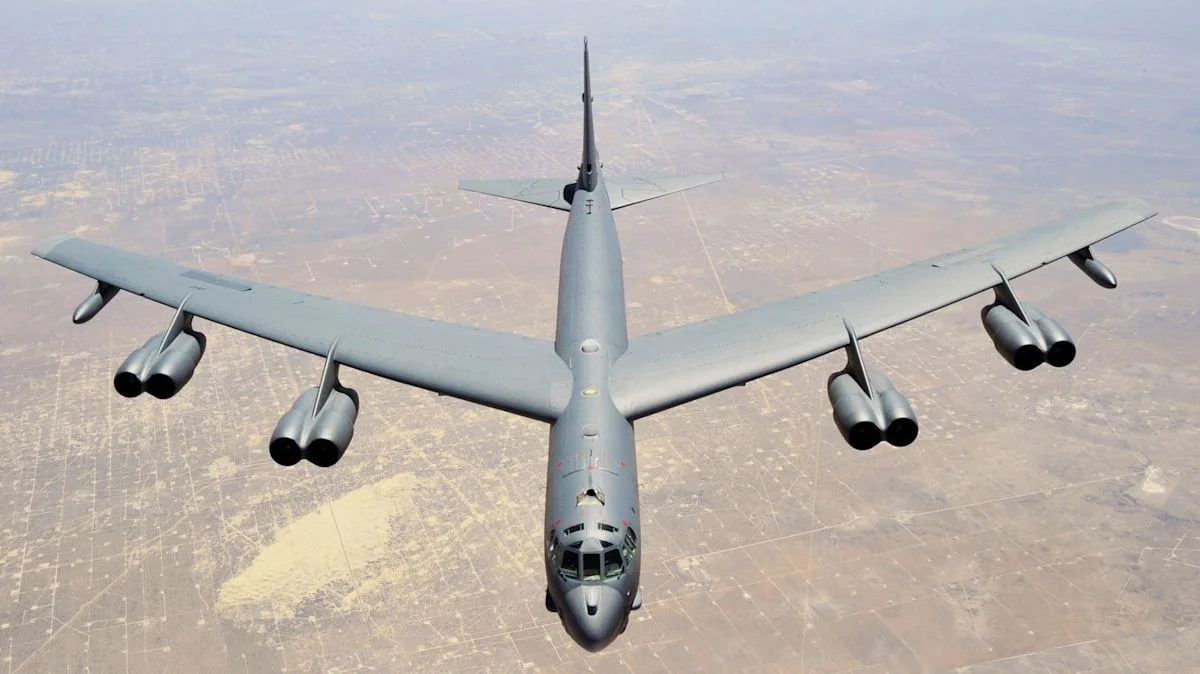
The B-52’s aluminum skin is designed to flex in flight, and forces on the aircraft can make it wrinkle or buckle, according to Air Force manuals. Maintenance crews monitor the skin because abnormal wrinkles can signal damaging stress rather than normal flexing.
The B-52’s shift from high-altitude bombing to low-level missions brought more buffeting in thicker, turbulent air. Carrying fuel inside the wings added stress, and the 1970s Pacer Plank program replaced much of the aircraft’s covering.
The article says parallel wrinkles can accompany wing-warping damage and should be examined immediately. Flight stresses can also loosen rivets, while overheating can buckle the skin. Wrinkles have been reported on F-15s under high-speed or high-G conditions and on a Boeing 767 after a hard landing.
